




I was the Al-Ahram correspondent in Washington when the 25 January Revolution broke out in Egypt in 2011, and a few months later the administration of former US president Barack Obama began determining its next moves regarding dealing with both the concealed and the more conspicuous political forces in Egypt following the ousting of former president Hosni Mubarak.
A group from the so-called Revolutionary Youth Coalition was received in Washington in the second half of October 2011, which included well-known figures from the revolution. They were received in various decision-making centres in Washington, notably the State Department.
According to informed sources at the time, the visit was not seen as being in the interest of the civilian camp in Egypt as the young people concerned had been unable to convince the US administration that they could be the best alternative to the former Mubarak regime. They focused on the need to get rid of the symbols of the previous regime, and they criticised the US for its support of traditional regimes in the region.
At the same time, the State Department was conducting unofficial meetings with the Muslim Brotherhood and its franchises in Washington, and former US secretary of state Hillary Clinton announced the start of a dialogue with the group in the summer of 2011.
In early April 2012, a delegation from the Freedom and Justice Party, the new political arm of the Brotherhood in Egypt, visited Washington with a meticulously arranged agenda and carefully calculated words. The delegation included young Brotherhood leaders who spoke fluent English, meaning that this youth group could be compared to the secular youth groups that had earlier visited Washington. The Brotherhood brought young members who managed the group’s websites to Washington, and it seems they had received intensive courses in political communication.
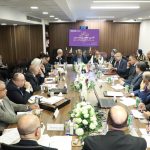
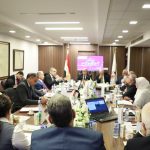
Attending a closed meeting with the Brotherhood’s youth group at the Council on Foreign Relations in Washington, without the group being given prior notice of my presence, was a highly interesting experience, since the Brotherhood was relying on the meeting to put its views across.
There were some 30 respected experts on US foreign policy present, and I was sitting next to Elliot Abrams, the official who is in charge of US relations with Iran in outgoing US president Donald Trump’s national security team and a hawkish member of the US neoconservative movement. The experts sat around the table, and the Brotherhood youth group sat right in the middle. The Council on Foreign Relations is a non-partisan US think-tank that includes figures associated with both the liberal and conservative streams of US foreign policy.
The Brotherhood delegation talked about the role played by different generations of the Brotherhood in shaping contemporary Egypt, and it emphasised the need to give a new generation the opportunity to participate in shaping Egypt’s future with other political forces in the country.
One of the US speakers present argued that the older generation of Brotherhood members, men who had only recently left prison and had spent their lives facing up to hostile regimes, would wish to carry out personal acts of revenge against the Egyptian state for what had happened in the past. A member of the Brotherhood group, someone who currently runs the Brotherhood media centre in London, answered that the older generation would hand over the leadership to a new generation that felt less bitter and vengeful towards the state. He said the group rejected all forms of violence and extremism in the name of religion.
The rest of the discussion dealt with the position of the Brotherhood on Israel and the Palestinian group Hamas, and the answers given by the Brotherhood youth delegation were evasive. The same answers were later given again at an open meeting with the delegation at Georgetown University in Washington. However, the general impression given by the Brotherhood delegation at the Council on Foreign Relations meeting and at other meetings was positive, and the visit was described at the time as a Brotherhood “charm offensive” in Washington.
A few months later, the Brotherhood won both the parliamentary and the presidential elections in Egypt after employing religious slogans designed to have mass appeal, including “Islam is the solution”. The Brotherhood claimed that this slogan was a political and not a religious one.
Western political leaders and think-tanks stopped short of commenting on the use of religion to win the elections, and considered that the electoral fraud that had taken place did not in itself require them to take up positions against this group that had set itself at the head of the Political Islam phenomenon. This was despite the fact that the religious slogans the group had used went against the principles of democratic practice.
Needless to say, these entrenched slogans then gave rise to the exclusionary policies seen during the year of the Brotherhood’s rule in Egypt, and it was against these that the overwhelming majority of Egyptians came out in support of restoring the state and freeing it from the control of an extremist religious group in 2013.
After US Republican Party Senator Ted Cruz reintroduced a bill in the US Congress in 2020 intended to designate the Muslim Brotherhood as a terrorist organisation in the United States and demanded that the State Department provide evidence for the inclusion of the group on its list of organisations supporting terrorism, Muslim Brotherhood acting guide Ibrahim Mounir came out with statement describing Cruz’s move as a “big mistake” because it ignored what he called the fact that the Brotherhood was the “firewall against extremism” in the Islamic world.
Mounir’s statement reminds me of the “charm offensive” the group earlier led in Washington. Mounir, who runs the Guidance Bureau of both the Egyptian Muslim Brotherhood and the International Organisation of the Brotherhood in London, has been trying to convince the Americans of the conclusions of a British special committee on the Brotherhood, formed six years ago, that supported the argument that the group was a “firewall against extremism.”
However, a careful reading of the committee’s report, chaired by Sir John Jenkins, reveals that while it says that many of the extremist organisations that have emerged around the world from under the mantle of the Brotherhood owe their allegiance to it and could be a threat to British national security, political considerations have prevented the condemnation of the Muslim Brotherhood for its adoption and practice of violence. This was made clear by those familiar with the deliberations of the British special committee on the Brotherhood.
The committee concluded, among other things, that “the Muslim Brotherhood generally tries to transform and remodel individuals and communities through a bottom-up approach and where possible participate in politics. But if needed the Muslim Brotherhood is willing to use violence and terror in pursuit of their long-term goals… The Muslim Brotherhood have been publicly committed to political engagement… [but] the Muslim Brotherhood in the West use double speak: the public narrative in the West in English is significantly different than in Arabic.”
After the change in the US administration on 20 January, the starting point for the Brotherhood will be to try to present itself anew to the new Democratic Party administration by playing on the idea that what is happening in Egypt undermines the “moderate currents” within the group and weakens it as a “firewall against extremism”.
Some liberal researchers and journalists in the West also promote this idea and believe that the presence of the group, even if it has practised violence in the past, is better than the absence of an Islamist organisation that can offer an alternative to Al-Qaeda and the Islamic State (IS) group.
But such ideas neglect the history of Muslim Brotherhood theorists arguing for the shedding of innocent blood. The Brotherhood lobby prevented Britain from designating the group as a terrorist organisation when the British special committee was set up some years ago, despite all the evidence, and it is this same lobby that has moved back to Washington today and is promoting the idea of the group as a “firewall against extremism”.
Should it be successful in promoting such false ideas, this will only strengthen the threat of terrorism and embolden fanaticism and separatism within Muslim communities in the West.