




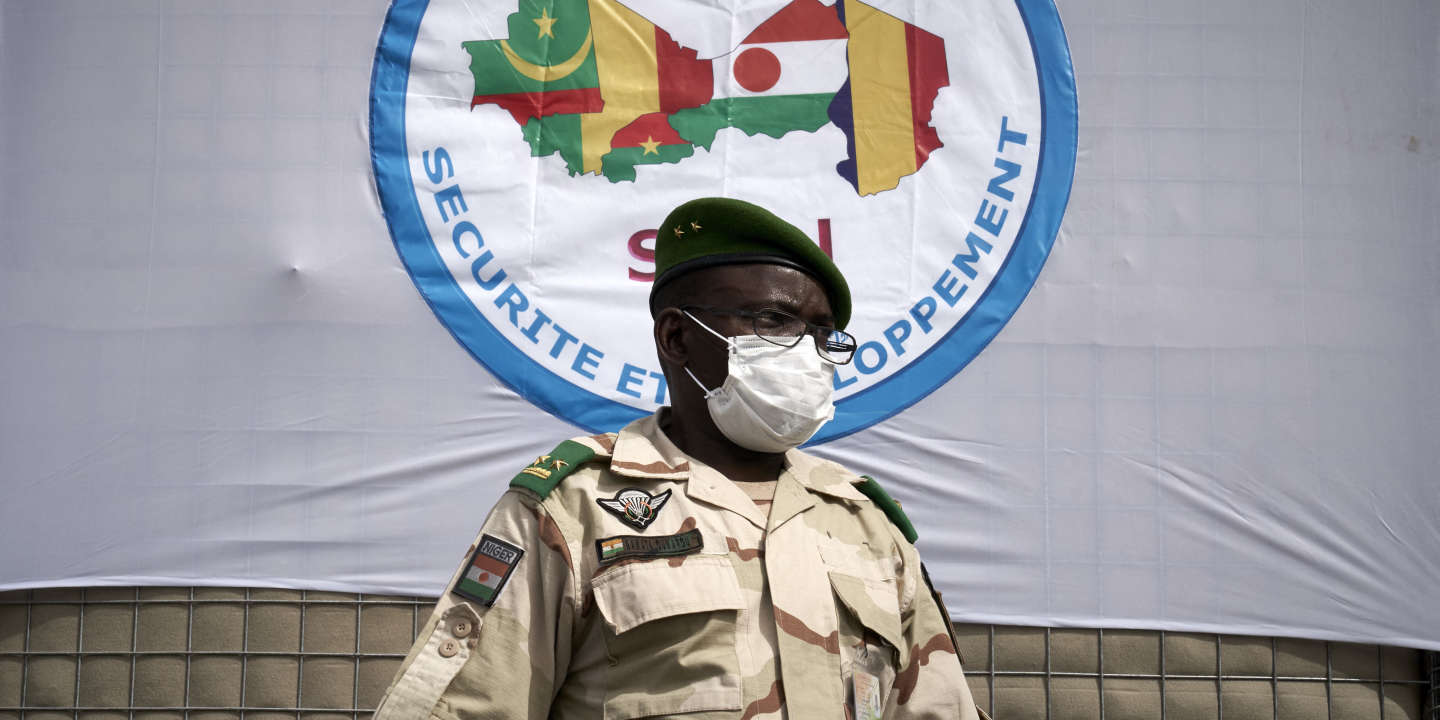
On 15 May 2022, Mali announced its withdrawal from the Group of Five for the Sahel (G5 Sahel), comprising Chad, Mali, Niger, Mauritania, and Burkina Faso, deciding to withdraw from all the G5 Sahel bodies, including la Force conjointe du G5 Sahel [the G5 Sahel Joint Force] (FC-G5S).
Mali’s announcement came in protest against the opposition of certain G5 Sahel member states to its presidency of the G5 Sahel in its eighth ordinary session. This step was associated with several factors, including the tense relations between Mali and France, the withdrawal of the French Barkhane Force and the European Takuba Force from Mali and their repositioning in Niger, the intervention of the Russian Wagner group in Mali, and the Economic Community of West African States’ (ECOWAS) imposition of sanctions on Mali.
Revealing Motives
Following its expulsion of the ECOWAS Special Envoy and the Ambassador of France, Mali decided to withdraw from all bodies of the G5 Sahel. The withdrawal was motivated by the opposition of certain G5 Sahel states to Mali’s presidency. As a result, the annual summit of the heads of state of the G5 Sahel, which was scheduled for February 2022 in the Malian capital Bamako, was postponed (and the G5 Sahel defense ministers have not met since November 2021). Historically, the G5 Sahel was established in 2014. In 2017, the FC-G5S was created to counter armed groups, then other G5 Sahel-affiliated bodies followed, including such as the Conference of Leaders and Heads of States, the G5 Council of Ministers, the G5 Executive Secretariat, the Defense and Security Committee, and the National Committees of G5 Actions Coordination were established but they stalled due to lack of funding. Overall, the opposition to Mali’s presidency of the G5 Sahel was stimulated by several motives, which can be explained as follows:
• The Worsening Domestic Situation in Mali: The interim government in Mali agreed to hold the presidential and legislative elections in February 2022, 18 months after Assimi Goita’s overthrow of President Ibrahim Boubacar Keïta in August 2020. Then, in May 2021, a second coup ousted the transitional president, Bah Ndaw, which gave rise to the consequent imposition of sanctions by the ECOWAS, due to the extension of the transitional period, the postponement of the elections, and the faltering of the political process in the country. According to the 2020 Transitional Charter of Mali, the transition period was projected to continue for 18 months and end in March 2022, with several institutional and electoral reforms planned to be introduced. Mali justified its withdrawal by the absence of any legal text in the G5 charter that provides for imposing restrictions on member states due to its internal political situation. Mali also criticized the G5 Sahel’s ratification of the sanctions imposed by the ECOWAS on Mali.
• Strained Relations between Bamako and Paris: The rift between Mali and France grew since the overthrow of the elected government in Mali in 2020. However, the diplomatic standoff between the two countries has worsened recently, culminating in the expulsion of the French ambassador from Mali. Many of France’s red lines were crossed, including negotiation with armed groups, seizure of power by the military junta, and Mali’s defiance of a timetable for the return to civilian rule. Against this, came France’s decision to withdraw its forces from Mali in June 2022. Relations between Mali and France have also reached an impasse with Bamako terminating its defense cooperation agreement with France in 2014, as well as other agreements of 2013 and 2020 that set the legal framework for the presence of Barkhane and Takuba forces.
• Growing Regional Differences: Against the backdrop of tensions between France and Mali over the deployment of the Wagner Group, Niger has taken a tough stand against the ruling military council in Mali, fearing the contagion of military coups amid the failed coup attempts in Niger. Niger also hosted the French and European forces, which countries of the region consider a trusted ally.
• Exacerbation of the G5 Sahel’s Internal Problems: According to Mali, the G5 Sahel has not achieved its goals of combating terrorist groups, strengthening economic ties among member countries, and providing security, owing to several structural obstacles including, the poor human resources, lack of financing policies, poor coordination among member states, and lack of logistical support, and the weak inter-state cooperation. Further, Mali has accused the G5 Sahel of human rights violations, including arbitrary arrests, detentions, and extrajudicial killings.
Possible Repercussions
Mali’s withdrawal will likely hinder the progress of the G5 Sahel in its war against terrorism. Mali will use it as a pressure card to lift the sanctions imposed on it by the ECOWAS and to send a message to France that opposes Mali’s cooperation with the Wagner Group. This will probably exacerbate the existing challenges, undermine the G5 Sahel activities in achieving Peace, lead to destabilization and further security threats, and increase the vulnerability of the border areas in the Sahel, which can be explained as follows:
• Disintegration of the G5 Sahel’s Efforts and the Loss of Geographical Ties: The Sahel countries are facing a range of local security challenges, political turmoil, and a wave of concurrent coup attempts, which pose common threats to the Sahel countries, particularly with Chad recalling 600 troops from the G5 Sahel force to counter the terrorist groups in Chad and amid the limited capabilities of the G5 Sahel force due to the lack of geographical ties. Now, after Mali’s withdrawal, Mauritania became geographically far from Chad, Niger, and Burkina Faso, where Mali served as a pivotal point in the implementation of operations among these countries. There are also the negative repercussions of the Russo-Ukrainian war on the G5 Sahel funding from donor countries, including primarily the European Union, whose funding contributions amounted to €156 million, amid refusal of the United States and Britain to provide funding through a regular UN mechanism.
• Mali’s Growing Regional and International Isolation: Chad and Niger condemned the deployment of “Wagner Group” in Mali and sided with France against Bamako which increased the isolation of the country, along with the repercussions of the ECOWAS’ economic sanctions on Mali and the African Union’s Peace and Security Council (PSC) upheld these sanctions. With its withdrawal, the Malian army will not be able to confront the growing insecurity alone. This decision came one week after Germany announced increasing its soldiers within the United Nations Multidimensional Integrated Stabilization Mission in Mali (MINUSMA), the impact of the withdrawal on Mali’ decision.
• The Worsening Security Situation in the Sahel: Mauritania is concerned about the worsening insecurity on its borders with Mali. Mali, which shares borders with Niger and Burkina Faso, is now considered a main source of security risks in the region. Additionally, there is a surge in the terrorist attacks and insecurity in the Diffa region of southeastern Niger, the Tillabéri region of western Niger, and the Tahoua region of northwest Niger, let alone the dangers of criminal gangs on the border between Nigeria and the Maradi region of southeastern Niger and the vulnerability of the three-country point (Liptako-Gourma) joining Burkina Faso, Mali, and Niger.
• Spillover of Terrorism Outside the Sahel Region: The threat of jihadist insurgency and the influence of terrorist groups is expected to grow, extending from Mali to Niger and Burkina Faso, to the coastal countries of the Gulf of Guinea in West Africa, with the limited capacity of the national armies in the region. There are concerns about the resilience of the armies of the G5 Sahel, which creates a security vacuum in the Sahel region and poses additional challenges. Among the most prominent terrorist groups operating in West Africa are Al-Qaeda in the Islamic Maghreb, the Islamic State (IS), Al-Mourabitoun, and Boko Haram.
In short, Mali’s withdrawal may provoke other countries to withdraw from the G5 Sahel, such as Burkina Faso, which experiences political turmoil as Mali. The move may also affect regional cooperation efforts, which could be limited to some specific operations.