




By using ECSS site, you agree to the Privacy Policy and Terms of Use.
Accept
ECSS - Egyptian Center for Strategic StudiesECSS - Egyptian Center for Strategic Studies
  • Home
  • International Relations
    International Relations
    Show More
    Top News
    اعتبارات انتخابية: مشروع أردوغان لإعادة مليون لاجئ إلى سوريا
    Electoral Considerations: Erdogan’s Project to Repatriate a Million Refugees to Syria
    June 6, 2022
    Playing Cards: The Domestic Dimension of Turkey’s Foreign Policy
    October 12, 2022
    Islamic State and Al-Qaeda in Africa: Shifting Dissemination and Influence 
    December 31, 2022
    Latest News
    A historic role: Egypt and the Palestinian cause since 1948
    May 23, 2026
    Employing maritime corridors in conflicts: Lessons learned
    May 20, 2026
    Israel’s security and economic conundrum:How does Israel confront the challenges of a protracted war with Iran?
    May 2, 2026
    Reshaping the US position toward Israel: From the erosion of the old consensus to a new conflict across parties, state, and society
    April 23, 2026
  • Defense & Security
    Defense & Security
    Show More
    Top News
    Reasons and Ramifications of Al-Shabaab’s Retreat from its Positions
    January 30, 2023
    Reading into the Global Terrorism Index 2024: The Toll of Terrorist Activity and Most Lethal Groups (1)
    March 6, 2024
    Afghan Peace Process: Cautious Optimism
    August 17, 2020
    Latest News
    Between two camps: Reading into ISIS discourse on the US-Israeli war on Iran
    April 15, 2026
    Encrypted messages “Roaring Lion”: The hidden messages behind the name of the operation against Iran
    March 11, 2026
    Iran war developments
    March 9, 2026
    Manufacturing the enemy : Reframing terrorism in contemporary Western discourse
    March 7, 2026
  • Public Policy
    Public Policy
    Show More
    Top News
    Natural Disasters Endanger Arab Economies
    October 10, 2023
    The Power behind the Shift: How Critical Minerals Fuel the Global Energy Transition
    February 18, 2025
    The Law of General Average: Ever Given Compensation Crisis
    August 19, 2021
    Latest News
    US trade policy in 2026: International moves and strategic implications
    May 25, 2026
    Analysis| Egypt economic path and IMF negotiations amid escalating regional energy crisis
    May 11, 2026
    From global shock to Egypt’s economy: Analyzing the impact of the Iran war on energy security
    May 3, 2026
    Egypt as a balancing power: Why Cairo rejects the logic of wars in the Middle East
    April 30, 2026
  • Analysis
    • Opinion
    • Analysis
    • Situation Assessment
    • Readings
  • Activities
    • Conferences
    • ECSS Agenda
    • Panel Discussion
    • Seminar
    • Workshops
  • ECSS Shop
  • العربية
  • Defense & Security
  • International Relations
  • Public Policy
All Rights Reserved to ECSS © 2022,
Reading: The Two-State Solution: Any New Game Changer?
Share
Notification Show More
Latest News
US trade policy in 2026: International moves and strategic implications
Economic & Energy Studies
Scenarios for shaping international and regional influence in the Middle East after the war
Opinions Articles
A historic role: Egypt and the Palestinian cause since 1948
Palestinian & Israeli Studies
Employing maritime corridors in conflicts: Lessons learned
Arab & Regional Studies
Analysis| Egypt economic path and IMF negotiations amid escalating regional energy crisis
Economic & Energy Studies
Aa
ECSS - Egyptian Center for Strategic StudiesECSS - Egyptian Center for Strategic Studies
Aa
  • اللغة العربية
  • International Relations
  • Defense & Security
  • Special Edition
  • Public Policy
  • Analysis
  • Activities & Events
  • Home
  • اللغة العربية
  • Categories
    • International Relations
    • Defense & Security
    • Public Policy
    • Analysis
    • Special Edition
    • Activities & Events
    • Opinions Articles
  • Bookmarks
Follow US
  • Advertise
All Rights Reserved to ECSS © 2022, Powered by EgyptYo Business Services.
Opinions Articles

The Two-State Solution: Any New Game Changer?

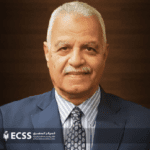
Gen. Mohamed Eldewery
Last updated: 2022/10/08 at 4:20 PM
Gen. Mohamed Eldewery
Share
8 Min Read
SHARE

The two-state solution will always stand as the only possible solution to the Israeli-Palestinian conflict, regardless of the obstacles in its way. This solution is the key to achieving stability in the region and would end a long history of conflict that lasted for more than seven decades.

Other solutions that are being put forward -including the one-state solution- remain a grand illusion, or say, these solutions would be a major historical mistake that would erase the Palestinian identity and make Palestinians only a minority living in the shadow of a Jewish state

Seasoned Israeli politicians who stand away from the commitments and one-upmanship of the extremist religious parties, realize that the Palestinian state will be ultimately established, no matter how long this takes. Yet, they are trying by every means to postpone this for electoral reasons or to have the time to lay the foundations that restrict the capabilities of the Palestinian state, particularly in the security and the military field so that it poses no threat to Israeli security. Moreover, Israeli politicians are aware that the Palestinian people will not accept to remain under the yoke of occupation indefinitely, that their resistance will continue by all legitimate and illegitimate means, and that the spiral of violence will not end. Also, it is no secret to them that there is a consensus among the entire international community, including the current US administration, on supporting the two-state solution.

Here, we must take a closer look at the Israeli Prime Minister Yair Lapid’s address to the 77th session of the United Nations General Assembly on 22 September. In his speech, Lapid declared his support for the two-state solution, stressing that Israel is powerful enough to seek peace with the Palestinians, based on two states for two peoples, being “the right thing for Israel’s security, for Israel’s economy and for the future of our children”, provided that the future Palestinian state will be peaceful and will not become another terror base that threatens the well-being and the very existence of Israel.

In my view, Lapid’s position represents an important variable at the present time and may change the course of the Palestinian cause if it is well taken advantage of, especially since it is certain that Lapid announced his position out of conviction that the continuation of the conflict would not be in Israel’s interest. He also realizes that the normalization agreements, no matter how diversified they are, will not ensure Israel’s security and regional integration, particularly with the escalation of tension in the West Bank, which could rise to a third uprising that could blow up in the face of Israel.

Taking up this position, Lapid is aware that he is risking his political future in the face of Netanyahu, who opinion polls suggest has a greater chance to form the next government. As far as I judge, Lapid’s position will give rise to changes in the Israeli internal arena before the Elections for the 25th Knesset scheduled a few weeks later, which will create considerable momentum among parties and alliances. I believe Lapid wagered that most of the Israeli people would support his views.

In order not to be too far away from reality and its complexities, we must admit that the two-state solution is shrouded in many difficulties, whether related to the scope and location of the settlements or the Israeli security requirements. Here, I would like to point out that significant progress has been made in addressing security issues during the negotiations between the Israeli and Palestinians before 2014, with the United States’ participation. As such, when resuming negotiations, there is no need to reinvent the wheel. Rather, negotiators should build on all the previous documented proposals.

Certainly, the Palestinian side is ready to reassure all its neighbors, not only Israel, that the prospective Palestinian state will not pose any threat to any state. There is a preliminary consensus on the security measures that reassure all countries, provided that these do not affect the sovereignty of the new state. The Palestinian people who waited for the realization of the state’s dream for years will be keener on ensuring its stability.

It is necessary to take Lapid’s address very seriously and not to perceive it as being a maneuver, even if it was. We should capitalize on this position as a starting point to change the current Palestinian reality, particularly with Biden taking steps to support this position.

In his address to the UN General Assembly on 23 September, Palestinian President Abu Mazen has welcomed Lapid’s position, calling on translating it into negotiations between the two sides based on international resolutions. If we are going to move forward with the two-state solution, there is a two-pronged responsibility on the Palestinian side: 1) the preparation for the negotiations in case of its resumption, in coordination with Egypt and Jordan, and 2) the immediate move towards achieving reconciliation, which is still missed and without it, the two-state solution remains pending until further notice.

In view of the above, I put forward the following four suggestions:

  1. Demonstrating considerable support for Lapid’s position, given its consistency with the visions put forward for solving the Palestinian cause.
  2. Articulating an Arab comprehensive and realistic vision to set the required and acceptable mechanisms for implementing the two-state solution, while continuing to back President Abu Mazen’s position.
  3. Launching negotiations directly after Lapid forms the government without deferring this step until the beginning of 2023.
  4. In the event of Netanyahu’s success, the momentum gained should be built on to force Netanyahu to enter into negotiations, a battle that we must fight towards imposing the peace we hope for.

This op-ed was originally published in Al-Ahram newspaper on 28 September 2022.

Related Posts

Scenarios for shaping international and regional influence in the Middle East after the war

A historic role: Egypt and the Palestinian cause since 1948

Egypt as a balancing power: Why Cairo rejects the logic of wars in the Middle East

Reshaping the US position toward Israel: From the erosion of the old consensus to a new conflict across parties, state, and society

TAGGED: Featured, Israel, Palestine, the Two-states solution
Gen. Mohamed Eldewery October 8, 2022
Share this Article
Facebook Twitter Whatsapp Whatsapp LinkedIn Telegram Email Copy Link Print
Gen. Mohamed Eldewery
By Gen. Mohamed Eldewery
Deputy Manager

Stay Connected

Facebook Like
Twitter Follow
Instagram Follow
Youtube Subscribe

Latest Articles

Overview: Egyptian Policies at Home and Abroad
Opinions Articles October 19, 2020
Lessons from the Gaza War (2)
Opinions Articles July 25, 2021
A Noteworthy Palestinian-Israeli Peace Proposal (1)
Opinions Articles September 23, 2024
Analysis| The Eighth front: Israel strategies for countering erosion of its narrative in western public opinion
Palestinian & Israeli Studies Readings February 9, 2026

Latest Tweets

//

The Egyptian Center for Strategic Studies is an independent non-profit think tank providing decision-makers by Policy alternatives, the center was established in 2018 and comprises a group of experts and researchers from different generations and scientific disciplines.

International Relations

  • African Studies
  • American Studies
  • Arab & Regional Studies
  • Asian Studies
  • European Studies
  • Palestinian & Israeli Studies

Defence & Security

  • Armament
  • Cyber Security
  • Extremism
  • Terrorism & Armed Conflict

Public Policies

  • Development & Society
  • Economic & Energy Studies
  • Egypt & World Stats
  • Media Studies
  • Public Opinion
  • Women & Family Studies

Who we are

The Egyptian Center for Strategic Studies (ECSS) is an independent Egyptian think tank established in 2018. The Center adopts a national, scientific perspective in examining strategic issues and challenges at the local, regional, and international levels, particularly those related to Egypt’s national security and core national interests.

The Center’s output is geared toward addressing national priorities, offering anticipatory visions for policy and decision alternatives, and enhancing awareness of various transformations through diverse forms of scientific production and research activities.

All Rights Reserved to Egyptian Center for Strategic Studies - ECSS © 2023

Removed from reading list

Undo
Welcome Back!

Sign in to your account

Lost your password?