






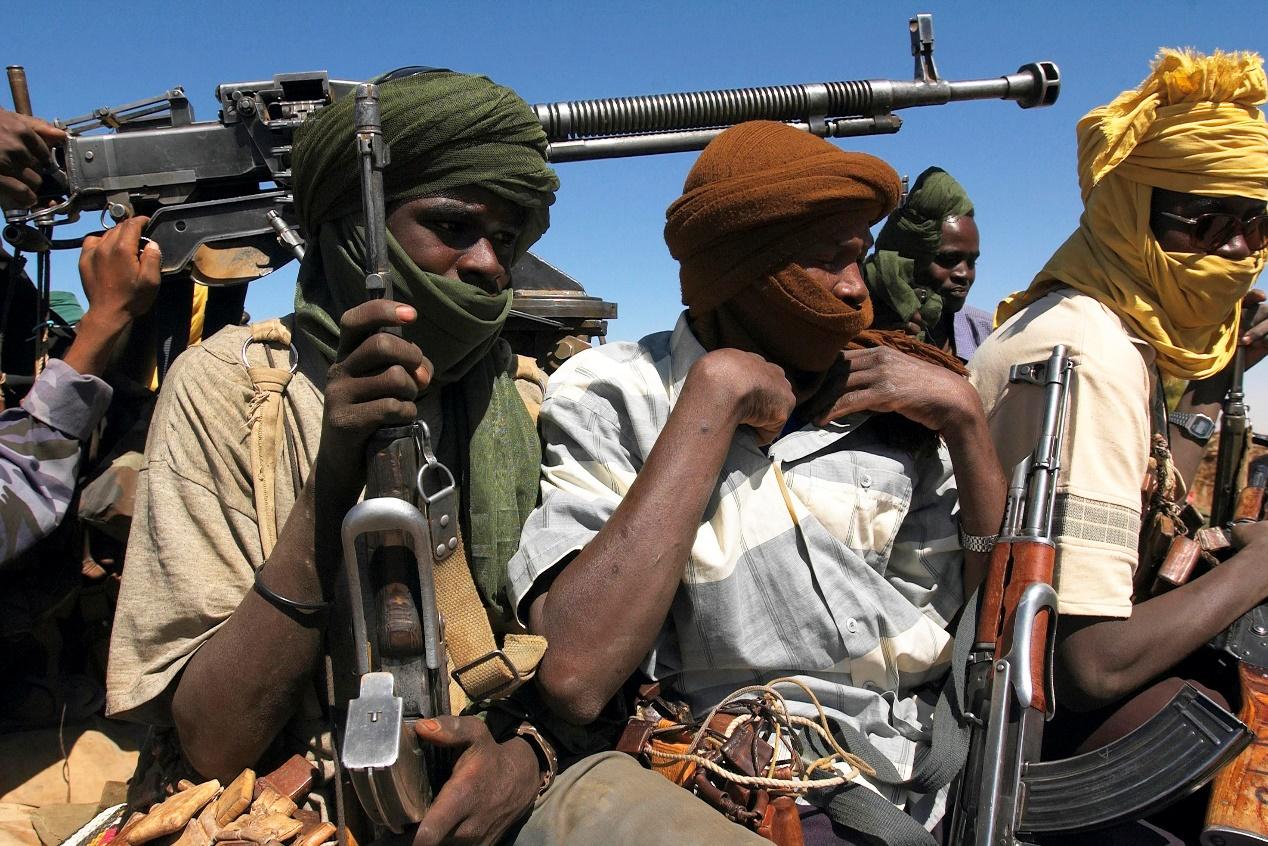
The Sudanese Armed Forces (SAF) and the Rapid Support Forces (RSF) have been at war for seven months now, but the decisive moments still seem far off. The military engagements have spread across five states: Al-Jazirah, Khartoum, Kordofan, South Darfur State, and West Darfur State. The RSF, however, appears to have opened multiple battlefronts in an attempt to broaden the scope of the conflict, deplete the SAF, and distribute its efforts along multiple fronts. This prevents the concentration and assembly of forces and the resolution of the conflict in Khartoum, which is thought to be the primary focus of the ongoing battles during this stage.
This paper provides an analysis of the current state of the conflict map, the prevailing battlefield conditions, the resulting consequences, and the factors that contribute to military indecisiveness.
Changing Confrontation Map
Omdurman, Khartoum, and Khartoum Bahri are experiencing an escalation in military engagements, where airstrikes, artillery barrages, and intense battles transpired between the warring sides. Alongside military aircraft and light and heavy weapons, the SAF’s drones destroyed RSF bases in the vicinity of Al-Ailfoun and Jabal Awliya, both of which are located south of Khartoum. Military operations persist in the capital, Khartoum, where hostilities between the opposing sides have escalated in several regions following the drone bombardment of RSF positions in the Eastern Nile State and the Jabra neighborhood, which is adjacent to the Armored Corps unit in southern Khartoum and has been one of the most populated areas by RSF members since its inception, along with Riyadh, Berri, Al Mansheiya, and Al-Taifi east of the capital.
The RSF sites in Sports City and the campgrounds in the city of Soba, east of Khartoum, were the targets of the Sudanese Air Force’s frequent sorties. The air force also detonated bombs on RSF bases located in the Khartoum Central Market and Arkaweet neighborhoods. Heavy weapon-driven violent clashes are taking place, paralleling analogous conflicts in distinct regions. Additionally, in south and west Omdurman, the SAF targeted RSF sites and concentrations, focusing on the northern regions of the Al-Thawra suburb.
The RSF executed a concurrent assault on locations situated to the north of Khartoum Bahri, specifically targeting an army military equipment depot near Wadi Seidna Air Base. Additionally, they discharged several shells at the headquarters of the Corps of Engineers. In response, the SAF employed artillery shelling on sites in the Al-Murabbaat neighborhood region, situated to the south of Omdurman, an area that is utilized by the RSF to launch attacks against the Corps of Engineers from within residential neighborhoods.
Following its failure to alter the situation on the ground and suffering heavy losses in equipment and personnel, the RSF withdrew to Al-Jazirah State, which shares an eastern border with Khartoum, and the northwestern regions of the state, specifically the Al-Maseed and Al-Thawra areas. However, substantial military reinforcements from the SAF were promptly dispatched to those areas, and any RSF concentrations in the Gezira Scheme were eliminated. Additionally, border patrols were conducted by the SAF between the states of Khartoum and Al-Jazirah.
Battles continued in the state capital of Nyala, located in the western region of the country, where the RSF is attempting to regain control in order to gain leverage that will allow it to obtain a strong pressure card that will allow it to gain some ground in the subsequent rounds of negotiations, particularly in light of its failure to seize control of Khartoum or make strategic advances in the newly conquered territories.
In North Kordofan State, the RSF launched separate attacks on El-Obeid three months ago with the goal of besieging the city’s capital, but all of their attempts failed as the SAF confronted those attempts, and the RSF suffered heavy losses. In the city of Dilling, South Kordofan state, violent clashes and confrontations also broke out between the SAF and the Sudan People’s Liberation Movement-North, led by Aziz Al-Hilu, as the SPLM-N attempted to expand its sphere of influence in the midst of the current unstable security situation. This marked the SPLM-North’s second assault on this city in the past three months; however, its forces were severely defeated both times.
In the meantime, a cycle of civil unrest broke out in Central Darfur state as a result of recurrent fighting between the Beni Halba and Salamat tribes in the Wastani area of Mukjar locality. Dozens of members of both tribes lost their lives in these conflicts, with the Native Administration failing to resolve the conflict. The Native Administration hopes to hold a reconciliation conference between the two parties at the end of October.
Implications and Outcomes
After seven months of fighting, the RSF has lost control of key strategic locations, but it is still trying to establish military dominance in major cities like El-Obeid, which serves as a key link between Khartoum and the rest of the states in western Sudan. The RSF further utilized the states of the Darfur regions as critical corridors for logistical support throughout the war. They engaged in significant battles with the SAF in order to gain access to key cities, but were unable to achieve a resolution due to the intricate military and tribal dynamics that encompassed the numerous theaters of operation.
Multiple stakeholders persistently strive to achieve a successful resolution. Political and civil forces, for instance, have proposed an initiative based on the necessity of forming an umbrella mechanism that includes regional partners like the League of Arab States, the African Union, the Intergovernmental Authority on Development (IGAD), and the United Nations to exert more efforts to bring an end to the war and prevent any external interference and complication of the current crisis. It is worth noting that these proposals have been supported by a number of active Sudanese political forces, including the Sudan’s Pro-Democracy Bloc, the National Movement Forces, the National Accord Forces, the Sudan Revolutionary Front, as well as the Native Administration, civil society, women, and revolutionary youth forces.
In conclusion, the complex aftereffects of the military conflict in Sudan and, after roughly seven months of fighting between the SAF and the RSF, the military operations between them have not ended the fighting that has been ongoing since last April. This raises valid questions about how long the war in Sudan is expected to last and the nature of the non-military solutions proposed to end the conflict in the coming months.