
By using ECSS site, you agree to the Privacy Policy and Terms of Use.
Accept
ECSS - Egyptian Center for Strategic StudiesECSS - Egyptian Center for Strategic Studies
  • Home
  • International Relations
    International Relations
    Show More
    Top News
    Why Did Israel Intensify Escalation with Iran?
    March 30, 2022
    تعدد المحاور: قراءة في تحولات السياسة الخارجية التركية
    Reading into Turkey’s Foreign Policy Shifts
    August 23, 2022
    Egypt, Libya, and Greece in the New Mediterranean
    May 30, 2021
    Latest News
    Reshaping the US position toward Israel: From the erosion of the old consensus to a new conflict across parties, state, and society
    April 23, 2026
    Israel’s African gambit
    March 6, 2026
    Geopolitical realism: What does Washington’s return to the African Sahel mean?
    March 5, 2026
    Analysis | Manufacturing opposition: How Israel uses digital platforms to shape Iranian public opinion
    February 14, 2026
  • Defense & Security
    Defense & Security
    Show More
    Top News
    Messages of military drills: Is the region on the brink of a new war?
    April 5, 2021
    Europe amid US–Iran Escalation: Can It Play the Diplomat or Become Entangled in the Crisis?
    April 13, 2025
    The Future of Relations between Al-Qaeda, Taliban and Islamic State After Al-Zawahiri’s Death
    August 27, 2022
    Latest News
    Between two camps: Reading into ISIS discourse on the US-Israeli war on Iran
    April 15, 2026
    Encrypted messages “Roaring Lion”: The hidden messages behind the name of the operation against Iran
    March 11, 2026
    Iran war developments
    March 9, 2026
    Manufacturing the enemy : Reframing terrorism in contemporary Western discourse
    March 7, 2026
  • Public Policy
    Public Policy
    Show More
    Top News
    Imminent Challenges: Hunger and Global Food Security Disruption
    March 14, 2023
    Egypt: A Strategic Gateway for Trade and Investment in Africa
    June 26, 2024
    Why Does Egypt Expand in the Establishment of International Schools?
    October 24, 2020
    Latest News
    Egypt as a balancing power: Why Cairo rejects the logic of wars in the Middle East
    April 30, 2026
    Militarizing water in Middle East wars A strategic analysis of the Iran-US-Israel war
    April 18, 2026
    Reading into attacks on maritime navigation in the Arabian Gulf
    March 17, 2026
    Emerging economies in a world without rules: Between opportunity and predicament
    March 5, 2026
  • Analysis
    • Opinion
    • Analysis
    • Situation Assessment
    • Readings
  • Activities
    • Conferences
    • ECSS Agenda
    • Panel Discussion
    • Seminar
    • Workshops
  • ECSS Shop
  • العربية
  • Defense & Security
  • International Relations
  • Public Policy
All Rights Reserved to ECSS © 2022,
Reading: Just the Start
Share
Notification Show More
Latest News
Egypt as a balancing power: Why Cairo rejects the logic of wars in the Middle East
Media Studies
Reshaping the US position toward Israel: From the erosion of the old consensus to a new conflict across parties, state, and society
American Studies
Militarizing water in Middle East wars A strategic analysis of the Iran-US-Israel war
Economic & Energy Studies
The future of US-Iran negotiations
Opinion
Between two camps: Reading into ISIS discourse on the US-Israeli war on Iran
Terrorism & Armed Conflict
Aa
ECSS - Egyptian Center for Strategic StudiesECSS - Egyptian Center for Strategic Studies
Aa
  • اللغة العربية
  • International Relations
  • Defense & Security
  • Special Edition
  • Public Policy
  • Analysis
  • Activities & Events
  • Home
  • اللغة العربية
  • Categories
    • International Relations
    • Defense & Security
    • Public Policy
    • Analysis
    • Special Edition
    • Activities & Events
    • Opinions Articles
  • Bookmarks
Follow US
  • Advertise
All Rights Reserved to ECSS © 2022, Powered by EgyptYo Business Services.
Opinion

Just the Start

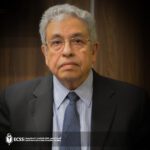
Dr. Abdel Moneim Said
Last updated: 2023/12/03 at 6:59 PM
Dr. Abdel Moneim Said
Share
8 Min Read
SHARE

It is impossible to predict what the situation will be like by the time this article reaches readers.

What I know now, as I write this, is that on Friday, 24 November, at 7:00am, the first truce in the fifth Gaza war went into effect. It provides for only a four day pause in hostilities though it gives Israel the right to use its air force in northern Gaza apart from only six hours when the roar of warplanes falls silent.  

Relief workers and agencies will be racing against the clock to deliver hundreds of trucks’ worth of food, medicine, fuel, and other basic needs and to transport the wounded and ailing from Gaza to hospitals outside the Strip through the Egyptian crossing at Rafah.

Under the agreement, Hamas and its allies will release 50 hostages over the four days in exchange for 3,000 Palestinian prisoners.

The priority will be given to women and children. The agreement opens a window for an extension, if only for a few days, if Hamas releases more hostages.

Israel has said that it would extend the truce for one day for every ten hostages released. However, there are no guarantees here. Various unignorable factors propel the situation towards a resumption of fighting at an even fiercer pace than we have seen so far.

 The Israeli government agreed to the humanitarian pause very grudgingly. It had to resist the objections of extremist religious parties that make up that government and it openly acknowledged that it had yielded to outside pressures, especially from the US. It said that it would use the time to prepare for the next round.

Hamas wanted a longer truce to be better prepared for the next round in which it will try to take advantage of urban guerrilla tactics in the towns and cities Israeli forces have entered.

It will be very difficult for heavy Israeli armoured vehicles to negotiate the narrow streets which are obstructed by the rubble of the bombed residential structures. They will be easy targets for antitank weapons. For both sides, then, the brief pause is an opportunity to ready themselves for more fighting. Meanwhile, while the international community welcomes the truce, it has not included two fronts: the one with Hizbullah to the north of Israel and the one with the Houthis in the southern Red Sea.

Whatever took place behind the scenes in the past few days, undoubtedly fervent efforts were made to prolong the truce or negotiate a new one after it ends. There were several truces during the first Arab-Israeli War in 1948 until finally the last one held, and the war ended. If both sides in the current war are determined to keep fighting, the political and diplomatic realities have changed considerably from how they stood at the outset of the war. In the six weeks since 7 October, there were four main developments.

First, sympathy for the Palestinian cause has gained great momentum and is seen as the key to achieving stability in the Middle East. This reflects an unprecedented quantum shift in international public opinion and among the international community, a shift that took place both inside and outside the Western world.

Second, the fighting on the ground has not given Israel the decisive result it sought. It did not free the hostages and it did not destroy Hamas. As in all cases of asymmetric warfare, the type of battle deprives the strongest side of victory and hands the weakest side victory by dint of not being defeated. We saw this in Vietnam, Afghanistan, Algeria and even in the American revolution against British colonial rule.

Third, many mechanisms are now in place to build negotiating bridges not just to promote new truces, but also to resolve the Palestinian-Israeli conflict based on the two-state solution, which all permanent members of the Security Council agree on, including the US. Equally important is the gap between the US and Israel over the two-state solution and, more immediately, over how to deal with Gaza after the cessation of hostilities.

Israel has insisted that it would remain in the Strip indefinitely and possibly rebuild its settlements there. Washington has made it clear that the Palestinians should run Gaza, most likely through the PLO and the Palestinian Authority (PA), with Arab and international support.

Fourth, Arab countries have been far from idle during this fifth Gaza war. As the combat intensified, resulting in more and more casualties, Egypt hosted a peace conference that resulted in a joint statement by the nine participants (the six Gulf Cooperation Council countries, Egypt, Jordan, and Morocco), strongly condemning the targeting of civilians by both sides and calling for the rehabilitation of the PLO and PA as the sole legitimate representative of the Palestinian people.

This led to the extraordinary Arab-Islamic summit in Riyadh, which adopted the statement from the summit in Cairo and added mechanisms to bring the matter to the UN Security Council and to bring Israel’s violations of international humanitarian law to the International Criminal Court.

The common theme in all these actions was the need to deal with the consequences of the current hostilities and to mobilise action to avert a repetition of this tragedy through a genuine peace process that sets a course towards the establishment of an independent Palestinian state.  

The Arab actions from the Cairo to the Riyadh summits display a proactive approach in which the Arabs strive to take the Palestinian question into their own hands in the framework of a system of regional security.

This would entail a solution to the Palestinian question through the creation of an independent state and a solution to the Israeli question through genuine peace, enabling Israel to integrate into the region, shed its religious and racist extremism and belligerency, and join others in the spirit of regional cooperation, development and shared hopes for peace and prosperity.  

This article first appeared on Ahram Online on November 28 and a version of it appears in print in the November 30, 2023 edition of Al-Ahram Weekly.

Related Posts

Egypt as a balancing power: Why Cairo rejects the logic of wars in the Middle East

The future of US-Iran negotiations

Encrypted messages “Roaring Lion”: The hidden messages behind the name of the operation against Iran

Analysis | Manufacturing opposition: How Israel uses digital platforms to shape Iranian public opinion

TAGGED: Gaza, war
Dr. Abdel Moneim Said November 29, 2023
Share this Article
Facebook Twitter Whatsapp Whatsapp LinkedIn Telegram Email Copy Link Print
Dr. Abdel Moneim Said
By Dr. Abdel Moneim Said
Chair of the Advisory Board

Stay Connected

Facebook Like
Twitter Follow
Instagram Follow
Youtube Subscribe

Latest Articles

TICAD 8: A Significant Milestone in Japan-Africa Partnership
International Relations September 29, 2022
Limits of Wagering: Cairo Hosts Talks on Libya’s Constitutional Path
International Relations April 25, 2022
Trump Faces the Israeli Right Wing
Opinion February 9, 2025
Redefining Dynamics: What the Japanese Foreign Minister’s Visit to China Signifies
Asian Studies January 11, 2025

Latest Tweets

//

The Egyptian Center for Strategic Studies is an independent non-profit think tank providing decision-makers by Policy alternatives, the center was established in 2018 and comprises a group of experts and researchers from different generations and scientific disciplines.

International Relations

  • African Studies
  • American Studies
  • Arab & Regional Studies
  • Asian Studies
  • European Studies
  • Palestinian & Israeli Studies

Defence & Security

  • Armament
  • Cyber Security
  • Extremism
  • Terrorism & Armed Conflict

Public Policies

  • Development & Society
  • Economic & Energy Studies
  • Egypt & World Stats
  • Media Studies
  • Public Opinion
  • Women & Family Studies

Who we are

The Egyptian Center for Strategic Studies (ECSS) is an independent Egyptian think tank established in 2018. The Center adopts a national, scientific perspective in examining strategic issues and challenges at the local, regional, and international levels, particularly those related to Egypt’s national security and core national interests.

The Center’s output is geared toward addressing national priorities, offering anticipatory visions for policy and decision alternatives, and enhancing awareness of various transformations through diverse forms of scientific production and research activities.

All Rights Reserved to Egyptian Center for Strategic Studies - ECSS © 2023

Removed from reading list

Undo
Welcome Back!

Sign in to your account

Lost your password?