




By using ECSS site, you agree to the Privacy Policy and Terms of Use.
Accept
ECSS - Egyptian Center for Strategic StudiesECSS - Egyptian Center for Strategic Studies
  • Home
  • International Relations
    International Relations
    Show More
    Top News
    Intertwining factors: The Significance of the MoU between the Syrian Democratic Council and the People’s Will Party
    September 18, 2020
    Pre-emptive fallacies Refuting Ethiopia’s claims on the second filling of GERD
    April 26, 2021
    the New Republic: Egypt’s Role in Africa
    October 20, 2021
    Latest News
    A historic role: Egypt and the Palestinian cause since 1948
    May 23, 2026
    Employing maritime corridors in conflicts: Lessons learned
    May 20, 2026
    Israel’s security and economic conundrum:How does Israel confront the challenges of a protracted war with Iran?
    May 2, 2026
    Reshaping the US position toward Israel: From the erosion of the old consensus to a new conflict across parties, state, and society
    April 23, 2026
  • Defense & Security
    Defense & Security
    Show More
    Top News
    Turkey and the Muslim Brotherhood: A temporary refuge and alternative Havens
    October 1, 2020
    Clashes in Tripoli: Do Rapid Developments in Libya Clash with the Road Map?
    August 22, 2023
    Assessing Deterrent Measures and the Prospects of War: US Military Movement in the Gulf to Confront Iran
    June 22, 2020
    Latest News
    Between two camps: Reading into ISIS discourse on the US-Israeli war on Iran
    April 15, 2026
    Encrypted messages “Roaring Lion”: The hidden messages behind the name of the operation against Iran
    March 11, 2026
    Iran war developments
    March 9, 2026
    Manufacturing the enemy : Reframing terrorism in contemporary Western discourse
    March 7, 2026
  • Public Policy
    Public Policy
    Show More
    Top News
    Favorable circumstances: Investing in Egyptian banks
    May 11, 2021
    Real Estate Transaction Tax: Addressing Challenges of Egypt’s Real Estate Sector
    March 24, 2022
    Investment in Egypt amid Covid-19
    July 25, 2021
    Latest News
    US trade policy in 2026: International moves and strategic implications
    May 25, 2026
    Analysis| Egypt economic path and IMF negotiations amid escalating regional energy crisis
    May 11, 2026
    From global shock to Egypt’s economy: Analyzing the impact of the Iran war on energy security
    May 3, 2026
    Egypt as a balancing power: Why Cairo rejects the logic of wars in the Middle East
    April 30, 2026
  • Analysis
    • Opinion
    • Analysis
    • Situation Assessment
    • Readings
  • Activities
    • Conferences
    • ECSS Agenda
    • Panel Discussion
    • Seminar
    • Workshops
  • ECSS Shop
  • العربية
  • Defense & Security
  • International Relations
  • Public Policy
All Rights Reserved to ECSS © 2022,
Reading: Egypt’s Continued Involvement with Gaza Developments
Share
Notification Show More
Latest News
US trade policy in 2026: International moves and strategic implications
Economic & Energy Studies
Scenarios for shaping international and regional influence in the Middle East after the war
Opinions Articles
A historic role: Egypt and the Palestinian cause since 1948
Palestinian & Israeli Studies
Employing maritime corridors in conflicts: Lessons learned
Arab & Regional Studies
Analysis| Egypt economic path and IMF negotiations amid escalating regional energy crisis
Economic & Energy Studies
Aa
ECSS - Egyptian Center for Strategic StudiesECSS - Egyptian Center for Strategic Studies
Aa
  • اللغة العربية
  • International Relations
  • Defense & Security
  • Special Edition
  • Public Policy
  • Analysis
  • Activities & Events
  • Home
  • اللغة العربية
  • Categories
    • International Relations
    • Defense & Security
    • Public Policy
    • Analysis
    • Special Edition
    • Activities & Events
    • Opinions Articles
  • Bookmarks
Follow US
  • Advertise
All Rights Reserved to ECSS © 2022, Powered by EgyptYo Business Services.
Opinions Articles

Egypt’s Continued Involvement with Gaza Developments

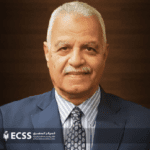
Gen. Mohamed Eldewery
Last updated: 2024/01/09 at 7:22 PM
Gen. Mohamed Eldewery
Share
8 Min Read
SHARE

Egypt’s involvement in the current situation in the Gaza Strip is based on a rich historical legacy and a clear understanding of the present reality, interpreting events objectively and responding to them to the extent that it advances the interests of the Palestinian people. This is the framework that has shaped Egyptian political leadership’s attitude towards the Palestinian cause over the past several decades and will continue to do so in the future.

The Egyptian action since the start of Israeli military operations in Gaza on 7 October 2023, following the Al-Aqsa Flood and Iron Swords operations has been marked by an unwavering adherence to Egyptian principles and determinants that remain unchanged. These principles include the firm rejection of any attempts to liquidate the Palestinian cause, refusal of the displacement of Palestinians from their territories, especially to Sinai, and opposition to Israel’s policy of collective punishment, deliberate murders, and destruction of defenseless civilians that Tel Aviv has been pursuing over the past three months without facing any form of deterrence. 

Since the first day of Israeli operations, Egypt has moved, aware that it is moving through a minefield and that this war is unlike any of the six that the Gaza Strip has seen since 2008. Notwithstanding the unparalleled challenges, Egypt has prioritised the establishment of a humanitarian truce or ceasefire. This course of action is regarded as a tactical objective that facilitates the attainment of several favorable developments, the most critical of which are the augmentation of humanitarian assistance and the finalization of a prisoner-hostage exchange agreement. By doing so, Egypt can enable the subsequent phase to shift its focus towards the strategic aim of rejuvenating the peace process.

Egypt demonstrated accountability in this regard when it presented proposals comprising multiple consecutive phases aimed at transforming the current situation in Gaza from one of war accompanied by its tragic consequences to one of tranquility, even temporary. It is imperative to highlight a critical aspect that is ardently regarded as being in the best interest of Egypt: Egypt is the only country in the world that has diligently developed a comprehensive plan to extricate the Gaza Strip from its current predicament and we shouldn’t forget that President Al-Sisi articulated a series of fundamental principles for resolving the Gaza crisis during the Cairo Peace Summit on 21 October 2023.

The significance of the Egyptian proposals that were recently advanced extends beyond the stages and requirements they encompass. In my opinion, their paramount value lies in Egypt’s determination to avoid becoming a mere observer state. Therefore, it chose to navigate through the fire and actively participate in the political struggle to safeguard its national security, which it will not tolerate being compromised. Such a course of action is crucial in order to secure solutions, considering that the losses suffered by the Gaza Strip have far exceeded those endured by the cause since 1948.

The Egyptian proposals, on the other hand, cannot be seen as inviolable or unchangeable, but one thing is certain: they can serve as a foundation for negotiations among all involved parties. As such, it is not reasonable or expected that the response to them will be either total acceptance or total rejection. They must be viewed by all as a glimmer of hope in an otherwise very dark tunnel and parties could utilize them to initiate a new phase that may alter the trajectory of the ongoing conflict, whose exact end is unknown.

Alongside these proposals, Egypt was eager to hold talks with all relevant parties, including the Islamic Jihad and Hamas movements, in order to come to agreements that could serve as a foundation for future negotiations. The ultimate goal was to achieve the necessary pacification and foster a gradual improvement in the prevailing circumstances in Gaza, with particular emphasis on mitigating the humanitarian catastrophe that is killing off Gaza’s population. 

Although Egypt has taken a commendable step towards developing a shared vision for pacification, this action is marred by two significant complications. First, the US stances do little to alleviate the situation in Gaza. Second, Israel has taken a number of extreme positions, such as refusing to let the displaced return to northern Gaza and even planning to occupy the borderline between the Gaza Strip and Egypt, also known as the Philadelphia axis. This adds another layer of complexity to the situation and suggests that Israeli intentions would hinder any attempts at a resolution.

Israeli stances like these must be seriously considered because Tel Aviv is gearing up for the third phase of its ground operation, which will primarily take place in the southern part of the Gaza Strip. During this phase, Israel will modify its military strategies from its operations in the north and center, reducing the frequency of ground incursions and increasing the precision of its bombing, destruction, and targeting operations. Its goal is to minimize casualties among civilians, thus avoiding further regional and international condemnation and partially giving in to US demands.

Despite the numerous challenges posed by the current situation in Gaza, which is growing more intricate, Egypt will persist in its efforts and maintain a strong commitment to engage with all involved parties until it achieves the desired state of peace, whether through its own proposal or alternative suggestions. Egypt will also maintain its willingness to collaborate with all relevant stakeholders in order to achieve a more favorable resolution that elevates the Palestinian population in the Gaza Strip from the dire circumstances that the international community helplessly observes to a humanitarian state where the Palestinians are granted minimal human rights recognition amidst a global community that recognizes only the human rights of its own communities.


Related Posts

Scenarios for shaping international and regional influence in the Middle East after the war

Gaza Crisis between Israeli and American Perspectives

The End of Globalization?

Troubled Waters in Jenin Camp

Gen. Mohamed Eldewery January 9, 2024
Share this Article
Facebook Twitter Whatsapp Whatsapp LinkedIn Telegram Email Copy Link Print
Gen. Mohamed Eldewery
By Gen. Mohamed Eldewery
Deputy Manager

Stay Connected

Facebook Like
Twitter Follow
Instagram Follow
Youtube Subscribe

Latest Articles

Washington and Tehran: Prospects of De-escalation or Confrontation
American Studies May 6, 2025
Global Energy Security: BRICS and Charting a Sustainable Path Forward
Economic & Energy Studies November 10, 2024
Ankara’s Losing Hand in Libya
International Relations October 3, 2020
The Middle East on a Hot Tin Roof
Opinions Articles August 22, 2021

Latest Tweets

//

The Egyptian Center for Strategic Studies is an independent non-profit think tank providing decision-makers by Policy alternatives, the center was established in 2018 and comprises a group of experts and researchers from different generations and scientific disciplines.

International Relations

  • African Studies
  • American Studies
  • Arab & Regional Studies
  • Asian Studies
  • European Studies
  • Palestinian & Israeli Studies

Defence & Security

  • Armament
  • Cyber Security
  • Extremism
  • Terrorism & Armed Conflict

Public Policies

  • Development & Society
  • Economic & Energy Studies
  • Egypt & World Stats
  • Media Studies
  • Public Opinion
  • Women & Family Studies

Who we are

The Egyptian Center for Strategic Studies (ECSS) is an independent Egyptian think tank established in 2018. The Center adopts a national, scientific perspective in examining strategic issues and challenges at the local, regional, and international levels, particularly those related to Egypt’s national security and core national interests.

The Center’s output is geared toward addressing national priorities, offering anticipatory visions for policy and decision alternatives, and enhancing awareness of various transformations through diverse forms of scientific production and research activities.

All Rights Reserved to Egyptian Center for Strategic Studies - ECSS © 2023

Removed from reading list

Undo
Welcome Back!

Sign in to your account

Lost your password?