






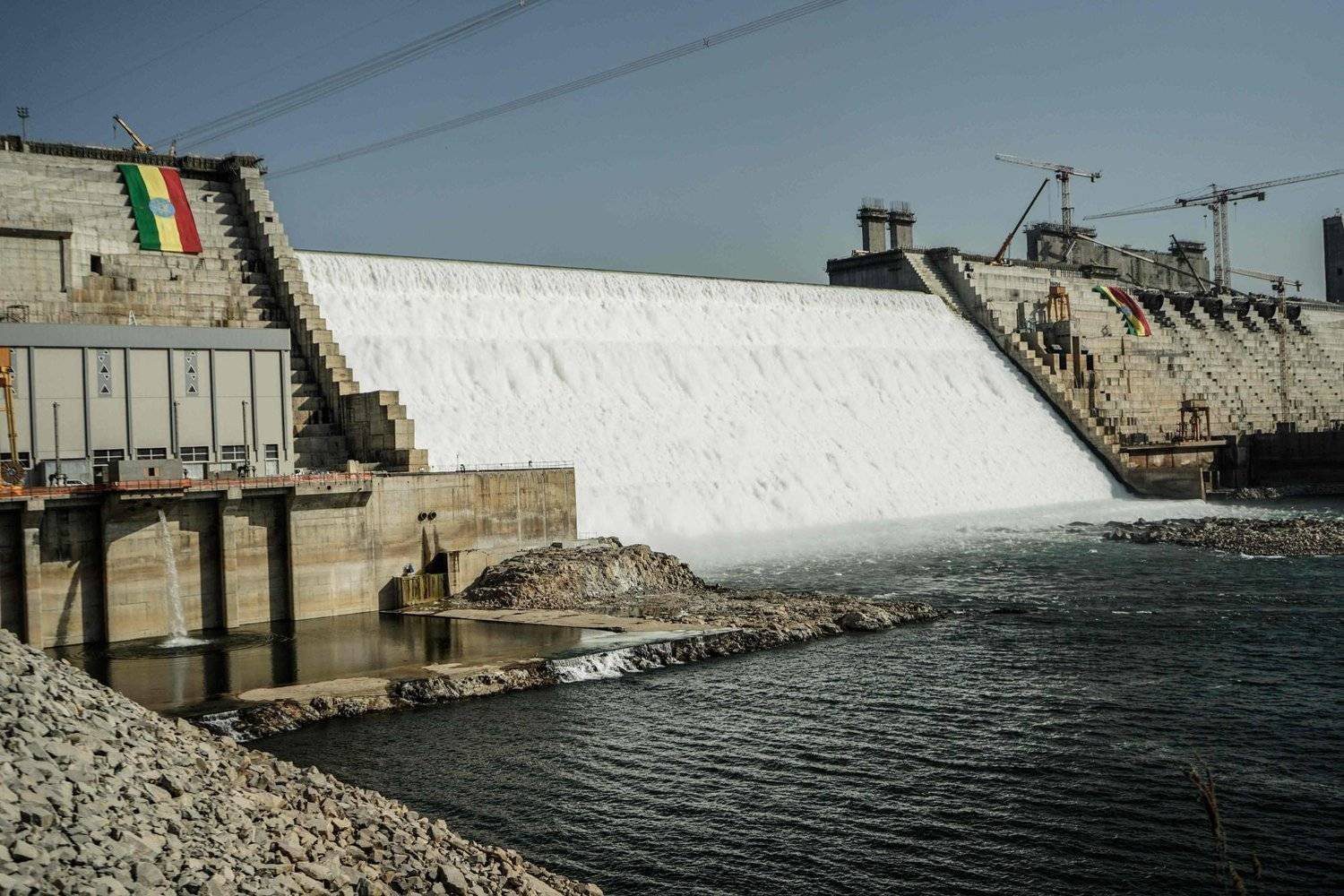
Over the past decade, water security issues in the Horn of Africa, particularly in the Nile Basin, have garnered significant attention from researchers and policymakers in the region and the West. Key developments, such as the 2010 Entebbe Agreement signed by most upstream Nile countries and the construction of the Grand Ethiopian Renaissance Dam (GERD) in 2011, have led these circles to consider the potential impacts of these developments on regional power dynamics and security. Following the March 2015 signing of the Declaration of Principles on the GERD Project, the resumed GERD negotiations were marked by vigorous Egyptian diplomacy, aiming to secure a binding legal agreement on the dam’s filling and operation. This priority was consistently highlighted in talks between Egypt’s political leaders, Foreign Ministry officials, and officials from the region and beyond.
Following the collapse of US-brokered negotiations, Egypt took its concerns to the UN Security Council in June 2020, framing the issue as a threat to regional peace and security. Concurrently, mediation by the African Union persisted. Following the second unilateral filling of the dam by Ethiopia, Egypt brought the matter back to the Security Council, which in September 2021 released a statement calling for the three countries to engage in negotiations to expeditiously finalize the text of mutually acceptable and binding agreement on the filling and operation of the GERD within a reasonable time frame.
On the Western front, the previous US administration under Trump showed keen interest in resolving this issue. After several rounds of negotiations, a preliminary agreement was reached, which Egypt initialed in February 2020. However, Ethiopia refused to sign, citing the need for more consultation time, while Sudan chose not to sign. The United States applied symbolic pressure by suspending a small portion of aid to Ethiopia, which the Ethiopian government used to claim it was being coerced into signing. On the other hand, the European Union emphasized technical collaboration on water issues, a stance rooted in its controversial 2017 adoption of the Programme for Transboundary Water Management in the Nile River basin to support the Nile Basin Initiative financially and technically and to work with Egypt, which had already suspended its membership in the initiative since 2010 over the unilateral signing of the Entebbe Agreement by most upstream countries. However, the stalled negotiations over the GERD and Ethiopia’s unilateral actions to fill the dam without agreement with the two downstream countries spurred the EU to issue a statement in July 2021, expressing regret over the second unilateral filling. The EU also proposed playing a more active role in the negotiations beyond mere observation. The statement highlighted that a mutual agreement could pave the way for foreign investments aimed at bolstering water, food, and energy security in the region. This sentiment was echoed in a joint press statement by the Egyptian Foreign Ministry and the EU Foreign Policy Chief at the conclusion of the ninth Egyptian-European Council meeting in Luxembourg in June 2022.
And despite the failure of the recent negotiation rounds in late 2023 and Ethiopia’s continued unilateral filling of the dam, international attention to the GERD and regional water issues has waned over the past two years. The Biden administration has taken a more hesitant stance on directly mediating the dam negotiations, focusing instead on Ethiopia’s internal conflicts, particularly the civil war in the Tigray region that erupted in November 2020. Similarly, the EU’s interest has diminished, especially after Ethiopia repeatedly rejected Sudan’s proposal, supported by Egypt and welcomed by the African Union, to expand mediation to include the United States, EU, and United Nations alongside the African Union. Sudan’s own political turmoil, marked by the October 2021 ousting of the transitional government and the ongoing war since April 2023, has also impacted its stance on the GERD.
Despite these complexities, several compelling factors underscore the need for renewed international attention to the water issues in the Horn of Africa, particularly Ethiopia’s policies on transboundary rivers. These factors can be outlined as follows:
- Ethiopia’s policy of initiating projects on transboundary river basins originating within its borders without consulting neighbouring countries or assessing the environmental and social impacts has become a recurring and widespread practice. This pattern extends beyond the Nile Basin to other rivers as well. In 2020, the Stockholm International Peace Research Institute (SIPRI), a renowned security research center, published a significant policy paper titled “Water Security and Governance in the Horn of Africa,” in which it explored Ethiopia’s actions in the Jubba and Shebelle river basins and their implications for water and food security in Somalia. According to the SIPRI paper, Ethiopia’s 2005 and 2007 plans for irrigation and hydroelectric projects in the Jubba-Shebelle basin risk utilizing almost all available water, causing severe repercussions for Somalia, where the basin is regarded as the country’s ‘breadbasket’. Further, Ethiopia has already started constructing the Genale Dawa hydroelectric power station in the early 2010s. The paper referenced a 2018 World Bank estimate, which indicates that Ethiopian dams could decrease the Shebelle River’s water flow to Somalia by 80%. As a result, Ethiopian projects might force Somalia to rely solely on rain-fed rather than irrigated agriculture.
Moreover, the report highlights that Ethiopia bypassed notifying Somalia about the construction of these dams, citing the lack of a stable government in Somalia at the time. Ironically, Ethiopia had objected to a Somali project proposed to the World Bank in the 1980s, arguing that it could establish Somali water rights without a formal agreement on river use. Despite this, Ethiopia has disregarded any regulatory framework for river exploitation over the past two decades.
This Ethiopian behavior is replicated in the Omo-Turkana River Basin. Although Ethiopia provided incentives to the Kenyan government in the form of exporting energy generated from the Gilgel Gibe series of dams, it did not notify the Kenyan side and did not conduct environmental and social impact studies. Consequently, the World Bank refused to fund these projects as they have led to reduced water levels in Lake Turkana and disrupted the lives of local communities, as documented by international organizations such as International Rivers.
- The threats to water security posed by Ethiopian projects have significant implications for human security in the region. Some investigative reports have already begun documenting the impact of the GERD on Sudan, and there is a pressing need for similar research into the effects of Ethiopian dams on the Jubba and Shebelle rivers, particularly regarding food and humanitarian security in Somalia. In an article for the Alternative Policy Solutions Programme, I highlighted the necessity of examining the social and humanitarian consequences of the water policies that the Egyptian government has had to implement in response to current water scarcity and the potential impact of the GERD.
- Water security issues intertwine with many regional conflicts in the Horn of Africa, often becoming politicized and exacerbating already strained relations or influencing the policies of certain powers. The previously mentioned SIPRI policy paper highlights that Ethiopia’s approach to Somalia has been rooted in a divide-and-rule strategy, aimed at weakening the Somali state and maintaining control over shared water resources originating in Ethiopia. Clearly, this strategy, which focuses on empowering regional governments at the expense of the federal government, still shapes Ethiopia’s policy towards Somalia, as evidenced by recent Ethiopian agreements to establish a military base in Somaliland. Another aspect of water politicization is the use or threat of using water as a bargaining chip in negotiations. A 2021 report by the International Crisis Group on the border conflict over Al-Fashaga District between Ethiopia and Sudan noted the overlap of this issue with the GERD negotiations.
- The number of influential stakeholders in the region is growing, often adding to the complexity of these conflicts. This includes the role of certain Gulf countries in supporting the Abiy Ahmed regime in its Tigray war, as well as China’s backing of Ethiopian dam projects on transboundary rivers.
- Climate change is poised to exacerbate water security issues, heightening the potential for future conflicts over water. While researchers differ on rainfall projections for the Horn of Africa and the Nile Basin, they agree on the rise in extreme weather events, such as severe droughts and floods. This explains the Egyptian negotiator’s focus on securing agreements on the GERD’s filling and operation during these critical periods.
In conclusion, the intertwined issues of water security, regional power dynamics, and climate change in the Horn of Africa, particularly regarding Ethiopia’s unilateral water projects, necessitate renewed and sustained international attention.


