








The Red Sea and Gulf of Aden region is experiencing rising tensions and growing instability due to recent Houthi attacks on naval ships. This has jeopardized international trade and maritime traffic, disrupted global supply chains along this critical sea route, and posed significant risks to the interests of riparian and other regional and international countries.
Within this context, the European Union (EU) declared the commencement of Operation Aspides–Greek for shield–in the Gulf of Aden and the Red Sea, involving five European countries, namely France, Greece, Italy, Germany, and Belgium. Operation Aspides will be commanded by Greece and overseen by Commander-in-Chief Vassilis Gryparis from his headquarters in Larissa, Greece. The roles of the mission encompass ensuring European energy security, forestalling Houthi attacks, keeping maritime shipping lines operational, and safeguarding maritime shipping lines and assets. Operation Aspides commenced on February 19 with a budget of €8 million and is planned to run for one year.
I. Turbulent Environment
The Red Sea is widely recognized by various regional and international actors as a vital strategic arena. It serves as a critical waterway for global trade, facilitating the principal trade route between Europe and Asia via the Suez Canal, which transports an estimated 12% of global trade and 40% of trade between Asia and Europe. Therefore, the disruption of trade routes in this region presents significant obstacles for the strategic interests of Europe. The Houthi attacks, involving missile strikes and drone attacks on commercial vessels in the Red Sea, had an impact on numerous ships owned and operated by European companies, including the Danish Maersk company. These attacks have led numerous commercial shipping companies to divert their routes away from this region, opting for longer and costlier but comparatively safer paths around the African continent. This has resulted in delays and increased expenses, impeding the pace of global trade.
Furthermore, the consequences of these assaults extend to the western coast of the Red Sea, touching upon Egypt, Djibouti, and Somalia. This is particularly significant considering the multitude of regional tensions that have arisen since the signing of the initial agreement between Ethiopia and the Somaliland breakaway region concerning access to the Red Sea, the resurgence of maritime piracy operations near the Somali coast, and the escalation of Al-Shabaab terrorist attacks that further strain the already precarious security situation in Somalia. This unstable security situation offers favorable conditions and potential for Al-Qaeda-affiliated terrorist organizations, particularly the Al-Shabaab movement in Somalia, to expand their sphere of influence and establish dominance over larger portions of this maritime route.
The security disruptions in the Red Sea impact regional stability due to the strong connections between Iran and the Houthi movement. The Houthis are advancing Tehran’s objectives through proxy conflicts in the region. There are concerns about Tehran’s frequent use of escalation in the Red Sea as leverage and the Houthi movement’s efforts to enhance its credibility and influence globally, as well as to engage in public pressure on Arab countries.
II. Functions of Operation Aspides and EU Involvement in the Red Sea Crisis
The EU has maintained freedom of maritime navigation as a paramount concern. Given the increasing competition for the main sea lane axes, the EU designated the northwestern Indian Ocean as a maritime region of strategic importance in 2022, encompassing a large ocean from the Strait of Hormuz to the Red Sea and into the centre of the Indian Ocean. This necessitated improving European maritime coordination using the Coordinated Maritime Presences (CMP) mechanism. The EU’s Operation Atlanta was extended until December 2024 with a revised mandate that reflects the operation’s accomplishments and difficulties since its inception in 2008. The current responsibilities include combating piracy and drug and arms trafficking, safeguarding World Food Programme shipments and other vulnerable shipping operations, and overseeing fishing activities in the Horn of Africa and the Western Indian Ocean.
Based on this, the new European operation Aspides aims to defend freedom of maritime navigation, enhance strategic deterrence against Houthi group attacks, and safeguard European vessels from such threats. The EU is slated to deploy airborne early warning ships and warships to safeguard commercial shipping vessels in the Red Sea and Gulf of Aden. This action is distinct from the US and British efforts under Operation Prosperity Guardian, which target Houthi positions in Yemen. However, European stances on participation in this endeavour diverge, following the decision of France, Italy, and Spain to abstain from direct involvement.
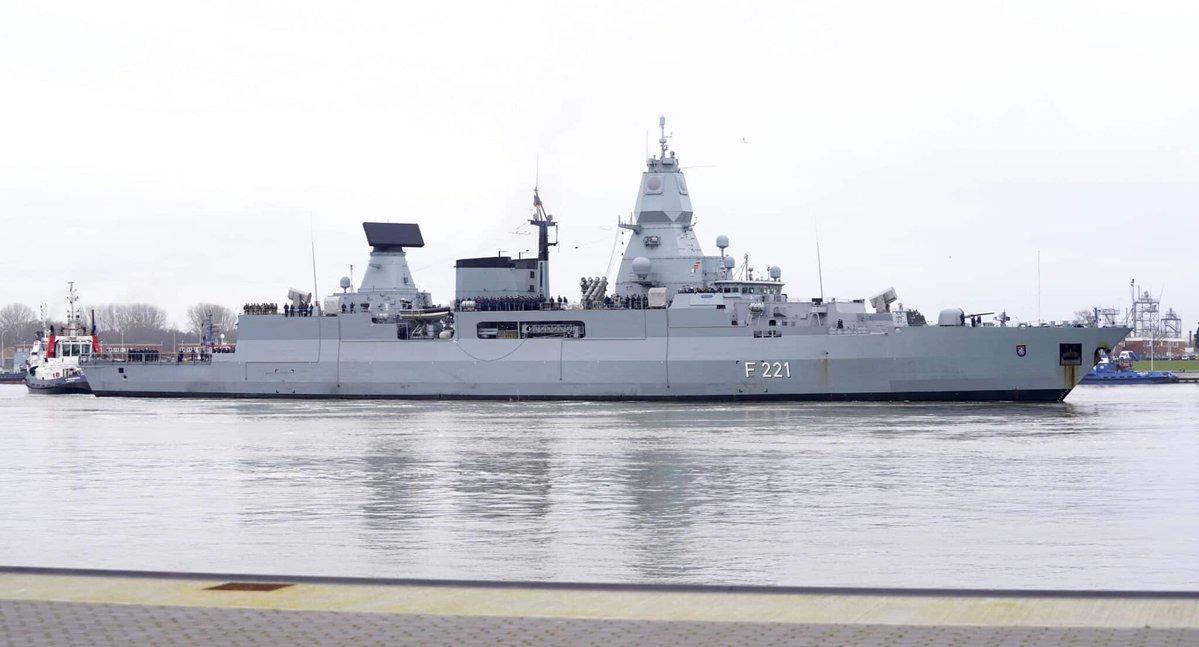
Given the notable disparity in capabilities between the Somali pirates off the Horn of Africa and the Houthis in Yemen, the new naval mission will have substantial capabilities in warships, intelligence, logistical support, early air warning, cyber protection, satellite support, and strategic communications. In terms of each country’s contribution to this operation, we find that Germany intends to send the frigate Hessen (F-221), which is designed for air defense and is equipped with radar systems capable of detecting targets at distances of up to 400 km and advanced missiles capable of shooting down targets such as ballistic missiles and unmanned aerial vehicles at ranges of more than 160 km. The German government has also approved the deployment of 700 soldiers from German armed forces to participate in the operation until February 28, 2025. Additionally, Belgium consented to the deployment of the Belgian frigate Louise-Marie (F-931). The Greek frigate HS Hydra is also expected to take part. Furthermore, the Italian government has officially declared its intention to deploy the guided-missile destroyer Caio Duilio (D554) to assist in Operation Aspides.
III. Interrelated Challenges
The rules of engagement and coordination policy may present challenges for the new naval mission, which aims to support the de-escalation policy, ensure freedom of navigation using defensive tools, and adhere to the cautious approach of the EU. This approach aims to minimize potential costs while maintaining a delicate balance between avoiding escalation and using force if the Houthis target warships of the new European mission. Participants in this mission must coordinate and communicate with other European naval missions like Operations Atalanta in the Horn of Africa, AGENOR in the Strait of Hormuz, and US-led maritime initiatives to avoid duplication of functions and operational scope.
In this sense, the existing joint naval forces will be structured into operational task forces, with three focusing on the Red Sea and Gulf of Aden and one dedicated to combating piracy in the Horn of Africa. The Prosperity Guardian coalition operates under the command of Combined Task Force 153, which officially shares the operation zone with Combined Joint Task Force 150. Furthermore, in conjunction with the United Kingdom, the United States spearheads the International Maritime Security Construct (IMSC), an initiative aimed at bolstering deterrence against navigational hazards in the Strait of Hormuz. This initiative also addresses the persistent menace posed by the Houthi movement and the perils posed by the sea mines it has laid, which have caused numerous incidents targeting passing ships, given Iran’s strategic utilization of the Gaza Strip conflict to bolster its regional influence through reinforcing the axis of resistance, compromising the presence of US military forces in the area, and impeding the passage of Israeli commercial vessels, amid the continuation of the Houthi escalation in spite of the strikes launched by the United States and the United Kingdom.
In short, the recent Houthi attacks have brought attention to the Red Sea’s precarious security, which has turned into a flashpoint for geopolitical rivalry amid the escalating regional tensions brought on by the Israeli military’s ongoing assault of the Gaza Strip and worries about its possible escalation. The current situation necessitates extensive coordination of the new EU mission with existing missions to prevent conflicts, uphold freedom of navigation, and mitigate tensions by conducting maritime reconnaissance, escorting, and protecting commercial ships from potential attacks in the region.


