








The Russian-Ukrainian war appears to be moving toward greater complexity, fueled by escalating tensions between the warring parties. Ukraine’s first missile strike of its kind on Russian soil—using American ATACMS and British Storm Shadow long-range missiles—marks a notable development after the US administration’s unexpected decision to permit Kyiv to target Russia directly. These missiles had previously been restricted to striking Russian targets outside its territory. As such, this shift could be seen as a response to Ukraine’s repeated demands over recent months to fortify its defenses, particularly against the backdrop of North Korea’s increasing support for Moscow.
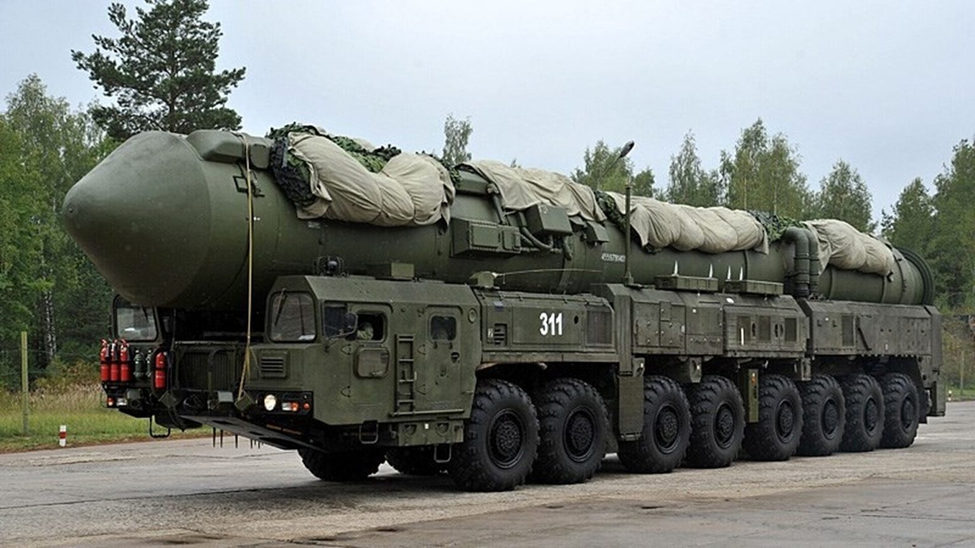
This assault was met with a decisive Russian reaction, marked by an official amendment to its nuclear doctrine—an escalation that had previously been only a rhetorical threat aimed at pressuring Ukraine and the West. Additionally, Russia intensified its assault on Kyiv through a missile strike that, for the first time, involved the use of an RS-26 Rubezh intercontinental ballistic missile.
This raised pressing questions about the potential negative repercussions of the evolving situation and the extent to which it might pull Russia into a direct confrontation with Western powers amid its ongoing war in Ukraine, all while a new US administration, potentially led by former President Donald Trump, prepares to assume office in 2025.
Sophisticated Escalation in the Pursuit of Deterrence
The mutual resolve of the warring parties to secure a decisive outcome before entering negotiations has introduced new political dynamics that might aid in rebalancing power, especially as Russia maintains its momentum on the Donetsk and Kursk fronts. While Moscow demands that ground realities shape any negotiation framework, Kyiv remains adamant about preserving its territorial integrity. This divergence has significantly increased the prospects of an enduring, unresolved military confrontation that may eventually involve other global players beyond the two countries.
In addition to the ongoing dynamics on the battlefield, the potential consequences of the updated Russian nuclear doctrine must also be considered. The updated doctrine states that Russia would consider an attack by a non-nuclear state, if supported by a nuclear power, as a joint assault, prompting a nuclear response. Moscow may also resort to using nuclear weapons in retaliation to the deployment of nuclear or other weapons of mass destruction against Moscow or its allies, as well as in cases of aggression against Russia and Belarus with conventional weapons that jeopardize their sovereignty and/or territorial integrity. According to the Associated Press, further scenarios have been outlined in the updated doctrine, adding new layers to the circumstances under which Russia might resort to its nuclear capabilities, including:
- If credible intelligence is obtained regarding the take-off or deployment of strategic and tactical aircraft, cruise missiles, drones, hypersonic vehicles, or any other airborne systems crossing into Russian airspace, or the launch of ballistic missiles aimed at Russia or its allies, this could trigger a nuclear response under the amended doctrine.
- If an enemy attack on critical Russian government or military facilities undermines Russia’s ability to carry out a retaliatory nuclear strike, this would justify a nuclear response.
Accordingly, Russia has broadened the scope of conditions under which it might deploy nuclear weapons as part of its so-called “deterrence policy,” surpassing the thresholds established in 2020. In the “Basic Principles of State Policy of the Russian Federation on Nuclear Deterrence,” Moscow had previously stipulated that nuclear weapons could be used “in the event of aggression against the Russian Federation using conventional weapons when the existence of the state is in danger.” This shift suggests that the prospect of a confrontation with the West increasingly depends on the consistency and sustainability of Western backing for Ukraine, which Russia seeks to leverage strategically under its “reaction” approach.
Additionally, there was a notable escalation in Russia’s recent missile strike on the city of Dnipro, which targeted the Ukrainian PA Pivdenmash factory, alongside residential areas and a medical facility. According to the US Department of Defense, the missile was armed with a conventional warhead “that can be reconfigured to carry different types of conventional or nuclear payloads” and was described as a new “experimental” version deployed in combat for the first time, as confirmed by Pentagon spokesperson Sabrina Singh. In contrast, Russian President Vladimir Putin described the strike as a justified response to attacks on Russian soil during a speech delivered on November 21, concurrent with the attack on Ukraine.
Although missile strikes themselves are not unprecedented, with Russia having repeatedly deployed Iskander ballistic missiles, K-101 cruise missiles designed to carry nuclear warheads, and Kinzhal hypersonic missiles against Ukraine, the introduction of the Oreshnik missile marks a significant shift. Its deployment has sparked renewed debate over the effectiveness of Ukraine’s Western-backed deterrence and defense systems at this pivotal juncture. Moreover, this development has revitalized discussions surrounding the capabilities of Russian weaponry, sending a clear message to the West about Russia’s ability to escalate its responses incrementally in line with the war’s evolving dynamics.
According to US and British sources, the missile is classified as an experimental medium-range missile capable of carrying nuclear warheads, with an estimated range of 5,500 kilometers—enough to strike Europe if launched from southwestern Russia, according to The Guardian. President Putin asserted that “the missile is not a modernization of old Soviet systems,” emphasizing that Russian engineers developed it “based on modern and advanced innovations” and asserting that there is no existing defense system capable of neutralizing the Oreshnik missile.
Constraints of the Russian-Western Confrontation
The recent escalation has reignited discussions about the likelihood of a military confrontation between Russia and Western powers over their support for Ukraine, particularly with the Trump administration set to assume office next year. Addressing this question requires examining several key considerations, as outlined below:
- Though Russia’s military escalation is part of its broader deterrence strategy, the possibility of direct escalation with the West remains a concern. Several European defense officials have frequently cautioned about the potential for direct warfare with Russia in the near future. Furthermore, NATO’s continued expansion serves to encircle Russia, thereby restricting its ability to pose a threat to European security.
- The revision of Russia’s nuclear doctrine is seen as a crucial element in its strategy to enhance political maneuverability and reinforce its standing as a major power capable of addressing emerging threats. This adjustment also serves to maintain deterrence against both Ukraine and the West, ensuring Russia’s influence remains intact.
- While the US decision to allow Ukraine to deploy long-range weapons addresses persistent Ukrainian demands, its potential impact on the battlefield is questionable and may have limited effectiveness in altering the course of the conflict at this stage, considering Russia’s ongoing advances on the frontlines. This move could signal the Biden administration’s confusion in its handling of Ukraine. Had the United States genuinely aimed to bolster Ukraine’s position and shift the war’s dynamics in a “land for land” framework, it would have supported such a strategy during the Kursk attack or prior to the U.S. presidential elections. Hence, this decision may reflect the Biden administration’s attempt to block any potential strategies that Trump might pursue in his second term, casting doubt on his ability to handle the crisis. Additionally, the move may also serve to balance the forces between the warring parties, potentially limiting further Ukrainian losses.
- As this transformation unfolds, European countries are confronted with multiple challenges, the most pressing being their ability to fortify their defenses in anticipation of a direct confrontation with Russia, a possibility that has grown more imminent. Furthermore, there is uncertainty over the continued ability to equip Ukraine with more advanced and sophisticated weapons, given the ongoing depletion of Western arms stockpiles and the rising demand from Ukraine for additional military support.
In conclusion, the Russian-Ukrainian war is entering a new phase of escalation, driven by the changes in Russia’s nuclear doctrine, Ukraine is targeting of Russian territory with Western long-range missiles, and Moscow’s deployment of its advanced arsenal. These interconnected shifts are likely to obstruct any potential negotiations in the near future and present significant challenges for the incoming US administration.


