






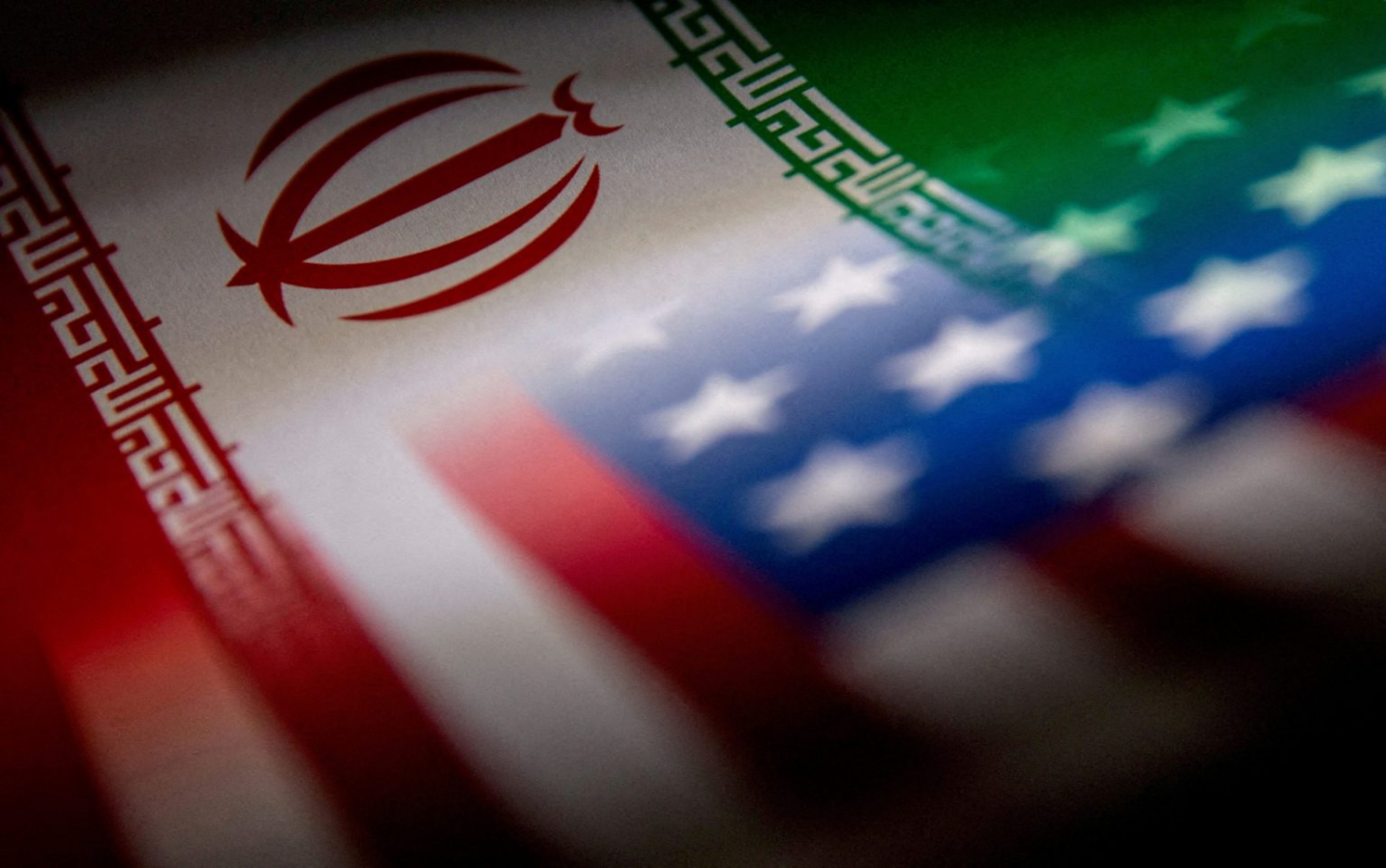
The initial round of talks between the United States and Iran wrapped up on Saturday, April 12, in an atmosphere both sides described as “very positive and constructive,” with an agreement to resume discussions on April 19. The negotiations were conducted indirectly, as Tehran insisted, rather than face-to-face, as US President Donald Trump had hoped. Iran’s Foreign Ministry spokesperson, Ismail Baghaei, clarified that each delegation met in separate rooms, exchanging messages through Oman’s Foreign Minister, except for a brief direct encounter between the delegations after the indirect talks concluded. Media reports suggest Trump is eager to move swiftly toward an agreement, despite repeated threats to resort to military measures if the talks falter. This comes amid Iran’s efforts to ease sanctions and US demands to curb Iran’s nuclear program, against a backdrop of escalating regional tensions fueled by Israel’s unrestrained actions. The unfolding scene raises questions about the likelihood of either escalation or détente between Washington and Tehran as these talks progress.
Talks amid War of Words and Maximum Pressure
On February 4, 2025, Trump announced his intent to reinstate the “maximum pressure” policy in response to Iran’s attempts to develop nuclear weapons. Tammy Bruce, the US State Department spokesperson, underscored that Washington “will use all tools at our disposal to hold the regime accountable for its destabilizing activities and pursuit of nuclear weapons that threaten the civilized world.” In line with this, Washington imposed sanctions on a fleet of ships and an international network responsible for funneling illicit revenues to Iran’s military. The Treasury Department clarified that the sanctions targeted individuals and companies in countries including China, India, and the UAE, while simultaneously imposing new sanctions on six entities based in Hong Kong and China for their involvement in a network procuring Iranian drones.
In contrast, in a post on his Truth Social account, Trump dismissed reports claiming that the United States, working in conjunction with Israel, is going to blow Iran into smithereens” as “greatly exaggerated.” He emphasized his desire to see Iran “great and successful, but one that cannot have nuclear weapons.” Going further, Trump expressed his eagerness to work toward a “peaceful nuclear agreement that will allow Iran to develop and prosper peacefully.” He called for immediate action to begin crafting this deal and even proposed hosting a “grand celebration” in the Middle East upon its signing and completion. Iran, however, rebuffed Trump’s proposal, with Supreme Leader Ayatollah Khamenei rejecting the idea of negotiating a new agreement.
Breaking from his rhetoric of isolationism and reluctance to engage militarily overseas, the Trump administration carried out intense airstrikes on March 15 targeting the Iran-supported Houthi group, Tehran’s sole proxy still actively operating. In a post on Truth Social, Trump made it clear he would not tolerate Houthi assaults on US vessels, promising to deploy crushing force to meet his goals and warning that Iran would “bear responsibility for any further Houthi attacks.” National Security Advisor Mike Waltz also stated that the United States could hit Iranian targets in Yemen as part of its offensive against the Houthis.
In an unexpected revelation during a meeting with Israeli Prime Minister Benjamin Netanyahu in the Oval Office on April 8, Trump told reporters that “direct talks with Tehran have begun,” referencing a meeting that was planned for Saturday, April 12. He added that he believes “everyone agrees reaching an agreement would be the best outcome.” Reinforcing this, White House spokesperson Caroline Leavitt stated during a press briefing that Trump has said the United States would hold “direct” talks with Iran on Saturday to discuss a new nuclear deal. She emphasized that the president had made it clear to the Iranians and they need to make a choice—they can reach a deal and negotiate, or they’ll have to pay a price. In response, Iranian Foreign Minister Abbas Araghchi said Iran prefers “indirect talks” with Washington “to avoid pressure and threats.” Iran’s IRNA news agency quoted Araghchi as saying, “Talks with the US are indirect; we do not accept any other method.”
The US delegation, under envoy Steve Witkoff, and the Iranian delegation, led by Abbas Araghchi, landed in Muscat, Oman, on April 12. Iran’s Foreign Ministry spokesperson reaffirmed that the Iranian team was there “for indirect talks.” On the other hand, Trump threatened military action should the negotiations fail. Tehran, in turn, issued a stern warning to neighboring countries with US bases, stating they would face “severe consequences” if they supported any American military strike on Iran.
During a visit to Abu Dhabi, US Secretary of Energy Chris Wright declared that the United States is ready to escalate pressure on Tehran by cutting off its oil exports, a move aimed at curbing Iran’s nuclear activities. He noted his belief that US allies in the Gulf are “deeply concerned” about Iran’s nuclear ambitions and align with Washington’s stance. At the same time, the United States imposed sanctions on five entities involved in running and supervising Iran’s nuclear efforts, including the Atomic Energy Organization of Iran (AEOI) and its subsidiary, the Iran Centrifuge Technology Company (TESA). A State Department statement underscored that the United States “will continue to hold accountable those who seek to support Iran’s nuclear program.”
In a statement released on IsraelArabic, Israeli Prime Minister Benjamin Netanyahu laid out Israel’s demands for any potential agreement with Iran before talks between Washington and Tehran started. “We are in full agreement that Iran must never possess nuclear weapons,” Netanyahu declared. “This can be done by agreement, but only if this agreement is Libyan style: They go in, blow up the installations, dismantle all of the equipment, under American supervision.” He added that if Iran dragged out the talks,” the alternative would be a “military” response.
Potential Scenarios
Throughout his campaign, Trump criticized Biden for weakening the “maximum pressure” approach of his first term through lax sanctions enforcement. He further blamed Biden’s “soft” stance on Tehran as the main driver behind the October 7, 2023, attack. While Trump’s initial presidency offers a blueprint for his Iran strategy in his second term, evolving regional dynamics could steer Washington’s new approach. These include Israel’s aggressive regional posture, Iran’s strategic fragility, and Tehran’s moves to reconcile with its neighbors, factors that cause the landscape to become far more convoluted, complicating efforts to analyze the current negotiations and their likely outcomes. This complexity can be viewed through three potential scenarios:
Scenario One: Pressure for a Deal
This scenario hinges on the premise that Trump’s central aim is to clinch a new deal, fueled by his drive for quick wins and surprising diplomatic coups, coupled with a cautious approach to military tools and a business-minded reluctance to shoulder costs, particularly in security and defense, which has been evidenced by his call for a nuclear peace deal” that lets Iran “develop and prosper” peacefully. The scenario also aligns with regional states’ desires to contain tensions and prevent further escalation, as seen in Iran’s open lines of communication with Gulf states, the reestablishment of Iran-Saudi diplomatic relations, Iran’s attendance at the Arab-Islamic Summit, and the Saudi Chief of Staff’s visit to Tehran, among other signs.
Although reaching an agreement is the goal, Trump wields “maximum pressure” for two key purposes: first, to prevent Iran from dragging its feet or buying time, and second, to force Tehran into a deal shaped by US demands. Concurrently, Trump offers reassurances to Iran’s leadership, signaling that Washington does not seek regime change, thus enticing Tehran to the negotiating table. This tactic exploits the Iranian regime’s priorities—securing its longevity while facing intensified economic chokeholds. Some observers argue that Trump’s seemingly inconsistent rhetoric is a deliberate part of his bargaining strategy, aimed at keeping opponents unsettled and under constant pressure.
Scenario 2: A Military Strike to Secure an Agreement
This scenario rests on the premise that the “maximum pressure” strategy, in its present form, may fall short, prompting Washington to escalate with a limited military campaign as the next step in its high-stakes pressure on Iran. The scenario is rooted in the notion that the increased US military buildup in the region and attacks on Yemen’s Houthis are a signal to Iran, pressing it to rejoin negotiations on US terms. It, thus, reflects Trump’s “peace through strength” doctrine, employed across multiple fronts. This could mean precise strikes on Iranian targets, not just the Houthis, to dismantle Tehran’s long-game tactics and insistence on indirect talks. The envisioned military action or limited war might mirror the strikes of April and October 2024, likely executed by Israel with US backing.
Although regional states would likely reject military escalation against Tehran, such a move would satisfy Israel to some extent. In February 2025, al-Hurra reported US intelligence assessments indicating Israel’s inclination to strike Iran’s nuclear facilities this year, capitalizing on Iran’s current vulnerabilities. The risk of this scenario lies in the challenge of predicting Iran’s tolerance limit. Instead of guaranteeing Iran’s return to the negotiating table, it could inadvertently drag the entire region into a quagmire of disorder.
Scenario 3: All-Out War against Iran
Over the past two decades, US presidents have pursued deterrence against Iran through diplomacy and sanctions, steering clear of direct military attacks on Iranian soil. Yet, Israel’s effective strikes on Tehran’s proxies and disruption of Iran’s regional network have upended this strategy, proving that Iran’s regional threat can be further dismantled. This scenario is based on assessments that the United States is gearing up for a full-scale assault on Iran, evidenced by a ramped-up military presence in the region—including additional B-2 stealth bombers, the deployment of the USS Carl Vinson aircraft carrier, and the extended deployment of the USS Harry S. Truman. Recent spikes in US aerial surveillance off Iran’s coast add weight to this theory, as do US air operations in Yemen, viewed as a “rehearsal” or “field test” for targeting Iran itself.
This scenario is bolstered by Israel’s push to urge the United States to capitalize on Iran’s current strategic vulnerabilities to permanently eliminate the threat it poses. It also draws support from segments of the American Christian right, who frame the regional escalation as part of an “end-times battle,” with some evangelical figures claiming “we are on the brink of the Second Coming.” Meanwhile, Tehran’s rejection of U.S. conditions and its continued “time-buying” strategy could provoke a reckless response from Trump, particularly given his fixation on achieving swift victories. However, this scenario carries immense costs—not only in terms of financial expenditure but also the broader toll on the region, driven in part by Iran’s reaction. Should Tehran perceive an existential threat, it could retaliate by launching attacks from all its “missile cities” that survive initial strikes.
In short, an initial analysis points to the first scenario as the most probable, but shifting dynamics on the ground suggest that all outcomes are possible, especially in light of the charged regional interactions and the pervasive uncertainty and confusion shaping perspectives. Predicting the Trump administration’s position on the region with certainty is difficult, as a stark division within the administration over renewed Middle East involvement has emerged. Signal leaks regarding US attacks on Yemen’s Houthis exposed Vice President JD Vance as the figurehead of the isolationist camp, contrasted by Defense Secretary Pete Hegseth’s leadership of the confrontational approach. This split was commented on by Matthew Petti, assistant editor at Reason magazine, who told Al Jazeera via text, “the newfound aversion to foreign wars, especially in the Middle East, has sat uncomfortably with the right-wing cultural affinity for Israel.” He added that the US far right is specifically riven with internal divisions, torn between advocating for isolationism and safeguarding Israel.