


The recent visit of Jeffrey Feltman, the US Special Envoy for the Horn of Africa, to Egypt on 5 May acquired a considerable significance which can be assessed in light of the following four factors:
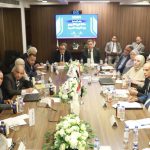
Factor one: Feltman’s meeting with President Abdel-Fattah Al-Sisi reflects the importance the political leadership attaches to the Grand Ethiopian Renaissance Dam (GERD) crisis and Egypt’s reliance on a US role in resolving this crisis.
Factor two: The US Envoy was provided with a comprehensive explanation of the crisis and of Egypt’s vision for a solution and the explanation came from the highest political level in Egypt so that Egypt’s position is clear, decisive, and indisputable.
Factor three: This visit comes as the first direct action from the new US administration on GERD which reflects the priority Biden’s administration gives to the crisis within the framework of its foreign policy agenda.
Factor four: Egypt was the US Envoy’s first destination in a tour covering Sudan, Ethiopia, and Eritrea which underscores the depth of the bilateral strategic relations between Egypt and the US.
In their meeting, President Al-Sisi made sure to personally elaborate the principles governing the Egyptian position on GERD for Washington to be fully informed about all aspects of the situation. In this respect, the president highlighted seven key points:
Point one: Egypt has shown great flexibility tackling the crisis from its outset and all over the past years.
Point two: Egypt’s approach to negotiations was centered on reaching a fair, balanced, and binding agreement that would satisfy the interests of Egypt, Sudan, and Ethiopia.
Point three: Any reachable agreement must take into consideration Egypt’s water rights and interests, protect its water security, and prevent causing it any damage.
Point four: All negotiation efforts failed to produce the hopeful agreement envisaged by Egypt due to the lack of a political will of the other side.
Point five: Egypt is still seeking a fair, binding, and impartial agreement on the filling and operation of the dam through the negotiation track under the aegis of the African Union led by President Félix Tshisekedi.
Point six: For Egypt, the dam issue is existential, and Egypt will not allow harming its water interests or compromising its destiny.
Point seven: The necessity of the international community taking on responsibility toward the crisis, underlining the US instrumental role in this respect.
Undoubtedly, these seven points that President Al-Sisi highlighted don’t only reflect the political leadership vision but rather the general attitude of the Egyptian people toward the crisis.
In my opinion, the President was keen to convey a three-fold message to the US envoy: first, that Egypt is still keen on reaching a political solution through negotiations despite all obstacles Ethiopia poses; second, that water is an existential issue for Egyptian in every sense of the word; and, third, that Egypt is still pinning hopes on Washington to play an influential role in bringing an end to the crisis as soon as possible.
For his part, during his meeting with President Al-Sisi, the US Envoy was keen to confirm the earnestness of the new US administration to resolve this critical issue realizing its paramount importance to Egypt and the whole region which requires reaching a fair and comprehensive settlement. According to the media note of the spokesperson of the US Department of State, Feltman’s visit underscores Washington’s commitment to lead a sustained diplomatic effort to address the interlinked political, security, and humanitarian crises in the Horn of Africa.
It is relevant here to review the US efforts exerted under the outgoing Democratic administration toward handling the dam’s crisis. Washington took a set of serious measures to offer a solution to this crisis as follows:
The US action toward this crisis began after President Abdel-Fattah Al-Sisi’s statement delivered before the United Nations General Assembly 74th session end of September 2010 in which he called for international mediation to pressure the parties to show the flexibility needed.
Following President Al-Sisi’s speech, the White House was quick to issue a statement to support the negotiation process, calling on the parties to reach an agreement that regulates filling and operating of the dam in the joint interests of the three parties while safeguarding the right of every party in development and respecting the water rights of each other.
On 6 November 2019, the US held a meeting with representatives of the three countries (foreign and irrigation ministers) in Washington, President Donald Trump, the US Secretary of the Treasury, and representatives of the World Bank, during which Trump urged the involved parties to reach an agreement.
The meeting gave rise to a negotiation mechanism encompassing six meetings occurring at two main levels, political (two meetings in Washington to assess the negotiations’ outcomes) and technical (four meeting to be held interchangeably in Ethiopia, Egypt, and Sudan) toward reaching the sought agreement with the Declaration of Principles of March 2015 being the reference point.
On 15 November 2019, Ethiopia hosted the first of these meetings while the last one was held in Washington on 15 January 2020 and brought about a joint statement by the five countries comprising six points, the most important of which stipulate that, “The filling of the GERD will be executed in stages that take into consideration the hydrological conditions of the Blue Nile, and that that Ethiopia commit to provide appropriate mitigation measures for Egypt and Sudan in case of severe droughts during this stage.”
On 13 February 2020, another joint meeting was held in Washington involving all parties and mediators during which it was agreed that Washington is to facilitate the preparation of the final agreement for consideration by the three states for conclusion end of February.
With the technical support from the World Bank, the United States managed to prepare the final version of the agreement based on the negotiation outcomes. Egypt’s Foreign Affairs Minister, Sameh Shoukry, placed his initials on the agreement on 28 February 2020 proving Egypt’s bona fides whereas Ethiopia was a no-show and hence didn’t sign the agreement. Sudan’s representative attended; however, he refused signing in response to the Ethiopian intransigence.
Looking at the ongoing US efforts, it can be said that Feltman’s tour attaching importance to the Ethiopian dam’s crisis and he underscoring the importance of reaching a political solution is considered a positive step that is likely to open the way for entering a whole new phase of negotiations meant to be markedly different, in form and substance.
As far as I can see, there are six basic demands required from the US in the forthcoming period:
First: the US should take an active and serious role in reaching an agreement that serve the interests of all parties, utilizing whatever appropriate means it deems necessary to achieve this goal.
Second: Washington should be firmly convinced that, if continued, the crisis will have serious repercussions on the stability of the region and the interests of all parties, and that time is of the essence; so, no one should think that we still have the luxury of time or that there is a lot of leeway to reach the agreement.
Third: The US should realize that Egypt – the most adversely affected country by the dam, along with Sudan naturally – is still keen on the resumption of the negotiation process and reaching a satisfactory agreement in the interests of all parties provided that no harm shall be caused to Egypt’s water interests and rights.
Fourth: The US should recognize that it did manage beforehand (in February 2020) to offer an agreement on which Ethiopia refused to sign off, and that Washington’s non-completion of its hopeful role of bringing other parties to sign represented a real problem, a situation that we hope will not recur down the road particularly Ethiopia’s initial opt-out of the agreement came at a less serious time than today where Ethiopia is getting close to the second filling without coming into an agreement with the downstream countries.
Fifth: It is important that the US set a date for resumption of negotiations and engage in it, along with the Africa Union, and the mediators’ role need to be changed from being merely observers to active participants with the ability to propose ideas and intermediate solutions that help bring controversial views closer, and I think the United States is qualified enough to play this role and bring the crisis to an end.
Sixth: Washington should be entirely confident that Egypt – which has been adhering to the negotiation process throughout the earlier stages without yielding any results – still favors the negotiating approach but at the same time, will never accept – whatever the consequences would be– that the negotiation track continue indefinitely to find itself presented with a fait accompli that negatively impacts Egypt’s water security.
In short, Egypt, which has strategic relations with the US, is still keen on allowing for the new US administration to act on the crisis toward reaching a satisfactory agreement binding upon all parties on the filling and operation of the dam in the interests of all parties, an effort that, if successful, will be counted towards Biden administration achievements.
Against this, it can be said that the time has come to put an end to this crisis. Ethiopia’s continued intransigence, rejection of all suggestions, and preparing for the second filling without agreement will bring unprecedented state of insecurity to the region. It is necessary to point out that Egypt is trying seriously and in goodwill to avoid reaching a complex stage, the responsibility of which falls on Ethiopia and the world community, including the US whose efforts Egypt appreciates and hopes will prove successful.


