
By using ECSS site, you agree to the Privacy Policy and Terms of Use.
Accept
ECSS - Egyptian Center for Strategic StudiesECSS - Egyptian Center for Strategic Studies
  • Home
  • International Relations
    International Relations
    Show More
    Top News
    The Conflict of Visions on GERD
    June 15, 2020
    The Muslim Brotherhood and the West: Reading through Official UK Documents (3)
    March 1, 2021
    The European Situation Towards Afghanistan Refugees
    September 21, 2021
    Latest News
    Israel’s security and economic conundrum:How does Israel confront the challenges of a protracted war with Iran?
    May 2, 2026
    Reshaping the US position toward Israel: From the erosion of the old consensus to a new conflict across parties, state, and society
    April 23, 2026
    Israel’s African gambit
    March 6, 2026
    Geopolitical realism: What does Washington’s return to the African Sahel mean?
    March 5, 2026
  • Defense & Security
    Defense & Security
    Show More
    Top News
    Messages of military drills: Is the region on the brink of a new war?
    April 5, 2021
    Europe amid US–Iran Escalation: Can It Play the Diplomat or Become Entangled in the Crisis?
    April 13, 2025
    The Future of Relations between Al-Qaeda, Taliban and Islamic State After Al-Zawahiri’s Death
    August 27, 2022
    Latest News
    Between two camps: Reading into ISIS discourse on the US-Israeli war on Iran
    April 15, 2026
    Encrypted messages “Roaring Lion”: The hidden messages behind the name of the operation against Iran
    March 11, 2026
    Iran war developments
    March 9, 2026
    Manufacturing the enemy : Reframing terrorism in contemporary Western discourse
    March 7, 2026
  • Public Policy
    Public Policy
    Show More
    Top News
    Why Does Egypt Expand in the Establishment of International Schools?
    October 24, 2020
    The National Strategy to Combat FGM: What’s Next?
    October 14, 2021
    Epidemiological Surveillance in the Egyptian Health System
    October 15, 2022
    Latest News
    From global shock to Egypt’s economy: Analyzing the impact of the Iran war on energy security
    May 3, 2026
    Egypt as a balancing power: Why Cairo rejects the logic of wars in the Middle East
    April 30, 2026
    Militarizing water in Middle East wars A strategic analysis of the Iran-US-Israel war
    April 18, 2026
    Reading into attacks on maritime navigation in the Arabian Gulf
    March 17, 2026
  • Analysis
    • Opinion
    • Analysis
    • Situation Assessment
    • Readings
  • Activities
    • Conferences
    • ECSS Agenda
    • Panel Discussion
    • Seminar
    • Workshops
  • ECSS Shop
  • العربية
  • Defense & Security
  • International Relations
  • Public Policy
All Rights Reserved to ECSS © 2022,
Reading: Egypt, Israel, and Gaza: What’s Next?
Share
Notification Show More
Latest News
From global shock to Egypt’s economy: Analyzing the impact of the Iran war on energy security
Economic & Energy Studies
Israel’s security and economic conundrum:How does Israel confront the challenges of a protracted war with Iran?
Palestinian & Israeli Studies Research Programs
Egypt as a balancing power: Why Cairo rejects the logic of wars in the Middle East
Media Studies
Reshaping the US position toward Israel: From the erosion of the old consensus to a new conflict across parties, state, and society
American Studies
Militarizing water in Middle East wars A strategic analysis of the Iran-US-Israel war
Economic & Energy Studies
Aa
ECSS - Egyptian Center for Strategic StudiesECSS - Egyptian Center for Strategic Studies
Aa
  • اللغة العربية
  • International Relations
  • Defense & Security
  • Special Edition
  • Public Policy
  • Analysis
  • Activities & Events
  • Home
  • اللغة العربية
  • Categories
    • International Relations
    • Defense & Security
    • Public Policy
    • Analysis
    • Special Edition
    • Activities & Events
    • Opinions Articles
  • Bookmarks
Follow US
  • Advertise
All Rights Reserved to ECSS © 2022, Powered by EgyptYo Business Services.
Opinion

Egypt, Israel, and Gaza: What’s Next?

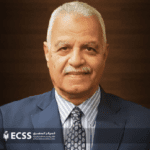
Gen. Mohamed Eldewery
Last updated: 2023/05/21 at 1:31 PM
Gen. Mohamed Eldewery
Share
8 Min Read
SHARE

It is unfair to consider Egypt only a mediator in discussions concerning the Palestinian cause. Egypt is a full partner given the significance of the Palestinian cause to its national security. Thus, Egypt has not and will not stop its efforts to find a solution to this problem, despite its complexity, until the Palestinian people attain their rights and establish a sovereign, independent state. In the most recent escalation, Egypt played its natural role, achieving a ceasefire between Israel and Gaza on 13 May after five days of military operations. 

While acknowledging the important role played by all the mediators who diligently sought to halt the military operations, it is clear that Egypt’s efforts were the most significant in trying to broker a ceasefire due to the following considerations:

First, Egypt is the only Arab country that shares a border (14-kilometer) with the Gaza Strip, and the main crossing through which Palestinians leave their country, Rafah, is located on Egyptian territory. The other crossing, Beit Hanoun, is under control, and only a few cases cross from there.

Second, Egypt has strong ties not only with the Palestinian Authority and leadership, but also with all Palestinian factions and organizations, regardless of whether they are located in Gaza, the West Bank, or abroad, in addition to positive ties with Israel and relevant Israeli institutions.

Third, Egypt’s team of negotiators has extensive experience dealing with every aspect of the Palestinian-Israeli file. This committed team, which operates day and night with deliberate direction, has already achieved a number of ceasefires and does not hesitate to be present on the ground in Tel Aviv, the West Bank, and Gaza when necessary. 

Regarding the Palestinian-Israeli conflict, we must also consider the following five important factors:

  1. Israel treats the Gaza Strip, which has the highest population density in the world relative to its size, as if it were a country that possesses the most advanced types of weapons; consequently, it bombards and destroys homes and facilities and kills civilians under an open sky in front of the Israeli Air Force, as well as closing all crossings.
  2. The Israeli wars on Gaza, which commenced in 2008, followed the Palestinian split, confirming the Israeli strategic objective of separating Gaza from the West Bank.
  3. For decades, Israel has continued its policy of assassinating senior members of Palestinian organizations, including Fatah, Hamas, Jihad, the Democratic Front for the Liberation of Palestine, the Popular Front for the Liberation of Palestine, and the Resistance Committees, whether they were based inside or outside of the Palestinian territories. Consequently, assassinations have always been a fundamental component of the values that have guided Israeli relations with Palestinian organizations.
  4. While the media focuses on the military operations in Gaza, Israeli policy towards the West Bank is largely the same, with regular killings, house demolitions, arrests, sieges, and storming of cities and the Al-Aqsa Mosque.
  5. There will be no permanent ceasefire, and the situation will continue to deteriorate, so long as the underlying causes of the problem are not addressed. Here, I pose two questions to Israel’s current leadership: What do you expect from an occupied Palestinian population that daily loses hope of living in a prosperous and stable independent state, as do Israeli citizens? What does Israel expect from a Palestinian group whose top officials are frequently killed, some of whom along with their families?

Israel, in my opinion, is making a serious error if it thinks the Palestinian people will submit to its policies or if it thinks it alone is in control of all positions and can direct them however it pleases, whenever it pleases, without regard for other regional or global positions. It’s inevitable that the violence that was resolved this time will flare up again. We have seen six wars between Israel and Gaza in the last 14 years, and this cycle of violence will not end. To put an end to this tragedy, we must therefore consider how to proceed during the subsequent phase, which calls for the following:

On the Palestinian Side: These developments should serve as a catalyst for Palestinian reconciliation. Here, I appeal to the heads of the Joint Operation Room for the Palestinian Factions in the Gaza Strip, telling them that if they were able to unite the positions of the factions in opposition to Israel, they must do the same now to end the division. I would also like to emphasize that Egypt is prepared to successfully mediate if both parties have a sincere desire to do so, as it did in the cases of a ceasefire, prisoner exchange, and reconstruction.

On the Arab Scale: Resuming negotiations between the Israeli and Palestinian sides to find acceptable solutions to the Palestinian cause requires immediate action on the part of the Arab world, led by Egypt and facilitated by President Abdel-Fattah El-Sisi. Without this, the cycle of violence will likely escalate and explode.

On the Israeli Side: Israel must review the outcomes of the six previous wars, their internal effects, and the price of maintaining the occupation before entering into serious negotiations in which all of its visions will be laid out. Otherwise, it must be held accountable for its policies.

On the International Scale: The international community, particularly the United States, needs to shift from a timid humanitarian approach to dealing with the Palestinian issue, demanding a de-escalation, protecting civilians, and emphasizing only Israel’s security, to political engagement and a gradual move to implement the two-state solution that it adopts in theory.

Related Posts

The future of US-Iran negotiations

Sudan Matters, Always

The End of Globalization?

The Israel–Turkey Power Dynamics in Syria

Gen. Mohamed Eldewery May 21, 2023
Share this Article
Facebook Twitter Whatsapp Whatsapp LinkedIn Telegram Email Copy Link Print
Gen. Mohamed Eldewery
By Gen. Mohamed Eldewery
Deputy Manager

Stay Connected

Facebook Like
Twitter Follow
Instagram Follow
Youtube Subscribe

Latest Articles

The National Museum of Egyptian Civilization: A Paradigm Shift in Museum Practices in Egypt
Public Policy August 19, 2021
Why Was the Global Coalition’s Mission in Iraq Extended?
Arab & Regional Studies September 4, 2024
2025 Yearender: China’s multipolar world
Arab & Regional Studies January 15, 2026
Attempts at Distraction on Gaza
Opinion August 9, 2024

Latest Tweets

//

The Egyptian Center for Strategic Studies is an independent non-profit think tank providing decision-makers by Policy alternatives, the center was established in 2018 and comprises a group of experts and researchers from different generations and scientific disciplines.

International Relations

  • African Studies
  • American Studies
  • Arab & Regional Studies
  • Asian Studies
  • European Studies
  • Palestinian & Israeli Studies

Defence & Security

  • Armament
  • Cyber Security
  • Extremism
  • Terrorism & Armed Conflict

Public Policies

  • Development & Society
  • Economic & Energy Studies
  • Egypt & World Stats
  • Media Studies
  • Public Opinion
  • Women & Family Studies

Who we are

The Egyptian Center for Strategic Studies (ECSS) is an independent Egyptian think tank established in 2018. The Center adopts a national, scientific perspective in examining strategic issues and challenges at the local, regional, and international levels, particularly those related to Egypt’s national security and core national interests.

The Center’s output is geared toward addressing national priorities, offering anticipatory visions for policy and decision alternatives, and enhancing awareness of various transformations through diverse forms of scientific production and research activities.

All Rights Reserved to Egyptian Center for Strategic Studies - ECSS © 2023

Removed from reading list

Undo
Welcome Back!

Sign in to your account

Lost your password?