



By using ECSS site, you agree to the Privacy Policy and Terms of Use.
Accept
ECSS - Egyptian Center for Strategic StudiesECSS - Egyptian Center for Strategic Studies
  • Home
  • International Relations
    International Relations
    Show More
    Top News
    Intertwining factors: The Significance of the MoU between the Syrian Democratic Council and the People’s Will Party
    September 18, 2020
    Pre-emptive fallacies Refuting Ethiopia’s claims on the second filling of GERD
    April 26, 2021
    the New Republic: Egypt’s Role in Africa
    October 20, 2021
    Latest News
    Israel’s security and economic conundrum:How does Israel confront the challenges of a protracted war with Iran?
    May 2, 2026
    Reshaping the US position toward Israel: From the erosion of the old consensus to a new conflict across parties, state, and society
    April 23, 2026
    Israel’s African gambit
    March 6, 2026
    Geopolitical realism: What does Washington’s return to the African Sahel mean?
    March 5, 2026
  • Defense & Security
    Defense & Security
    Show More
    Top News
    Turkey and the Muslim Brotherhood: A temporary refuge and alternative Havens
    October 1, 2020
    Clashes in Tripoli: Do Rapid Developments in Libya Clash with the Road Map?
    August 22, 2023
    Assessing Deterrent Measures and the Prospects of War: US Military Movement in the Gulf to Confront Iran
    June 22, 2020
    Latest News
    Between two camps: Reading into ISIS discourse on the US-Israeli war on Iran
    April 15, 2026
    Encrypted messages “Roaring Lion”: The hidden messages behind the name of the operation against Iran
    March 11, 2026
    Iran war developments
    March 9, 2026
    Manufacturing the enemy : Reframing terrorism in contemporary Western discourse
    March 7, 2026
  • Public Policy
    Public Policy
    Show More
    Top News
    Favorable circumstances: Investing in Egyptian banks
    May 11, 2021
    Real Estate Transaction Tax: Addressing Challenges of Egypt’s Real Estate Sector
    March 24, 2022
    Investment in Egypt amid Covid-19
    July 25, 2021
    Latest News
    From global shock to Egypt’s economy: Analyzing the impact of the Iran war on energy security
    May 3, 2026
    Egypt as a balancing power: Why Cairo rejects the logic of wars in the Middle East
    April 30, 2026
    Militarizing water in Middle East wars A strategic analysis of the Iran-US-Israel war
    April 18, 2026
    Reading into attacks on maritime navigation in the Arabian Gulf
    March 17, 2026
  • Analysis
    • Opinion
    • Analysis
    • Situation Assessment
    • Readings
  • Activities
    • Conferences
    • ECSS Agenda
    • Panel Discussion
    • Seminar
    • Workshops
  • ECSS Shop
  • العربية
  • Defense & Security
  • International Relations
  • Public Policy
All Rights Reserved to ECSS © 2022,
Reading: Attempts at Distraction on Gaza
Share
Notification Show More
Latest News
From global shock to Egypt’s economy: Analyzing the impact of the Iran war on energy security
Economic & Energy Studies
Israel’s security and economic conundrum:How does Israel confront the challenges of a protracted war with Iran?
Palestinian & Israeli Studies Research Programs
Egypt as a balancing power: Why Cairo rejects the logic of wars in the Middle East
Media Studies
Reshaping the US position toward Israel: From the erosion of the old consensus to a new conflict across parties, state, and society
American Studies
Militarizing water in Middle East wars A strategic analysis of the Iran-US-Israel war
Economic & Energy Studies
Aa
ECSS - Egyptian Center for Strategic StudiesECSS - Egyptian Center for Strategic Studies
Aa
  • اللغة العربية
  • International Relations
  • Defense & Security
  • Special Edition
  • Public Policy
  • Analysis
  • Activities & Events
  • Home
  • اللغة العربية
  • Categories
    • International Relations
    • Defense & Security
    • Public Policy
    • Analysis
    • Special Edition
    • Activities & Events
    • Opinions Articles
  • Bookmarks
Follow US
  • Advertise
All Rights Reserved to ECSS © 2022, Powered by EgyptYo Business Services.
Opinion

Attempts at Distraction on Gaza

Khaled Okasha
Last updated: 2024/08/08 at 9:43 PM
Khaled Okasha
Share
9 Min Read
SHARE

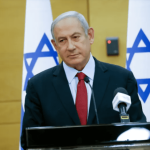
The worst way to end the war on Gaza is to let it be hijacked by the conflict between Israel and Iran and its regional extensions. This is not only because an ending of this sort will serve to support the narrative Israeli Prime Minister Benjamin Netanyahu has been reiterating ever since 7 October in order to deny the Palestinians the truth regarding events on the ground.

Tel Aviv is desperate for something to counter the fact that the attack by the Palestinian resistance on 7 October was a logical reaction to the Israeli occupation and its decades of violating the fundamental rights of the Palestinian people. That is the crux of the issue that needs to be addressed in order to revive a political path to ending the conflict as a whole.

However, when UN Secretary-General Antonio Guterres suggested as much in his statements calling for a ceasefire and a return to the negotiating table in the early months of the war, Israel unleashed a vicious and concerted attack against him and the UN’s humanitarian agencies. The US dutifully lent a hand by automatically wielding its veto to block any constructive step by the UN Security Council.

The Israeli war machine, like other war machines, needs a political doctrine and discourse its politicians can use in meetings with its counterparts and in the media it uses to address broader audiences. The aim is to secure the political backing needed to keep the war machine rolling so it can achieve its aims and/or inflict the greatest possible damage on the adversary.

In the current case, the doctrinal line has been set by the prime minister, even if to many Israeli military and intelligence figures it seems both incoherent and insufficient to achieve the stated goals of the war. Netanyahu’s doctrine establishes as its general context that the situation in Gaza is a mere link and episode in the Iranian threat, not just to Israel, but to the entire region.

Hamas in this telling has no agency of its own, driven by the struggle for Palestinian rights and resistance to the occupation. It is merely a tentacle in the Iranian regional project, like the Houthis in Yemen, the Iraqi Popular Mobilization Forces (PMF), and Hezbollah in Lebanon.

It might be useful here to return to a short chapter in this Israeli narrative-weaving before the current discourse solidified. In the opening weeks of the assault on Gaza, Netanyahu tried to liken Hamas to Daesh, thinking that this would rally the broadest base of international support behind his war. He even called for an “international coalition” to fight Palestinian “terrorism” like the one formed to fight Daesh in Syria and Iraq.

That gambit quickly collapsed, perhaps after it had been tested out on Washington first and had been found not to hold water or to withstand the dynamics on the ground. So, an alternative gambit was used, which presented the doctrine of the “unity of fronts.” This slogan referred to the readiness of all fronts in the Iranian-led “Axis of Resistance” to support the Palestinian resistance factions in Gaza against the onslaught of the Israeli Occupation Forces.

Observers of such developments understand that as with other wars there is an interplay here between the war and the political and media environment and that the nature of this interplay shifts and mutates in tandem with the changing conditions on the ground. So, it was not that difficult to sort through many of the actors concerned and determine how they interacted with the event as a whole in all its diverse dimensions.

The Arabs, as represented by the main Arab powers, found it crucial to invest in reviving global interest in the Palestinian cause in order to restart the political negotiations that are ultimately intended to lead to the “two-state solution.” Achieving this goal was seen as key to ensuring stability in the region, as it would end the main source of conflict while providing security guarantees to its main protagonists and other concerned countries in the region and the world.

This Arab stance has gained momentum, which is not surprising since it is supported by international law and UN resolutions. It has revived international interest in a return to the peace process, which had floundered before it could implement conditions that could be described as secure and irreversible.  

The Arab view is fully cognizant of the enormous toll the Palestinians have paid as victims of the war on Gaza, which has so far claimed at least 40,000 dead, 100,000 injured, and massive destruction that has impacted every aspect of the lives of millions.

However, now this vision for stopping the bloodshed and remedying the root causes of the conflict is facing a deliberate bid to derail it. The first step was the suspicious incident in Majdal Shams in the Occupied Syrian Golan Heights at the end of July. This happened to coincide with the mediating round in Rome that was on the verge of reaching a ceasefire agreement, one that would have brought an extended truce and hostage/prisoner exchanges.

The Majdal Shams incident, which claimed the lives of 12 children among the occupied population of the Arab Druze in the Golan, most of whom have long rejected citizenship under the Israeli occupation, was immediately followed by three other strikes, each clearly coordinated in a way to create a state of play radically different to that which had prevailed the day before.

The first was the Israeli airstrike against the southern suburbs of Beirut targeting Fouad Shukr, commander of the Hezbollah military wing. The second was the assassination of Ismail Haniyeh in Tehran. The third was the US strike against a PMF base south of Baghdad in Iraq.

In the space of a few hours, Netanyahu received the “kiss of life” he longed for following his failed visit to the US and the barrage of criticism by Israeli security and military leaders accusing him of deliberately sabotaging the negotiations after all the details and guarantees had been agreed on.

 This strategy of distraction will find other means and incentives to extend it, as long as it accomplishes the ends of its architects. The main aim is to void the Palestinian bloodshed by Israel of its significance through the grotesque distortion that reduces Gaza to a mere link in the ongoing Israel-Iran conflict and the intermittent exchanges between Israel and Hizbullah, all of which have their own dynamics and rules of engagement.

This article was originally published on Ahram Online and a version of it appears in print in the August 8, 2024 edition of Al-Ahram Weekly.

Related Posts

Egypt as a balancing power: Why Cairo rejects the logic of wars in the Middle East

Reshaping the US position toward Israel: From the erosion of the old consensus to a new conflict across parties, state, and society

The future of US-Iran negotiations

Between two camps: Reading into ISIS discourse on the US-Israeli war on Iran

TAGGED: Gaza, Israel, Palestine
Khaled Okasha August 9, 2024
Share this Article
Facebook Twitter Whatsapp Whatsapp LinkedIn Telegram Email Copy Link Print
Khaled Okasha
By Khaled Okasha
General Manager

Stay Connected

Facebook Like
Twitter Follow
Instagram Follow
Youtube Subscribe

Latest Articles

Water and Regional Conflicts in the Horn of Africa
African Studies July 30, 2024
Kyiv and the Great Winter Battle
Opinions Articles January 5, 2023
Analysis| The Eighth front: Israel strategies for countering erosion of its narrative in western public opinion
Palestinian & Israeli Studies Readings February 9, 2026
Iran’s Political Demography and Presidential Elections: Can Reformists Rise to the Helm?
Analytical article Others July 3, 2024

Latest Tweets

//

The Egyptian Center for Strategic Studies is an independent non-profit think tank providing decision-makers by Policy alternatives, the center was established in 2018 and comprises a group of experts and researchers from different generations and scientific disciplines.

International Relations

  • African Studies
  • American Studies
  • Arab & Regional Studies
  • Asian Studies
  • European Studies
  • Palestinian & Israeli Studies

Defence & Security

  • Armament
  • Cyber Security
  • Extremism
  • Terrorism & Armed Conflict

Public Policies

  • Development & Society
  • Economic & Energy Studies
  • Egypt & World Stats
  • Media Studies
  • Public Opinion
  • Women & Family Studies

Who we are

The Egyptian Center for Strategic Studies (ECSS) is an independent Egyptian think tank established in 2018. The Center adopts a national, scientific perspective in examining strategic issues and challenges at the local, regional, and international levels, particularly those related to Egypt’s national security and core national interests.

The Center’s output is geared toward addressing national priorities, offering anticipatory visions for policy and decision alternatives, and enhancing awareness of various transformations through diverse forms of scientific production and research activities.

All Rights Reserved to Egyptian Center for Strategic Studies - ECSS © 2023

Removed from reading list

Undo
Welcome Back!

Sign in to your account

Lost your password?