







The security landscape in the Red Sea is increasingly becoming militarized as international powers rely more on military means to accomplish their objectives and safeguard their critical interests, particularly in light of the security disruptions caused by the Houthi escalation along this strategic waterway, targeting Israeli and other vessels travelling to or from the occupied territories. The militarization of interactions in the Red Sea became apparent with the United States’ declaration of Operation Prosperity Guardian on 19 December 2023, the European Union’s launch of Mission Aspides in the Red Sea on 19 February, and China’s recent announcement of the deployment of the 46th Southern Fleet to the Red Sea region on 24 February. This development can be interpreted as a significant advancement in how China addresses developments in the Red Sea region.
Against this background, this paper aims to identify the factors influencing China’s position and the significant consequences of the militarization of interactions in the Red Sea region.
China’s Calculations
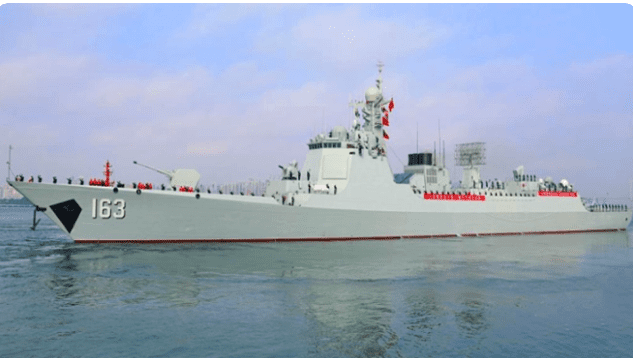
According to the Chinese News Agency Xinhua, a military fleet sailed from a port in the coastal city of Zhanjiang in Guangdong Province in southern China on 24 February to escort the 45th naval fleet in the Gulf of Aden and waters off the coast of Somalia. The 46th fleet comprises the guided-missile destroyer Jiaozuo, the missile frigate Xuchang, and the comprehensive replenishment vessel Honghu, as reported by the Xinhua News Agency. Two helicopters are also present on board the fleet, along with more than 700 officers and soldiers, dozens of whom are members of the special forces. This Chinese action can be interpreted in light of the following factors:
1. Impact of Disturbance in the Red Sea on China: China’s change in strategy regarding the Red Sea, shifting from diplomatic efforts to military reinforcement, demonstrates the adverse impact of security developments in this crucial waterway on China. Chu Ch’ing, the Chinese ambassador to Yemen, substantiated this notion in press statements on 22 February in Riyadh, in which he acknowledged that the escalating Houthi operations in the Red Sea had an impact on Yemen and emphasized the significance of halting these assaults against commercial vessels. Chu said that the situation in the Red Sea has an impact on China, that insurance premiums have increased for ships and maritime transportation, and that certain Chinese ships were compelled to pass through South Africa, increasing expenses and lengthening the time and distance required for their arrival. Additionally, he emphasized the significance of preventing the tense situation in the Red Sea from escalating due to its global ramifications and its relevance to China, the Middle East, and the entire world. He cautioned that a protracted conflict in the Red Sea could spiral out of control and urged all involved parties to uphold the shared security of the area while honoring the territorial integrity and sovereignty of countries bordering the Red Sea and refrain from meddling in their internal affairs.
2. Chinese Strategy for Addressing the Houthi Threat: China and the United States have differing interpretations of the security tensions in the Red Sea. China associates the situation with the Israeli conflict in the Gaza Strip. On 3 January, China’s Deputy Permanent Representative to the United Nations, Geng Shuang, stated that “the current tensions in the Red Sea are one of the manifestations of the spillover effects of the conflict in Gaza.” Furthermore, China has tacitly condemned the US-British assaults that targeted Houthi strongholds in Yemen but this stance in no way signifies its approval of the Houthis’ practices. China urged the Houthi movement to comply with Security Council Resolution 2722, cease obstructing civilian ships, and uphold the freedom of navigation in the Red Sea. By contrast, the United States is making an effort to disentangle the events occurring in the Gaza Strip from those occurring in the Red Sea.
When examining China’s response to the developments in the Red Sea, it can be concluded that Beijing thinks that a ceasefire in the Gaza Strip conflict is the first step towards putting an end to the Houthi attacks. Until this is achieved, China seems to be aiming to secure its strategic interests in the Red Sea by bolstering its military presence, primarily focused on safeguarding these interests. Important facts and figures must be considered in this regard. China’s trade volume in 2023, combining exports and imports, amounted to $5.87 trillion and the Red Sea region is a crucial waterway within the Belt and Road Initiative. Additionally, China leads in global shipbuilding orders and its sailors are prominently aboard ships navigating the world’s seas and oceans. These factors underscore the necessity for China to enhance its military presence in the Red Sea to safeguard its vital interests.
3. Security and Defense Considerations: While the Houthis have thus far refrained from targeting commercial or oil tankers bound for Asia and have also naturally refrained from targeting Chinese vessels as this would provoke a reorientation in China’s stance and would, in turn, further stress Iran, heightened security concerns in the Red Sea may impede China’s critical trade routes, particularly in terms of delayed shipment arrivals and increased shipping expenses, with most commercial ships sailing via the Cape of Good Hope route to avoid Houthi attacks. This pushes China towards strengthening its security presence in the Red Sea, ensuring that this scenario is avoided and its effects are reduced.
4. Balancing the Western Military Presence: The post-escalation phase in the Red Sea, which started on 19 October 2023 with the Houthi escalation has witnessed a Western trend of militarizing interactions in this strategic region through two paths: 1) the formation of security alliances comparable to Operation Prosperity Guardian, which Washington initiated on 19 December 2023 and the European Union’s Mission Aspides, which was declared on 19 February; and 2) the commencement of preemptive strikes against the Houthis, a strategy that commenced with the US-British assaults on 12 January.
It seems that the objective of these Western movements, particularly in regards to the newly established security arrangements, extended beyond addressing the Houthi threat. Specifically, one of the facets of these initiatives was to establish and bolster a military presence in the Red Sea. China is concerned about this, as it perceives the prevailing militarization in the Red Sea interactions as bolstering US influence at the expense of China’s soft expansion that is predicated on economic and stability considerations. China views that with caution, believing that the United States is attempting to heighten tensions in the Red Sea in an attempt to crack down on China’s sole overseas military base in Djibouti and encircle the Belt and Road initiative, for which the Red Sea serves as a junction linking the land corridor to the Maritime Silk Road. The Chinese apprehension is logically strengthened by the likelihood that the United States, in tandem with the ongoing Houthi escalation, will launch a significant military campaign to overthrow their dominion over the Hudaydah port. Such an action would escalate the conflict in the area and significantly undermine China’s strategic interests.
Consequences of Militarization in the Red Sea
The increasing militarization in the Red Sea region is leading to numerous adverse consequences, most notably the transformation of this strategic waterway into a battleground for confrontations between major powers and certain regional powers and their proxies. The most significant consequences can be outlined as follows:
1. Impacting the Strategic Interests of Countries: As a consequence of the increasing propensity of certain global powers to militarize their interactions in the Red Sea, security unrest will likely escalate in this vital strategic waterway, against the backdrop of the dangers posed by potential attacks, such as those directed at specific groups like the Houthis or the Houthi movement’s attacks against the new security arrangements. This will negatively impact international trade in the Red Sea, particularly considering that the Red Sea contains the Bab al-Mandab Strait, the Suez Canal, and the Strait of Hormuz, which are three of the most vital international shipping lanes.
2. Mustering the Houthi Response: The main problem with the Western response to the security tensions in the region is its attempt to isolate the escalation in the Red Sea from the ongoing conflict in the Gaza Strip by dealing with them as separate issues instead of exerting pressure to stop the Israeli aggression on Gaza. Here, an important challenge arises regarding the potential for a heightened Houthi response to the escalating tensions. This response could involve targeting Western military bases or vital facilities in the Red Sea, such as marine communication cables. The recent announcement by the Houthis about the deployment of their submarine force adds to the ongoing escalation in the region.
3- Increasing the Volume of Illegal Activities across the Red Sea: The ongoing security instability in the Red Sea is leading to the development of a security setting that is favorable for illegal activities. This setting may provide a conducive environment for establishing a breeding ground for illegal arms trade, human smuggling, and drug trafficking. This is particularly true as the southern area of the Red Sea region is experiencing the proliferation of numerous armed non-state actors and terrorist organizations, such as the Houthis in Yemen, the Somali Al-Shabaab movement, and Al-Qaeda-affiliated terrorist cells in Yemen and some African countries. The security disruptions may lead to the creation of an environment that fosters logistical support, coordination, and collaboration among these groups.
In short, the deployment of China’s 46th fleet in the Red Sea region can be interpreted as part of China’s strategy to counter the escalating dangers in this waterway, in light of the Houthi escalation and the endeavors of some Western countries to establish sustainable security arrangements in this strategic area, which threaten China’s vital and strategic interests.


