




By using ECSS site, you agree to the Privacy Policy and Terms of Use.
Accept
ECSS - Egyptian Center for Strategic StudiesECSS - Egyptian Center for Strategic Studies
  • Home
  • International Relations
    International Relations
    Show More
    Top News
    Deconstructing Ethiopia’s media discourse on GERD: Technical fallacies
    July 21, 2020
    Widening the scope: Ethiopia’s diplomatic activity amid unrest
    March 4, 2021
    The New Republic: Determinants of Egypt’s Foreign Policy
    September 30, 2021
    Latest News
    Ethiopia’s 2026 elections: Procedural modernization and the limits of political inclusiveness
    June 20, 2026
    A historic role: Egypt and the Palestinian cause since 1948
    May 23, 2026
    Employing maritime corridors in conflicts: Lessons learned
    May 20, 2026
    Israel’s security and economic conundrum:How does Israel confront the challenges of a protracted war with Iran?
    May 2, 2026
  • Defense & Security
    Defense & Security
    Show More
    Top News
    Egypt’s Defense Industries: Steady Steps and Promising Prospects
    Egypt’s Defense Industries: Steady Steps and Promising Prospects
    December 18, 2021
    Arms Internationalization: The UN and Israeli Armament Activities
    March 13, 2024
    Task Force 59: The New US Military Deployment Pattern in the Middle East
    November 30, 2022
    Latest News
    Between two camps: Reading into ISIS discourse on the US-Israeli war on Iran
    April 15, 2026
    Encrypted messages “Roaring Lion”: The hidden messages behind the name of the operation against Iran
    March 11, 2026
    Iran war developments
    March 9, 2026
    Manufacturing the enemy : Reframing terrorism in contemporary Western discourse
    March 7, 2026
  • Public Policy
    Public Policy
    Show More
    Top News
    Achievements of the 2020 elections
    January 9, 2021
    Egypt’s IPO Program: Maximizing the Private Sector’s Role in the Economy
    Egypt’s IPO Program: Maximizing the Private Sector’s Role in the Economy
    January 25, 2022
    The Repercussion of Reduced Oil Prices amid the Coronavirus on Egypt’s Economy
    September 20, 2020
    Latest News
    Egyptian tourism and cruise ships: Efforts yet to bear fruit
    July 8, 2026
    US trade policy in 2026: International moves and strategic implications
    May 25, 2026
    Analysis| Egypt economic path and IMF negotiations amid escalating regional energy crisis
    May 11, 2026
    From global shock to Egypt’s economy: Analyzing the impact of the Iran war on energy security
    May 3, 2026
  • Analysis
    • Opinion
    • Analysis
    • Situation Assessment
    • Readings
  • Activities
    • Conferences
    • ECSS Agenda
    • Panel Discussion
    • Seminar
    • Workshops
  • ECSS Shop
  • العربية
  • Defense & Security
  • International Relations
  • Public Policy
All Rights Reserved to ECSS © 2022,
Reading: The Egyptian Center for Strategic Studies holds a workshop on “The Place of the June 30 Revolution Among Egypt’s Revolutions”
Share
Notification Show More
Latest News
Egyptian popular consciousness and the 30 June Revolution: A historical reading
Unit for Studies of National Identity, Values, and Beliefs in Egypt
Egypt between two revolutions (July 1952 – June 2013)
Activities & Events Others
Egyptian tourism and cruise ships: Efforts yet to bear fruit
Public Policy
The Egyptian Center for Strategic Studies holds a workshop on “The Place of the June 30 Revolution Among Egypt’s Revolutions”
Activities & Events
How did the 30 June Revolution preserve the Arab World?
the Historical Studies Program
Aa
ECSS - Egyptian Center for Strategic StudiesECSS - Egyptian Center for Strategic Studies
Aa
  • اللغة العربية
  • International Relations
  • Defense & Security
  • Special Edition
  • Public Policy
  • Analysis
  • Activities & Events
  • Home
  • اللغة العربية
  • Categories
    • International Relations
    • Defense & Security
    • Public Policy
    • Analysis
    • Special Edition
    • Activities & Events
    • Opinions Articles
  • Bookmarks
Follow US
  • Advertise
All Rights Reserved to ECSS © 2022, Powered by EgyptYo Business Services.
Activities & Events

The Egyptian Center for Strategic Studies holds a workshop on “The Place of the June 30 Revolution Among Egypt’s Revolutions”

ECSS Team
Last updated: 2026/07/07 at 4:26 PM
ECSS Team
Share
6 Min Read
SHARE

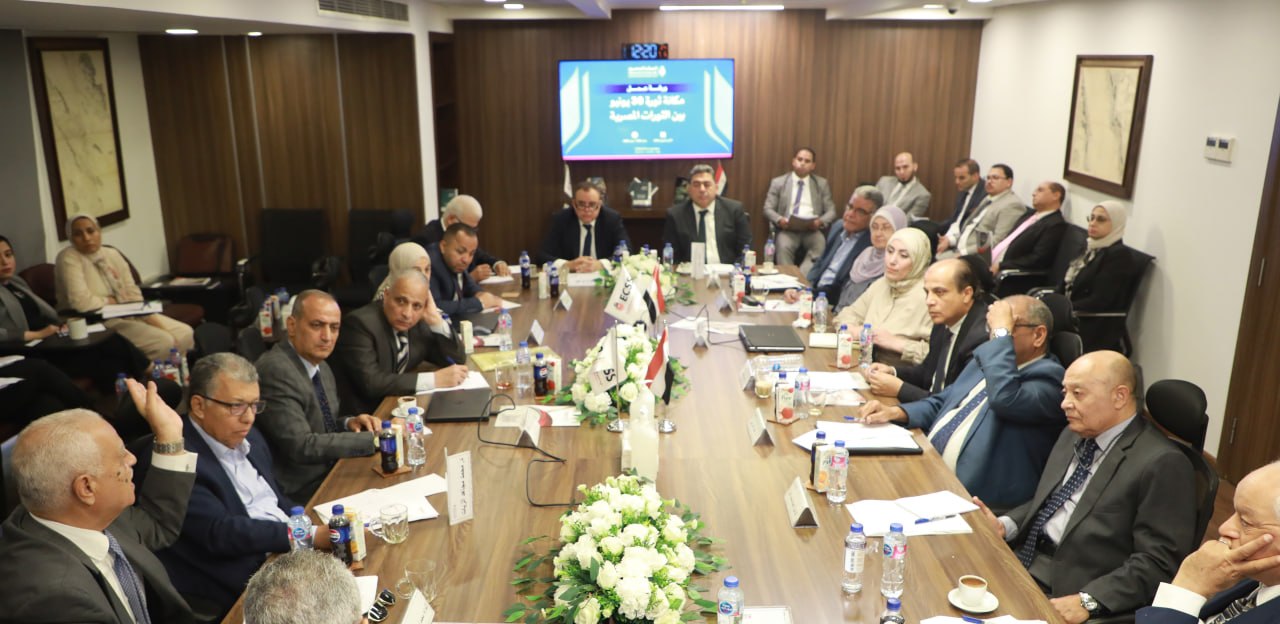
The Egyptian Center for Strategic Studies (ECSS) held a workshop on July 6, 2026 on “The Place of the June 30 Revolution Among Egypt’s Revolutions,” marking the launch of the ECSS’ research and academic activities plan for 2026-2027. The workshop was also the first event organized by the center’s newly established Historical Studies Program, bringing together a distinguished group of history professors and experts in political and social sciences.
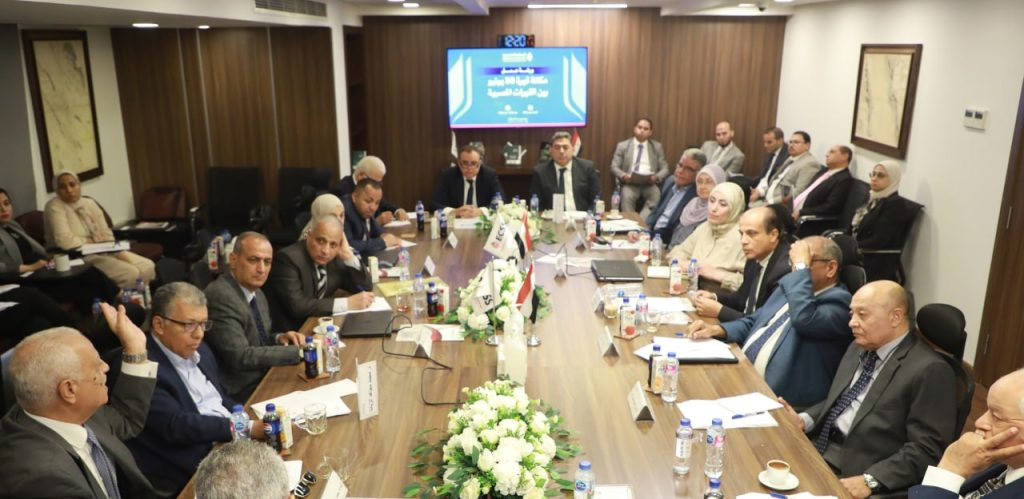
The workshop sought to situate the June 30, 2013 Revolution within the broader historical context of Egypt’s numerous revolutions across different historical eras. It also aimed to conduct an appropriate historical and analytical comparison between the June 30 Revolution and the most prominent revolutions witnessed throughout the various periods of Egyptian history — ancient, Islamic, modern, and contemporary — in order to identify the similarities and differences between the June 30 Revolution and its predecessors, highlight the distinctive characteristics that set it apart from earlier revolutions, and draw lessons from examining the June 30 Revolution against the backdrop of Egypt’s previous revolutions.
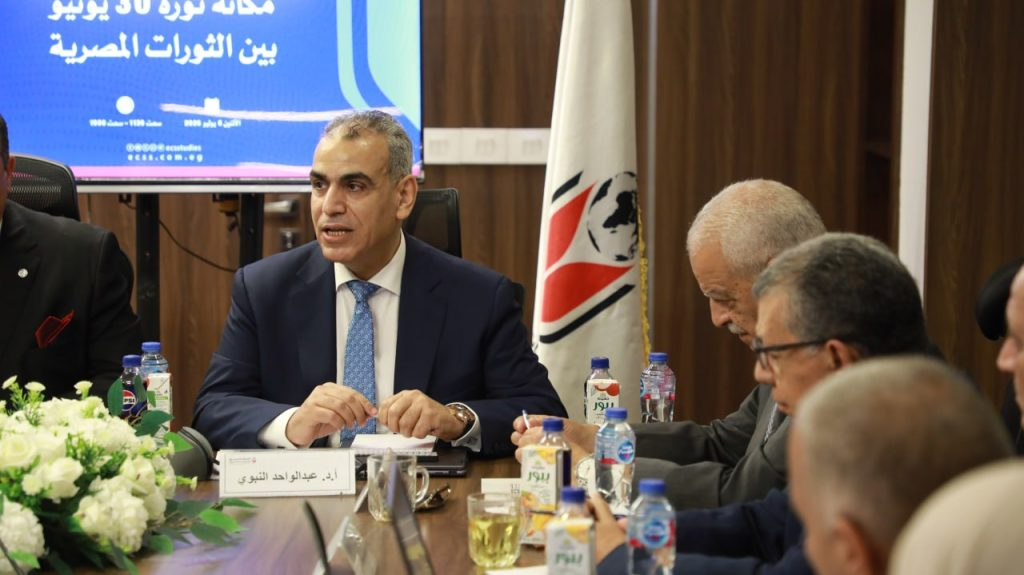
The workshop was divided into three main sessions. The first session addressed “The Place of the June 30 Revolution Among the Revolutions of Ancient Egyptian History,” focusing on the role of the military establishment, the religious dimension, the preservation of national identity, and social dimensions.

The second session, titled “The June 30 Revolution Among Egyptian Revolutions in the Islamic Era,” examined the various dimensions of comparison between the June 30, 2013 Revolution, on the one hand, and popular revolts during the Fatimid era, the revolt against Turan Shah in 648 AH, and revolts during the Mamluk era, on the other.
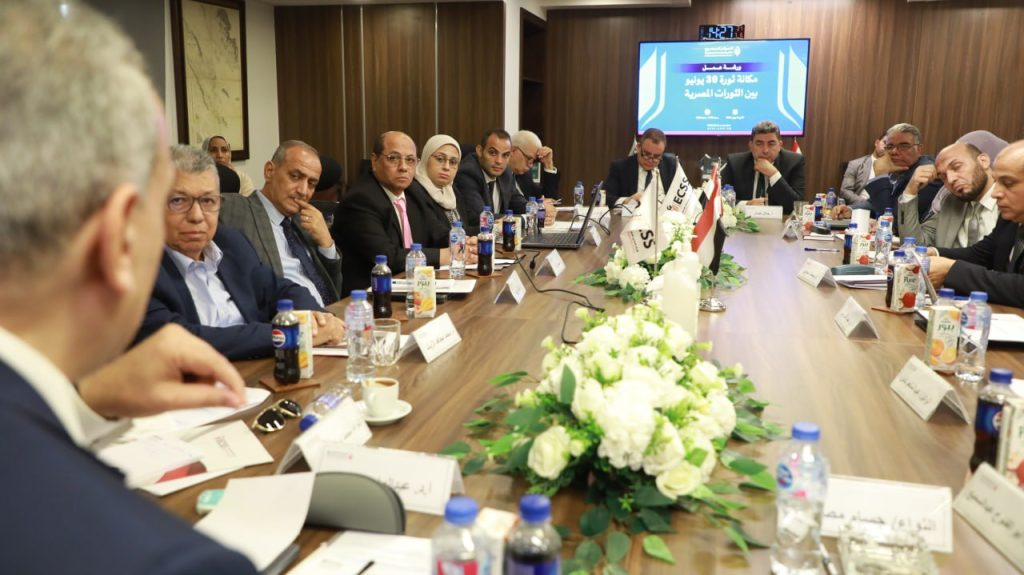
The third session, titled “The June 30 Revolution Among Egyptian Revolutions in Modern and Contemporary History,” sought to place the June 30 Revolution within the context of Egypt’s modern revolutions, beginning with the two Cairo revolts during the French Campaign, the 1805 revolt against Khorshid Pasha, the 1919 Revolution, and the July 23, 1952 Revolution. The session highlighted common factors linking these revolutions, including the role of religious institutions, popular will, Egyptian identity, and the position of the terrorist Muslim Brotherhood.
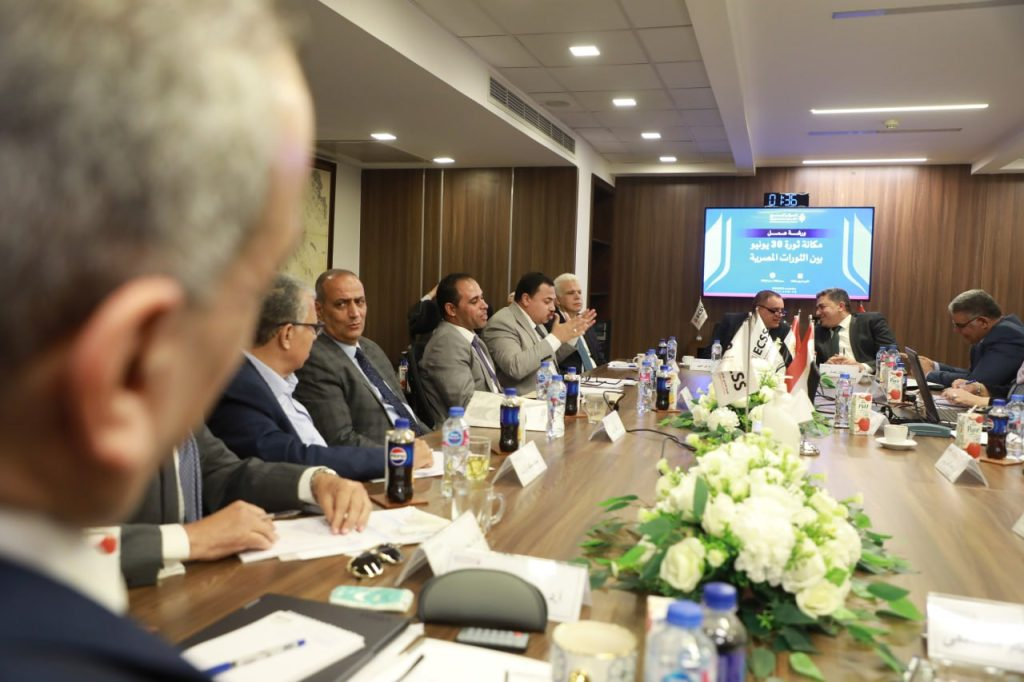
Based on the research papers presented and the substantive discussions among participants, the workshop produced a broad range of findings demonstrating the remarkable continuity that has characterized the Egyptian political character. Egyptians have consistently viewed revolution as an exceptional means of correcting the course of events whenever the foundations of the state are destabilized, rather than as a tool for destroying the state or undermining its institutions. Accordingly, June 30 represents a contemporary chapter in a long historical trajectory aimed at preserving the nation-state and restoring its capacity to perform its functions.
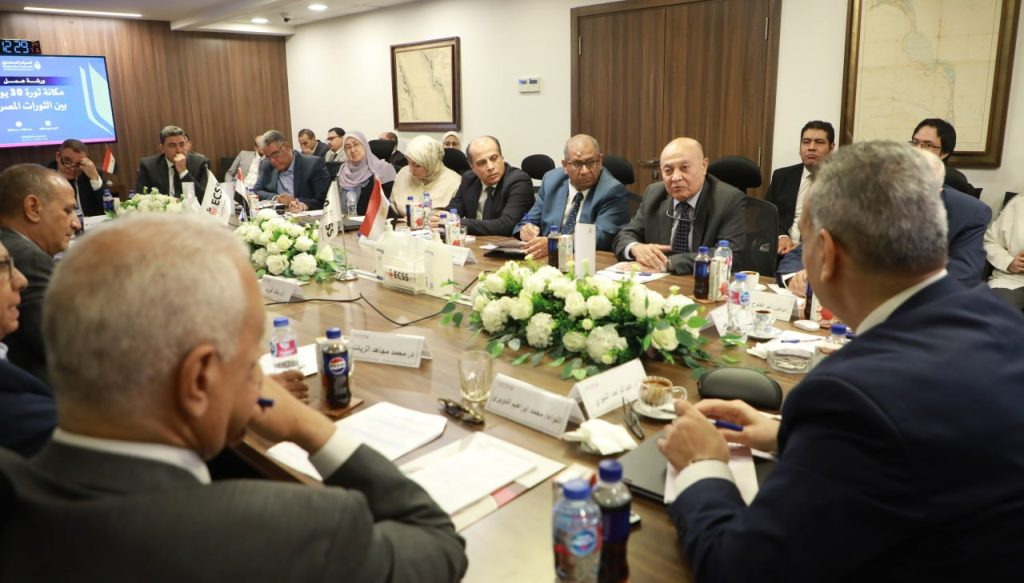
The papers and discussions also demonstrated that the Egyptian character and society possess a distinctive perspective for assessing whether events are unfolding along the proper course. Drawing on numerous experiences throughout Egyptian history, this perspective is rooted in a combination of deeply embedded religious, national, and civilizational values. In ancient times, these values were embodied in the concept of “Ma’at,” with its principles of truth and morality governing the universe, governance, society, and the individual.
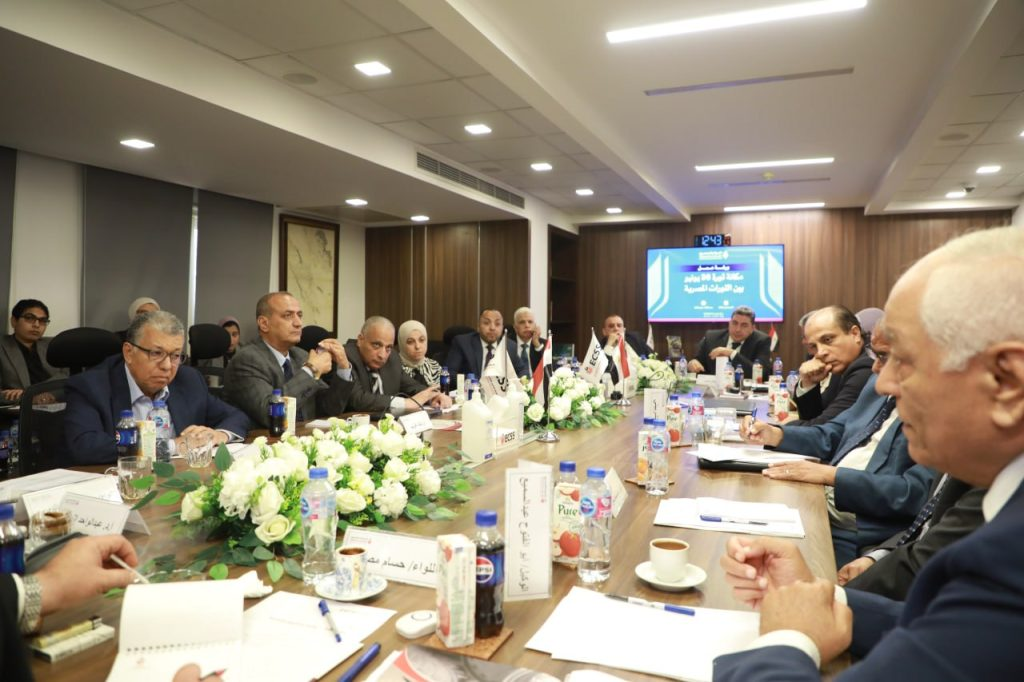
Egyptian revolutions throughout history, including the June 30 Revolution, also reveal Egyptian society’s particular sensitivity to its identity and, consequently, its rejection of any attempt to undermine that identity in civilizational, religious, or cultural terms. Egyptian society likewise rejects any external tutelage over its national decision-making or foreign encroachment that affects the integrity of the state or its social and economic equilibrium. Moreover, Egyptian revolutions demonstrate that overcoming major crises has consistently depended on the complementary roles of state institutions, foremost among them the military and religious establishments, alongside other national institutions, as pillars for safeguarding the unity of the state and preserving social cohesion.

The workshop demonstrated that the June 30 Revolution represents a contemporary milestone that can be understood within a longstanding historical pattern in which preserving the nation-state, safeguarding identity, and protecting social cohesion have remained among the foremost constants shaping Egyptian political consciousness across different historical eras.


Related Posts

Egypt between two revolutions (July 1952 – June 2013)

Reading into the Outcomes of the ECSS-Organized Conference on the Horn of Africa 

“Iraq and Egypt are the Arab Nation’s Shield and Sword”, Says Ammar Al-Hakim

The fourth war between Israel and Palestinian factions: Roles, results, and future scenarios

ECSS Team July 7, 2026
Share this Article
Facebook Twitter Whatsapp Whatsapp LinkedIn Telegram Email Copy Link Print

Stay Connected

Facebook Like
Twitter Follow
Instagram Follow
Youtube Subscribe

Latest Articles

Determinants of Success: Fifth Arab-African Summit
International Relations June 14, 2020
A review of the US administration’s position on regional issues
Opinions Articles November 29, 2020
Rethinking Europe’s Defense after America’s Pullback (1): An Introduction
European Studies May 3, 2025
Europe’s Security and Defense in the Face of Uncertainty: What Can Be Done?
European Studies March 9, 2025

Latest Tweets

//

The Egyptian Center for Strategic Studies is an independent non-profit think tank providing decision-makers by Policy alternatives, the center was established in 2018 and comprises a group of experts and researchers from different generations and scientific disciplines.

International Relations

  • African Studies
  • American Studies
  • Arab & Regional Studies
  • Asian Studies
  • European Studies
  • Palestinian & Israeli Studies

Defence & Security

  • Armament
  • Cyber Security
  • Extremism
  • Terrorism & Armed Conflict

Public Policies

  • Development & Society
  • Economic & Energy Studies
  • Egypt & World Stats
  • Media Studies
  • Public Opinion
  • Women & Family Studies

Who we are

The Egyptian Center for Strategic Studies (ECSS) is an independent Egyptian think tank established in 2018. The Center adopts a national, scientific perspective in examining strategic issues and challenges at the local, regional, and international levels, particularly those related to Egypt’s national security and core national interests.

The Center’s output is geared toward addressing national priorities, offering anticipatory visions for policy and decision alternatives, and enhancing awareness of various transformations through diverse forms of scientific production and research activities.

All Rights Reserved to Egyptian Center for Strategic Studies - ECSS © 2023

Removed from reading list

Undo
Welcome Back!

Sign in to your account

Lost your password?