




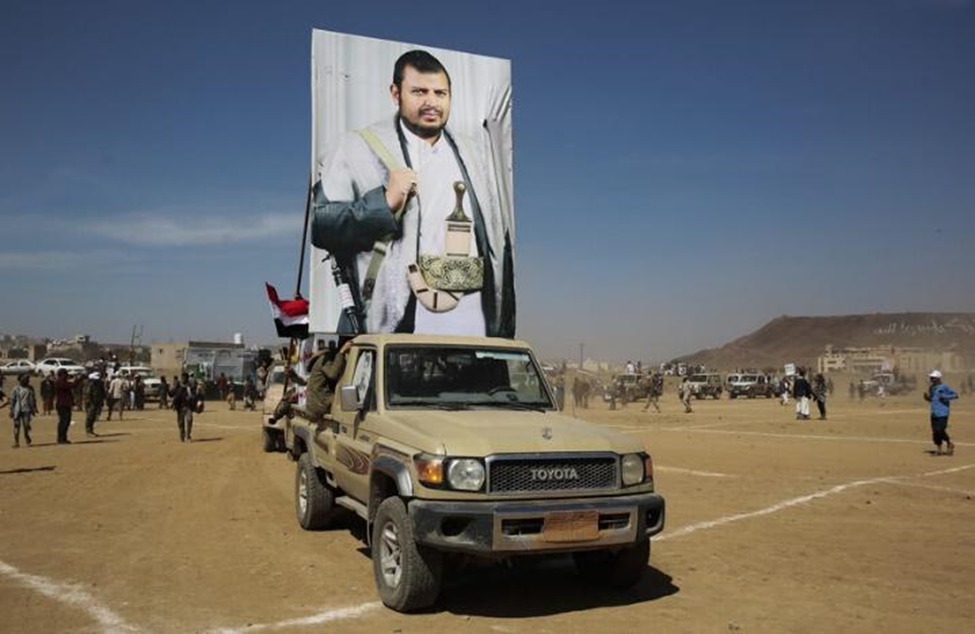
As Tel Aviv secured progress in implementing its plans to bolster field gains in Syria, its focus has now turned to the Houthi group in Yemen. On January 1, Prime Minister Benjamin Netanyahu announced in a television interview that the war against the Houthis “is just getting started,” coinciding with Israeli media reports of plans for a “more violent” campaign and an expanded “target bank.”
This aligns with the Israeli Broadcasting Authority’s revelation on December 9 of an in-depth Israeli study of large-scale military operations in Yemen after the collapse of al-Assad’s regime in retaliation for the escalation of Houthi strikes against Tel Aviv, with the group announcing on January 3 that it carried out 22 attacks within one week against US and Israeli targets using missiles and unmanned aerial vehicles (UAV). Throughout 2024, Houthi strikes against Israel surpassed 200 missiles and 170 UAVs, let alone Houthi escalations in the Red Sea, which inflicted substantial harm on Israel’s economy. This raises critical questions about Tel Aviv’s forthcoming strategy to counter the Houthi threat.
In this context, this article undertakes an analysis of Israel’s counter-Houthi strategy, shedding light on its efforts to destabilize Yemen as a critical front within the axis of resistance. It will further investigate the key features of this strategy, the challenges faced by Tel Aviv in its implementation, and the prevailing trends in Israel’s approach to countering the Houthi threat in Yemen.
I. Key Aspects of Israel’s Anti-Houthi Strategy
Several indicators suggest that the Houthi threat has become a top priority for the Israeli political and military leadership in the aftermath of the Assad regime’s collapse. This focus is coupled with Israel’s continued attention to traditional escalation arenas, including Syria, Lebanon, Gaza, and the West Bank, and its leadership’s commitment to developing a well-defined strategy with clear objectives and vital elements to confront the Houthis, as detailed below:
1. An Israeli Plan to Combat the Houthis: Leaked reports have uncovered an Israeli strategy to confront the Houthis, deliberated in closed-door sessions during December 2024 as Houthi strikes on Tel Aviv escalated. This strategy comprises three main components. The first involves accelerating efforts by Israeli intelligence agencies to gather detailed information on the Houthi group, including their field operations, combat tactics, and military capabilities, thereby cultivating in-depth expertise on Yemen. The second axis entails the creation of an independent unit within the Military Intelligence Directorate (Aman) of the Israeli army to monitor and collect intelligence on Houthi movements and activities, leveraging cooperation with foreign armies and intelligence agencies that share mutual interests against militias. Lastly, the third axis focuses on forming a significantly broader regional alliance than the existing multinational coalition, aimed at intensifying attacks on the Houthi group and their military sites.
2. Progressing Towards Establishing an Israeli Military Presence in Somaliland: According to the Middle East Monitor on October 15, 2024, Israel is pursuing plans to set up a military base in Somaliland with mediation by the UAE, which is negotiating with Somaliland authorities to grant Israelis access to military bases in exchange for formally recognizing Somaliland. This move seeks to establish a strategic foothold near the Houthi group’s sphere of influence in Yemen. With Somaliland located less than 400 miles from Yemen’s port of al-Hudaydah, it presents an optimal launch point for Tel Aviv, cutting the distance for Israeli aircraft by 2,000 km to facilitate attacks on Houthi military targets.
3. Strengthening Israeli Naval Capabilities to Encircle the Houthis by Sea: Israel is set to rely heavily on its advanced naval capabilities in its strategy to combat the Houthi group. These capabilities, strategically positioned, enable engagements along the western Yemeni coastline under Houthi control and support the enforcement of a naval blockade. An Israeli security report highlighted that the Tel Aviv Navy has shifted its focus to operational zones in the Red Sea and the Arabian Gulf, aiming to enhance its readiness through training and equipping itself with advanced naval combat tools, particularly modern landing craft. The report further noted that the Israeli Navy possesses long-range capabilities, including modern attack ships, submarines, and missile boats, operating beyond the “third circle” – a designated area far from the Israeli border.
Overall, Israel’s growing naval military capabilities are inextricably linked to its plans to deploy them in any future escalation against the Houthi group, particularly in light of reports suggesting Tel Aviv’s inclination to establish a military foothold in Somaliland.
4. Targeting Houthi Leaders to Disrupt the Group’s Operations: Israel is reportedly planning a series of assassinations targeting Houthi leaders via a wave of Israeli airstrikes, likely supported by its regional allies, including the United States and Britain. This approach mirrors Israel’s strategies in Gaza, the West Bank, Syria, and Lebanon, where it has eliminated leaders of Hezbollah and Hamas as well as resistance elements in the West Bank. Israeli Defense Minister Yisrael Katz underscored this strategy in December 2024, declaring, “We will hunt down all of the Houthis’ leaders and we will strike them just as we have done in other places.”
On January 6, the Hebrew website Walla reported that the Israeli General Staff has formally classified the situation pertaining to the Houthi group in Yemen as an active military campaign. This designation necessitates a heightened level of intelligence gathering by Aman and authorizes the Israeli Air Force—which will be allocated additional resources—to intensify its offensive operations against Houthi targets, including leadership figures, military infrastructure, and supply chains, with a particular focus on the delivery of weapon systems and raw materials for arms production from Iran and other countries. These measures, directed by Chief of Staff Herzi Halevi, aim to address years of underinvestment by Israeli security services in Yemen, attributed to insufficient budgets.
According to Yedioth Ahronoth, Likud Knesset Member Amit Halevi introduced a bill in November 2024 to establish a standalone intelligence department that would work in parallel with the IDF’s Military Intelligence Directorate. This department’s role would be to deliver independent intelligence analyses, offering an alternative perspective to the assessments from the IDF’s Intelligence Directorate. The bill, endorsed by 17 Knesset Members representing Likud, Religious Zionist, and the Otzma Yehudit parties, sought to tackle the intelligence lapses linked to Operation al-Aqsa Flood and to prevent similar gaps in Israeli military readiness against the Houthis.
Given the context outlined, it is quite plausible that Tel Aviv might attempt to open diplomatic channels with the Yemeni government to gain military assistance for an operation designed to free Sana’a and coastal cities from Houthi domination in return for Israeli-Yemeni normalization. This initiative gains further credibility considering the UAE’s role as a regional ally supporting Yemen’s Southern Transitional Council, which is also a partner of Tel Aviv. As a result, the Israeli partnership could become a significant factor in fostering closer ties between the Yemeni government, backed by Saudi Arabia, and the Yemen Transitional Council, supported by the UAE, which would potentially shift the military balance in Yemen, enabling the restoration of Yemeni control over Sana’a and the coastal areas, thus countering the Houthi threat to global trade and Israeli national security. This is particularly relevant in light of the Yemeni government’s assessment that Western strikes against the Houthis have not been effective, emphasizing that the best solution lies in reinforcing legitimate forces to reclaim al-Hudaydah and its ports, thereby ending the Houthi-led coup and restoring control over the capital.
Notably, Eyal Zisser, Vice Rector of Tel Aviv University and a specialist in Middle East affairs, has previously advocated for Tel Aviv to complement military pressure with the formation of a local alliance. This alliance, composed of an estimated 70% of Yemenis opposed to the Houthi group and supported by the United States, would focus on seizing control of northern Yemen and dismantling the Houthi regime. Zisser highlighted that the presence of a shared adversary serves as a strategic link between Tel Aviv, the Yemeni government, southern Yemen’s administration, and Tel Aviv’s international partners.
II. Challenges to Israel’s Anti-Houthi Strategy
Tel Aviv is confronted with a series of challenges that hinder its attempts to undermine Houthi military capabilities, but it strives to address them. The first of these challenges is the insufficient intelligence on key Houthi military and logistical sites and the lack of intelligence on the whereabouts of Houthi leaders, who have reportedly adopted similar tactics to those used by al-Qaeda leaders, hiding in caves reminiscent of those in Afghanistan. To overcome these issues, Tel Aviv has ramped up efforts by its security and intelligence services to gather fragmented intelligence on Houthi leaders’ hideouts and military concentrations. This effort aims to compile a database of strategic targets in Yemen for potential Israeli strikes, in collaboration with international intelligence agencies like those from Washington and London. Furthermore, the Israeli Military Intelligence Directorate, led by Major General Shlomi Bender, has initiated steps to create an independent unit tasked with collecting intelligence and monitoring the movements and activities of the Houthi group.
The second major challenge for Israel in combating the Houthis lies in the formidable nature of Yemen’s vast and mountainous terrain. This rugged geography significantly hinders the effectiveness of aerial bombardment, unlike the more confined environments of Lebanon and Gaza. This necessitates the implementation of a military operation to ensure the effectiveness of Israel’s approach. Such an operation could involve leveraging legitimate Yemeni forces with Israeli and Western support or an Israeli coastal incursion. To facilitate this, Tel Aviv must strengthen its military foothold in the Red Sea and the Horn of Africa. This is already evident in the ongoing negotiations with Somaliland to establish a military base on its eastern coast, complementing Israel’s long-standing presence in Eritrea, which includes small naval units in the Dahlak Archipelago, the port of Massawa, and an intelligence-gathering center in the Emba Soira Mountain area near Asmara
The third challenge stems from the significant geographical distance between Tel Aviv and Sana’a, approximately 2,000 kilometers. This considerable distance presents two critical logistical and operational impediments. It poses a substantial financial strain on Israeli airstrike operations and underscores the complexity of ensuring effective coordination between operational forces—such as war planes executing the missions—and intelligence agencies responsible for guiding these operations.
III. Internal Israeli Discord over the Optimal Strategy to Confront the Houthis
The Israeli security and military establishment is grappling with the optimal approach to addressing the Houthi threat. This has led to a division within the Israeli leadership, driven by concerns about the potential consequences of any escalation, such as an escalation in missile attacks from Yemen, disruptions to flights at Ben Gurion Airport, and significant harm to the tourism sector and the broader Israeli economy. One faction, represented by several army generals, argues that achieving deterrence is impossible without disrupting the Houthis’ supply chain and implementing countermeasures against them. Conversely, a second faction, led by Mossad director David Barnea, advocates for targeting Iran as a means of indirectly curbing Houthi activities. This approach is contested by those who believe the Houthis operate with substantial independence, noting that despite Iran’s previous requests for the group and its allies to halt their strikes, these demands were largely ignored.
In conclusion, Israel has made countering the Houthi group and degrading its military capabilities a top priority, mirroring its strategies against Hezbollah and Hamas. This reflects a proactive Israeli approach to confronting the Houthis, involving rapid response capabilities and leveraging international and regional alliances. Israel aims to exploit the Iranian threat and its Houthi proxy to enhance its strategic positioning in the Red Sea and the Horn of Africa, securing strategic positioning along vital maritime routes. Concurrently, Israel seeks to forge a regional alliance with key Arab countries and international partners, solidifying its regional influence.


