





Undoubtedly, the war that commenced in Gaza on October 7 has brought the Palestinian cause to the forefront of the international stage and exposed numerous realities in Palestine, the Middle East, and globally. The following summarizes the most significant of these realities:
- Evidence has demonstrated that the Israeli military’s superior capabilities alone do not ensure the security of Israel, which has long been claiming that it can guarantee the security of Arab countries that have signed or seek to join the Abrahamic Accords. The war demonstrated that it is Israel that stands in need of Arab peace partners to ensure its security in Gaza and in response to the recent limited Iranian missile strike. Israel has been convincingly shown that its genuine security stems from the current state of peace it enjoys with its neighboring countries, Egypt and Jordan.
- Significant global developments that have occurred since the turn of the 21st century, most notably the rise in prominence of the Internet and social media, have eradicated the repercussions of the Israeli lobby and its support groups’ influence over conventional media, or particularly over the perceptions of young individuals worldwide, including those in the United States. This explains the unprecedented expansion of Western youth demonstrations against American military support for Israel and its atrocities in Gaza to American universities.
- American universities have observed the emergence of the Boycott, Divestment, and Sanctions (BDS) movement, which aims to terminate global backing for Israel’s oppression of Palestinians and exert pressure on Israel to adhere to international legal obligations. Significantly, during the 1980s, the act of withdrawing investments from American universities in apartheid-era South Africa proved to be one of the most impactful strategies in the fight to bring an end to apartheid in the 1990s.
- The current unipolar international system’s transitional phase has given rise to a number of international powers that oppose US policy and its application of double standards to issues like the Israeli occupation of the West Bank and Gaza Strip versus the Russian occupation of Ukraine. South Africa spearheaded the global effort to demonstrate that the Israeli military operation in Gaza is indicative of a broader Israeli strategy targeted at committing genocide against the Palestinian people. Israel’s leaders are now being charged with war crimes by international courts.
- As much as some Arab countries—Saudi Arabia in particular—need US assistance to preserve stability and governance, the United States is in greater need to stop China from entering’ markets of the countries as a rival in the commercial, technological, and even military and nuclear domains.
- For the first time since Israel’s founding, the Arab and Muslim vote in the United States now holds significant sway in determining the outcome of the upcoming presidential elections in several swing states. This could potentially prevent President Biden from being reelected if he maintains his current approach to the war and post-war period.
Consequently, the outcomes of the conflict over the last seven months have placed limitations on Israel’s future military operations in Gaza. These restrictions are a result of the peace relations with Egypt, the international response, the evolving global dynamics, and internal political factors in both the United States and Israel.
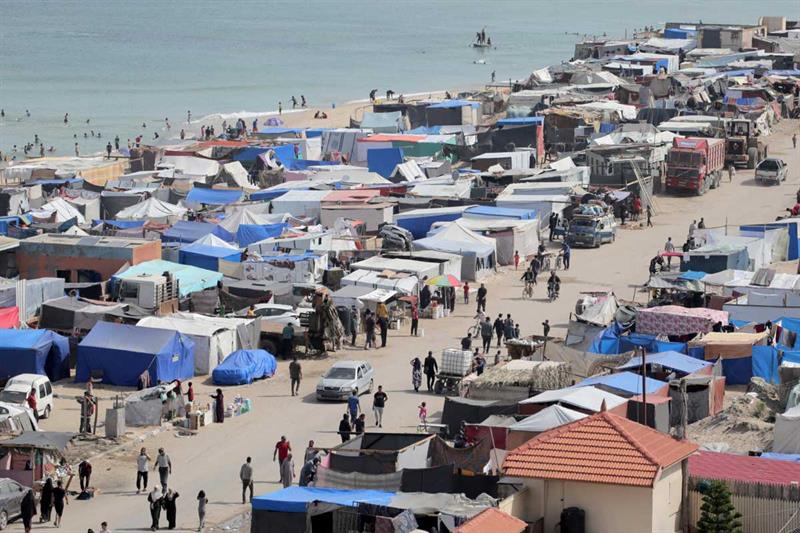
The Palestinian Rafah region garnered global attention due to concerns that the Netanyahu government would carry out its threats of a military invasion, similar to what transpired in Gaza and claimed the lives and injuries of tens of thousands of civilians, displaced approximately one and a half million Palestinians, and exposed them to the peril of starvation as the Israeli army prevented the entry of adequate quantities of aid to the region. Hearts have ached for fear that the Palestinian tragedy would recur in Rafah and that its direct consequences would escalate the conflict to become a regional, if not an international one, affecting Egypt first and then the rest of the region.
Hamas’s agreement to the framework ceasefire proposal put forth by Egypt, which entailed the release of prisoners from both sides, increasing aid deliveries into the Gaza Strip, the commencement of the Israeli military withdrawal, and the repatriation of displaced Palestinians to their regions of origin, failed to assuage international apprehension. Concern over Netanyahu’s desire to prolong the conflict and maintain the unity of his far-right coalition—which stands to fall apart should he accept the framework agreement that Hamas accepted—has persisted on the international scene.
In my opinion, the Netanyahu government will ultimately acquiesce to the fundamental aspects of the framework agreement due to significant covert coercion from the Biden administration, as well as pressure from Israeli public sentiment and the families of the hostages.
The Israeli government’s acceptance could potentially trigger a political crisis resulting in the departure of certain extremist religious parties from the cabinet. However, this would still enable Netanyahu to remain in power until the elections, as he would have the support of the more moderate parties in the Knesset. This may give Netanyahu more leeway to accept concessions that will allow him to achieve two historic goals ahead of the elections: the release of the remaining Israeli prisoners and, possibly, historic reconciliation with Saudi Arabia as part of a tripartite agreement with the United States.
While I acknowledge the potential for a comprehensive agreement, I am not very hopeful that it will be achieved before the American elections—an agreement comprising the United States’ recognition of a Palestinian state, with post-Gaza ceasefire negotiations aiming to establish a security framework capable of averting a recurrence of the October 7 attacks in exchange for an agreement in principle on normalization between Saudi Arabia and Israel, contingent upon Israel’s consent to the US announcement as a means to obtaining approval for passing the security, nuclear, and technological agreement in the US Congress and securing the transfer of power to the Crown Prince with the backing of the United States.
However, I think that averting the Israeli military advance into Rafah and both parties accepting and carrying out of the framework agreement for a ceasefire and prisoner exchange can pave the way for the active participants, including Egypt, to persuade the United States and Israel of the remaining stipulations of the agreement, which the United States ought to endorse and could possibly alter the agreement’s trajectory to become a pillar of a peace deal between Israel and the Palestinians that results in a two-state solution.
My cautious optimism is based on elements contained in the Egyptian proposal for the framework agreement, the most important of which is that the agreement’s guarantors are the United States, Egypt, Qatar, and the United Nations, implying that the agreement’s implementation will be overseen internationally. Furthermore, the process of transporting, securing, and distributing aid and rebuilding Gaza will necessitate international collaboration, with Egypt assuming a crucial role. Naturally, the international role will encompass peacekeeping and mutual security measures, which must be agreed upon as a prerequisite for the Israeli withdrawal from Gaza. Certain Hamas leaders facilitated the acceptance of these measures by expressing their willingness to relinquish weapons and armed conflict as part of the process of establishing a sovereign Palestinian state.
I think US President Biden could issue a statement akin to the 1917 Balfour Declaration, which promise to assist the Jews in establishing a national homeland on a portion of the land in Palestine. He could refer to this American declaration in favor of the establishment of a Palestinian state as the “Biden Declaration,” outlining a one-year transitional plan that would conclude with the beginning of negotiations to establish an autonomous and sustainable state for the Palestinians on the basis of the territories Israel occupied in 1967, with just security guarantees. This declaration should pave the way for Palestine to be recognized as a full member state of the United Nations and other international organizations. Additionally, the United States could advocate for a resolution to be passed by the UN Security Council to support this objective and endorse the final settlement criteria outlined in the declaration.
This plan would restore the Palestinians’ shattered political optimism and grant the Israeli people their security aspirations, thereby preventing future attacks similar to those that transpired on October 7. Further, this plan would help prevent a political and security vacuum in the Gaza Strip following Israel’s military withdrawal and pave the way for Hamas to transition into a political movement that joins the Palestine Liberation Organization (PLO) and adheres to the PLO-signed peace agreement.
The proposed one-year transitional period would encompass the cessation of hostilities in Gaza, the liberation of all captives and prisoners of war from both sides, the deployment of international peacekeeping forces, and the extended invitation to the PLO to establish a governing entity in Gaza. The peacekeeping forces would oversee the Israeli military’s withdrawal from Gaza, dismantle all heavy weaponry in the area, monitor all incoming and outgoing goods, and initiate a worldwide effort to reconstruct Gaza and establish it as a thriving economic model for peaceful collaboration at both regional and international levels.
These measures will ensure the stability of the region, uphold the Israeli peace treaties with Egypt and Jordan, safeguard the Abrahamic Accords agreements, and promote efforts to broaden their regional impact, potentially including the initiation of Israeli-Saudi normalization once Israel embraces the two-state solution. This approach plays a crucial role in achieving lasting peace between Israel and the Palestinians, not only in Gaza but also in the West Bank and Jerusalem.