





By using ECSS site, you agree to the Privacy Policy and Terms of Use.
Accept
ECSS - Egyptian Center for Strategic StudiesECSS - Egyptian Center for Strategic Studies
  • Home
  • International Relations
    International Relations
    Show More
    Top News
    Human Rights Violations and Global Apathy: The OHCHR Report on Gaza’s Humanitarian Crisis
    November 18, 2024
    BRICS Plus and Africa: Challenges and Mutual Gains
    September 21, 2023
    When Will Lebanon Fill the Presidential Vacuum?
    April 2, 2023
    Latest News
    Israel’s African gambit
    March 6, 2026
    Geopolitical realism: What does Washington’s return to the African Sahel mean?
    March 5, 2026
    Analysis | Manufacturing opposition: How Israel uses digital platforms to shape Iranian public opinion
    February 14, 2026
    Analysis| Turkey without terrorism: Assessing the trajectory of Turkish–Kurdish reconciliation
    February 12, 2026
  • Defense & Security
    Defense & Security
    Show More
    Top News
    Messages of military drills: Is the region on the brink of a new war?
    April 5, 2021
    Europe amid US–Iran Escalation: Can It Play the Diplomat or Become Entangled in the Crisis?
    April 13, 2025
    The Future of Relations between Al-Qaeda, Taliban and Islamic State After Al-Zawahiri’s Death
    August 27, 2022
    Latest News
    Between two camps: Reading into ISIS discourse on the US-Israeli war on Iran
    April 15, 2026
    Encrypted messages “Roaring Lion”: The hidden messages behind the name of the operation against Iran
    March 11, 2026
    Iran war developments
    March 9, 2026
    Manufacturing the enemy : Reframing terrorism in contemporary Western discourse
    March 7, 2026
  • Public Policy
    Public Policy
    Show More
    Top News
    Why Does Egypt Expand in the Establishment of International Schools?
    October 24, 2020
    The National Strategy to Combat FGM: What’s Next?
    October 14, 2021
    Epidemiological Surveillance in the Egyptian Health System
    October 15, 2022
    Latest News
    Reading into attacks on maritime navigation in the Arabian Gulf
    March 17, 2026
    Emerging economies in a world without rules: Between opportunity and predicament
    March 5, 2026
    The end of economic globalization: Reading into the 2025 U.S. National Security Strategy
    February 4, 2026
    Weaponization of Resources: The Role of Rare Earth Metals in the US-China Trade War
    May 25, 2025
  • Analysis
    • Opinion
    • Analysis
    • Situation Assessment
    • Readings
  • Activities
    • Conferences
    • ECSS Agenda
    • Panel Discussion
    • Seminar
    • Workshops
  • ECSS Shop
  • العربية
  • Defense & Security
  • International Relations
  • Public Policy
All Rights Reserved to ECSS © 2022,
Reading: How Will Pezeshkian’s Leadership Affect Iran’s National and Foreign Policy Directions?
Share
Notification Show More
Latest News
The future of US-Iran negotiations
Opinion
Between two camps: Reading into ISIS discourse on the US-Israeli war on Iran
Terrorism & Armed Conflict
Russia, China, and the war against Iran
Others
Continental drift
Others
Deadlock in the Strait of Hormuz
Others
Aa
ECSS - Egyptian Center for Strategic StudiesECSS - Egyptian Center for Strategic Studies
Aa
  • اللغة العربية
  • International Relations
  • Defense & Security
  • Special Edition
  • Public Policy
  • Analysis
  • Activities & Events
  • Home
  • اللغة العربية
  • Categories
    • International Relations
    • Defense & Security
    • Public Policy
    • Analysis
    • Special Edition
    • Activities & Events
    • Opinions Articles
  • Bookmarks
Follow US
  • Advertise
All Rights Reserved to ECSS © 2022, Powered by EgyptYo Business Services.
Arab & Regional Studies

How Will Pezeshkian’s Leadership Affect Iran’s National and Foreign Policy Directions?

Ali Atef
Last updated: 2024/07/10 at 6:07 PM
Ali Atef
Share
7 Min Read
SHARE

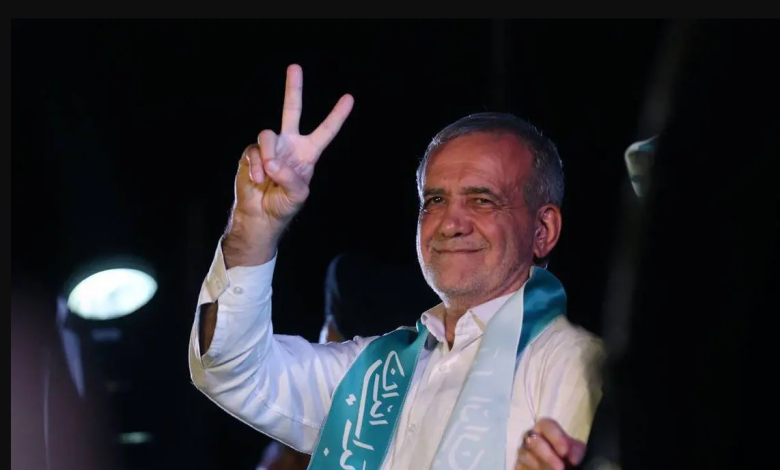
In the early hours of July 6, 2024, the Iranian Election Commission declared reformist candidate Masoud Pezeshkian as the winner of the country’s fourteenth presidential election. Pezeshkian now joins the ranks of the Islamic Republic’s presidents as its ninth leader and the third reformist to hold the office, following Muhammad Khatami (1997–2005) and Hassan Rouhani (2013–2021).

Pezeshkian garnered 16,384,403 votes, surpassing the fundamentalist candidate Saeed Jalili, who received 13,538,179 votes. Voter turnout in the second round was 49.8%, a notable increase from the 40% turnout in the first round held on June 28.

Contrary to widespread expectations favoring Saeed Jalili, given the fundamentalist movement’s stronghold over Iran’s key political institutions, Pezeshkian’s victory marks a significant shift with potential ramifications for both domestic and foreign policy.

Impact of Pezeshkian’s Victory on Domestic Politics in Iran

The most significant impacts of Pezeshkian’s victory on domestic politics in Iran can be outlined as follows:

Revival of the Reformist Movement: Pezeshkian’s triumph marks the resurgence of the reformist movement in Iran’s political landscape after a three-year hiatus following former President Ebrahim Raisi’s tenure. During Raisi’s presidency, many reformist leaders retreated from key political positions dominated by fundamentalists. Pezeshkian’s win signals a renewed competition between reformists and fundamentalists, especially as the latter still control many influential political roles.

Calming Internal Tensions Amid Economic Hardships: Pezeshkian’s victory is likely to soothe Iranian citizens disillusioned with the domestic policies of former President Ebrahim Raisi, particularly on contentious issues like women’s rights and the mandatory hijab. His win rekindles hope for economic improvement, as the reformist approach leans towards openness and engagement with Western countries, in stark contrast to the fundamentalist agenda.

The regime likely needs to pacify the domestic front, especially since recent signs indicated potential widespread protests if Pezeshkian had lost, particularly after he secured over 10 million votes in the first round, compared to Jalili’s 9 million. Pezeshkian’s victory, therefore, presents an opportunity to stabilize the internal political climate.

A Peaceful Transition to a New Era: With Iran on the brink of entering the post-Khamenei phase, the regime faces the urgent task of pacifying the streets and steadying the political environment. The rise of a reformist president could significantly enhance political stability and prevent local disruptions, particularly if reformists succeed in negotiating a nuclear agreement and achieving economic progress in the upcoming months.

The Impact of Pezeshkian’s Victory on Iranian Foreign Policy

At a foreign policy level, the most notable impacts of Pezeshkian’s victory on Iran’s regional and international foreign policy can be summarized as follows:

Continuing Rapprochement with Middle Eastern Countries: Pezeshkian has repeatedly emphasized his commitment to strengthening ties with neighbouring countries in the Middle East. This sentiment has been echoed by other Iranian institutions, particularly after the death of former President Ebrahim Raisi on May 19, 2024. The commitment to this policy indicates no major shifts in regional diplomacy. 

However, the question remains: Will Pezeshkian maintain the same pace and vigor as the previous administration, or will his government prioritize relations with Western countries over Eastern ones?

Enhancing Relations with the United States and Europe: Reformists have a well-known penchant for opening up to the West, including the United States and Europe. This suggests a potential thaw in Iranian-US and Iranian-European relations in the coming months. Such a shift could pave the way for increased Western investments in Iran, reminiscent of the economic opportunities seen during former President Hassan Rouhani’s term (2013-2021).

Increased Prospects for a Nuclear Agreement: With Masoud Pezeshkian’s victory, the likelihood of reaching a nuclear agreement with major world powers appears more promising. Reformists are generally seen as more pragmatic and less extreme at the negotiating table, unlike the fundamentalists, who, under President Raisi, engaged in protracted yet fruitless discussions with the West for over two years in Vienna. Pezeshkian’s presidency brings renewed optimism for diplomatic progress. 

Notably, former President Rouhani managed to secure a nuclear deal in a much shorter timeframe, highlighting the reformists’ effectiveness in such diplomatic efforts.

Unchanged Policy towards Proxies and Conflict with Israel: Despite these potential shifts, Iran’s approach to its regional proxies in Iraq, Lebanon, and Syria is expected to remain consistent. This is primarily because the military and security services control these policies. However, Iran might seek to de-escalate tensions on these fronts temporarily to avoid destabilizing its internal political, security, or military situation, especially as it prepares for the post-Khamenei era. The same applies to Iran’s conflict with Israel, which remains under the purview of these security apparatuses.

Conclusion

Masoud Pezeshkian’s victory breathes new life into the reformist movement, bringing it back to prominence in Iran’s political landscape after a three-year absence. This resurgence not only revitalizes the reformists but also promises to bring much-needed stability to the political scene, as reformists and fundamentalists are likely to be preoccupied with their renewed rivalry.

On the foreign policy front, significant changes are not expected, particularly regarding Iran’s regional proxies, its relationship with the United States, and the ongoing conflict with Israel. Iran has confirmed its continued commitment to rapprochement with Arab and Middle Eastern countries.

In the meantime, the likelihood of reaching a nuclear agreement with major powers is set to increase, particularly after the US presidential elections in November 2024. A closer alignment with European countries is also anticipated, paving the way for enhanced diplomatic and economic relations.

Related Posts

The future of US-Iran negotiations

Between two camps: Reading into ISIS discourse on the US-Israeli war on Iran

Deadlock in the Strait of Hormuz

Reading into attacks on maritime navigation in the Arabian Gulf

TAGGED: 2024_Iran_elections, Hassan Rouhani, Iran, Pezeshkian’s Leadership
Ali Atef July 10, 2024
Share this Article
Facebook Twitter Whatsapp Whatsapp LinkedIn Telegram Email Copy Link Print

Stay Connected

Facebook Like
Twitter Follow
Instagram Follow
Youtube Subscribe

Latest Articles

Multiple Calculations: Reciprocal Assaults between Washington and Iraqi Militias
Arab & Regional Studies February 22, 2024
Reading into the Global Terrorism Index 2024: Trends in Terrorist Activity and Regional Distribution of Operations (3)
Terrorism & Armed Conflict March 14, 2024
The Egyptian Center for Strategic Studies participates in the 57th Cairo International Book Fair for the sixth year
Readings January 25, 2026
Tax Neutrality: Strategies to Stimulate Private Investment
Economic & Energy Studies July 29, 2023

Latest Tweets

//

The Egyptian Center for Strategic Studies is an independent non-profit think tank providing decision-makers by Policy alternatives, the center was established in 2018 and comprises a group of experts and researchers from different generations and scientific disciplines.

International Relations

  • African Studies
  • American Studies
  • Arab & Regional Studies
  • Asian Studies
  • European Studies
  • Palestinian & Israeli Studies

Defence & Security

  • Armament
  • Cyber Security
  • Extremism
  • Terrorism & Armed Conflict

Public Policies

  • Development & Society
  • Economic & Energy Studies
  • Egypt & World Stats
  • Media Studies
  • Public Opinion
  • Women & Family Studies

Who we are

The Egyptian Center for Strategic Studies (ECSS) is an independent Egyptian think tank established in 2018. The Center adopts a national, scientific perspective in examining strategic issues and challenges at the local, regional, and international levels, particularly those related to Egypt’s national security and core national interests.

The Center’s output is geared toward addressing national priorities, offering anticipatory visions for policy and decision alternatives, and enhancing awareness of various transformations through diverse forms of scientific production and research activities.

All Rights Reserved to Egyptian Center for Strategic Studies - ECSS © 2023

Removed from reading list

Undo
Welcome Back!

Sign in to your account

Lost your password?