



By using ECSS site, you agree to the Privacy Policy and Terms of Use.
Accept
ECSS - Egyptian Center for Strategic StudiesECSS - Egyptian Center for Strategic Studies
  • Home
  • International Relations
    International Relations
    Show More
    Top News
    Egypt-France relations: Consensus and strategic partnership
    December 12, 2020
    Beyond Tigray: Wielding Hunger as a Weapon in Ethiopia’s Civil War
    August 22, 2021
    Cautious Trepidation: The International and Regional Response to the Ethiopian Crisis
    February 9, 2022
    Latest News
    Reshaping the US position toward Israel: From the erosion of the old consensus to a new conflict across parties, state, and society
    April 23, 2026
    Israel’s African gambit
    March 6, 2026
    Geopolitical realism: What does Washington’s return to the African Sahel mean?
    March 5, 2026
    Analysis | Manufacturing opposition: How Israel uses digital platforms to shape Iranian public opinion
    February 14, 2026
  • Defense & Security
    Defense & Security
    Show More
    Top News
    Strategic Deception in the October War
    October 5, 2023
    Reading into the Global Terrorism Index 2024: A Critical Perspective
    March 25, 2024
    Why isn’t the Yemen war drawing to a close?
    March 27, 2021
    Latest News
    Between two camps: Reading into ISIS discourse on the US-Israeli war on Iran
    April 15, 2026
    Encrypted messages “Roaring Lion”: The hidden messages behind the name of the operation against Iran
    March 11, 2026
    Iran war developments
    March 9, 2026
    Manufacturing the enemy : Reframing terrorism in contemporary Western discourse
    March 7, 2026
  • Public Policy
    Public Policy
    Show More
    Top News
    Unprecedented Revival: Egypt’s Becomes Self-Sufficient in Natural Gas
    August 29, 2021
    A Comprehensive Vision: The Cultural and Touristic Dimensions of Developing Muhammad Ali’s Gunpowder Magazine
    A Comprehensive Vision: The Cultural and Touristic Dimensions of Developing Muhammad Ali’s Gunpowder Magazine
    June 21, 2022
    Effective Policies: Managing Inflation in Egypt in 2021
    February 8, 2022
    Latest News
    Egypt as a balancing power: Why Cairo rejects the logic of wars in the Middle East
    April 30, 2026
    Militarizing water in Middle East wars A strategic analysis of the Iran-US-Israel war
    April 18, 2026
    Reading into attacks on maritime navigation in the Arabian Gulf
    March 17, 2026
    Emerging economies in a world without rules: Between opportunity and predicament
    March 5, 2026
  • Analysis
    • Opinion
    • Analysis
    • Situation Assessment
    • Readings
  • Activities
    • Conferences
    • ECSS Agenda
    • Panel Discussion
    • Seminar
    • Workshops
  • ECSS Shop
  • العربية
  • Defense & Security
  • International Relations
  • Public Policy
All Rights Reserved to ECSS © 2022,
Reading: Analytical Insight into the World Bank’s Report on the ‘Middle-Income Trap’
Share
Notification Show More
Latest News
Egypt as a balancing power: Why Cairo rejects the logic of wars in the Middle East
Media Studies
Reshaping the US position toward Israel: From the erosion of the old consensus to a new conflict across parties, state, and society
American Studies
Militarizing water in Middle East wars A strategic analysis of the Iran-US-Israel war
Economic & Energy Studies
The future of US-Iran negotiations
Opinion
Between two camps: Reading into ISIS discourse on the US-Israeli war on Iran
Terrorism & Armed Conflict
Aa
ECSS - Egyptian Center for Strategic StudiesECSS - Egyptian Center for Strategic Studies
Aa
  • اللغة العربية
  • International Relations
  • Defense & Security
  • Special Edition
  • Public Policy
  • Analysis
  • Activities & Events
  • Home
  • اللغة العربية
  • Categories
    • International Relations
    • Defense & Security
    • Public Policy
    • Analysis
    • Special Edition
    • Activities & Events
    • Opinions Articles
  • Bookmarks
Follow US
  • Advertise
All Rights Reserved to ECSS © 2022, Powered by EgyptYo Business Services.
Economic & Energy Studies

Analytical Insight into the World Bank’s Report on the ‘Middle-Income Trap’

Sally Ashour
Last updated: 2024/08/21 at 3:03 PM
Sally Ashour
Share
8 Min Read
SHARE

Contents
How to Escape the Middle-Income Trap?

With a combined population of 6 billion, middle-income countries are engaged in a critical race against time. Many of these countries have established ambitious objectives: to ascend to high-income status within the next two or three decades. The challenge is formidable—since the 1990s, only 34 middle-income economies have successfully achieved this transition. The remaining 108, as of the close of 2023, remained ensnared in the so-called ‘middle-income trap.’ It is noteworthy that since 1970, per capita income in middle-income countries has never surpassed 10% of that in the United States.

Attaining sustainable economic growth and breaking free from the middle-income trap have become increasingly challenging for developing countries. The journey to high-income status is further complicated by mounting debt, an ageing population, and the surge in protectionist policies in advanced economies. The 2024 World Development Report provides actionable strategies to navigate these hurdles.

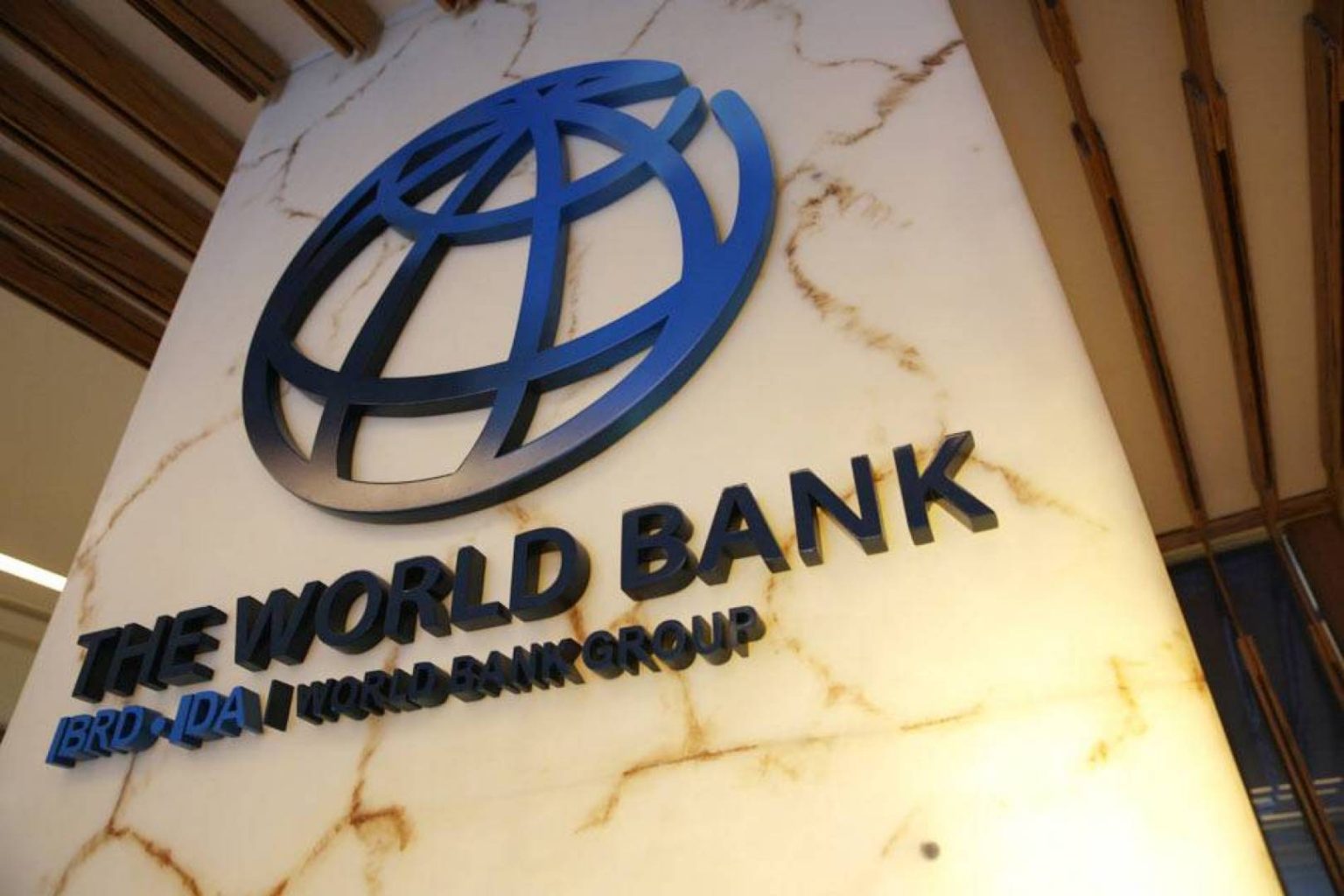
Recently, the World Bank has released a report highlighting the middle-income trap as a significant hurdle for many developing countries. This phenomenon occurs when a country’s economic growth stalls after reaching a certain per capita income level, preventing it from progressing to developed country status.

The middle-income trap refers to an economic condition where a country, after reaching a certain level of economic growth, struggles to advance to developed status. In simpler terms, the country becomes stuck at a moderate per capita income level, unable to achieve significant progress in its economic and social development.

In effect, the middle-income trap stands as one of the most significant obstacles that many developing countries face on their journey towards sustainable development.  After making impressive economic gains and moving from low-income to middle-income status, these countries frequently struggle to achieve the further qualitative advances needed, remaining stagnant at a median level of per capita income.

In this article, we’ll explore the concept of the middle-income trap, delve into its underlying causes and impacts, and discuss how to escape it.

I. What Does the Middle Income Trap Mean?

The latest World Bank classification identifies 108 countries as middle-income, with annual per capita incomes ranging from $1,136 to $13,845. These countries are crucial to the global economy, accounting for approximately 40% of global output. They are home to over 60% of the world’s population living below the poverty line and are responsible for more than 60% of total global carbon dioxide emissions.

As developing economies advance, their economic structures undergo significant transformations, leading to shifts in the factors driving growth. Generally, economic growth begins to decelerate when per capita income reaches approximately 11% of the United States’ per capita income (currently around $8,000), typically marking the onset of the upper-middle-income stage. This growth slowdown is a natural consequence of evolving production factors.

The World Bank introduced the term ‘middle-income trap in 2007 to characterize this economic phenomenon. Despite its prevalence, only 34 economies have successfully navigated this obstacle over the past  34 years.

Empirical research has established a robust correlation between the complexity of a country’s export basket and its income level.  Yet, middle-income countries encounter growing obstacles to sustainable growth, with their average growth rates declining sharply over the past twenty years due to geopolitical tensions, protectionist policies, and climate change. Notwithstanding these challenges, export complexity continues to be a pivotal factor in achieving sustainable economic growth in these countries.

II. Why Economies Fall into the Middle-Income Trap?

Several factors contribute to countries falling into the middle-income trap, with a key issue being a dearth of innovation. Many middle-income countries lack an environment conducive to innovation, research, and development, hindering their capacity to produce goods and services with substantial added value. Furthermore, their reliance on raw material exports exposes them to the volatility of global markets and the potential decline of commodity prices. Additional challenges include inadequate infrastructure, which raises production costs and hampers competitiveness, and economic mismanagement due to corruption and resource misallocation. Income inequality further complicates the business environment, impeding economic growth.

How to Escape the Middle-Income Trap?

Countries can escape the middle-income trap by adopting a three-pronged strategy, often referred to as the ‘3i strategy,’ which encompasses three essential pillars, namely investment, infusion, and innovation.

The 3i strategy can be tailored to a country’s developmental stage. Low-income countries could initially concentrate on investment (1i) to boost their economic base.  Upon reaching lower-middle-income status, countries should move to the next phase, which combines investment and infusion (2i) and involves importing and integrating advanced technologies throughout the economy. Once they reach upper-middle-income status, they should transition to the final stage, innovation (3i), involving investment, infusion, and innovation, where they not only adopt but also generate new technologies and ideas, leading in global innovation.

Furthermore, middle-income countries need to implement a multifaceted approach, encompassing the following measures:

  • Foster Innovation: Cultivate an environment conducive to innovation by supporting research and development, safeguarding intellectual property, and streamlining bureaucratic procedures.
  • Diversify the Economy: Reduce reliance on raw material exports and prioritize manufacturing and high-value-added services.
  • Enhance Education Quality and Training: Invest in education and training to develop a skilled workforce and boost productivity.
  • Combat Corruption: Address corruption and promote transparency and accountability to foster trust in government institutions and attract investment.
  • Adapt to Climate Change: Invest in renewable energy and energy efficiency to mitigate carbon emissions and adapt to the consequences of climate change.

In short, the middle-income trap signifies a country’s struggle to effectively manage economic transformation and progress beyond the middle-income bracket. Notably, true economic advancement involves more than achieving rapid growth and building institutions; it demands a collective push to elevate education quality, increase labour productivity, drive innovation and research, and upgrade value chains.


Related Posts

Militarizing water in Middle East wars A strategic analysis of the Iran-US-Israel war

Emerging economies in a world without rules: Between opportunity and predicament

The end of economic globalization: Reading into the 2025 U.S. National Security Strategy

Weaponization of Resources: The Role of Rare Earth Metals in the US-China Trade War

Sally Ashour August 21, 2024
Share this Article
Facebook Twitter Whatsapp Whatsapp LinkedIn Telegram Email Copy Link Print

Stay Connected

Facebook Like
Twitter Follow
Instagram Follow
Youtube Subscribe

Latest Articles

A Mixed Bag of Responses: Tunisian Women’s Stance on the New Constitution
Analysis August 29, 2022
Coping with Challenges:
ISIS from Operation Kayla Mueller to the Syria Earthquake
Terrorism & Armed Conflict March 4, 2023
Effective Engagement: Egypt’s Role in Combating Terrorism within the Framework of Community of Sahel-Saharan States
International Relations June 14, 2020
Strategic Motives: Three Decades of Chinese Relations with Central Asia
International Relations April 27, 2022

Latest Tweets

//

The Egyptian Center for Strategic Studies is an independent non-profit think tank providing decision-makers by Policy alternatives, the center was established in 2018 and comprises a group of experts and researchers from different generations and scientific disciplines.

International Relations

  • African Studies
  • American Studies
  • Arab & Regional Studies
  • Asian Studies
  • European Studies
  • Palestinian & Israeli Studies

Defence & Security

  • Armament
  • Cyber Security
  • Extremism
  • Terrorism & Armed Conflict

Public Policies

  • Development & Society
  • Economic & Energy Studies
  • Egypt & World Stats
  • Media Studies
  • Public Opinion
  • Women & Family Studies

Who we are

The Egyptian Center for Strategic Studies (ECSS) is an independent Egyptian think tank established in 2018. The Center adopts a national, scientific perspective in examining strategic issues and challenges at the local, regional, and international levels, particularly those related to Egypt’s national security and core national interests.

The Center’s output is geared toward addressing national priorities, offering anticipatory visions for policy and decision alternatives, and enhancing awareness of various transformations through diverse forms of scientific production and research activities.

All Rights Reserved to Egyptian Center for Strategic Studies - ECSS © 2023

Removed from reading list

Undo
Welcome Back!

Sign in to your account

Lost your password?