





By using ECSS site, you agree to the Privacy Policy and Terms of Use.
Accept
ECSS - Egyptian Center for Strategic StudiesECSS - Egyptian Center for Strategic Studies
  • Home
  • International Relations
    International Relations
    Show More
    Top News
    Egypt-France relations: Consensus and strategic partnership
    December 12, 2020
    Beyond Tigray: Wielding Hunger as a Weapon in Ethiopia’s Civil War
    August 22, 2021
    Cautious Trepidation: The International and Regional Response to the Ethiopian Crisis
    February 9, 2022
    Latest News
    Israel’s African gambit
    March 6, 2026
    Geopolitical realism: What does Washington’s return to the African Sahel mean?
    March 5, 2026
    Analysis | Manufacturing opposition: How Israel uses digital platforms to shape Iranian public opinion
    February 14, 2026
    Analysis| Turkey without terrorism: Assessing the trajectory of Turkish–Kurdish reconciliation
    February 12, 2026
  • Defense & Security
    Defense & Security
    Show More
    Top News
    Strategic Deception in the October War
    October 5, 2023
    Reading into the Global Terrorism Index 2024: A Critical Perspective
    March 25, 2024
    Why isn’t the Yemen war drawing to a close?
    March 27, 2021
    Latest News
    Between two camps: Reading into ISIS discourse on the US-Israeli war on Iran
    April 15, 2026
    Encrypted messages “Roaring Lion”: The hidden messages behind the name of the operation against Iran
    March 11, 2026
    Iran war developments
    March 9, 2026
    Manufacturing the enemy : Reframing terrorism in contemporary Western discourse
    March 7, 2026
  • Public Policy
    Public Policy
    Show More
    Top News
    Unprecedented Revival: Egypt’s Becomes Self-Sufficient in Natural Gas
    August 29, 2021
    A Comprehensive Vision: The Cultural and Touristic Dimensions of Developing Muhammad Ali’s Gunpowder Magazine
    A Comprehensive Vision: The Cultural and Touristic Dimensions of Developing Muhammad Ali’s Gunpowder Magazine
    June 21, 2022
    Effective Policies: Managing Inflation in Egypt in 2021
    February 8, 2022
    Latest News
    Militarizing water in Middle East wars A strategic analysis of the Iran-US-Israel war
    April 18, 2026
    Reading into attacks on maritime navigation in the Arabian Gulf
    March 17, 2026
    Emerging economies in a world without rules: Between opportunity and predicament
    March 5, 2026
    The end of economic globalization: Reading into the 2025 U.S. National Security Strategy
    February 4, 2026
  • Analysis
    • Opinion
    • Analysis
    • Situation Assessment
    • Readings
  • Activities
    • Conferences
    • ECSS Agenda
    • Panel Discussion
    • Seminar
    • Workshops
  • ECSS Shop
  • العربية
  • Defense & Security
  • International Relations
  • Public Policy
All Rights Reserved to ECSS © 2022,
Reading: The Social Repercussions of Operation Al-Aqsa Flood on Israel
Share
Notification Show More
Latest News
Militarizing water in Middle East wars A strategic analysis of the Iran-US-Israel war
Economic & Energy Studies
The future of US-Iran negotiations
Opinion
Between two camps: Reading into ISIS discourse on the US-Israeli war on Iran
Terrorism & Armed Conflict
Russia, China, and the war against Iran
Others
Continental drift
Others
Aa
ECSS - Egyptian Center for Strategic StudiesECSS - Egyptian Center for Strategic Studies
Aa
  • اللغة العربية
  • International Relations
  • Defense & Security
  • Special Edition
  • Public Policy
  • Analysis
  • Activities & Events
  • Home
  • اللغة العربية
  • Categories
    • International Relations
    • Defense & Security
    • Public Policy
    • Analysis
    • Special Edition
    • Activities & Events
    • Opinions Articles
  • Bookmarks
Follow US
  • Advertise
All Rights Reserved to ECSS © 2022, Powered by EgyptYo Business Services.
Arab & Regional Studies

The Social Repercussions of Operation Al-Aqsa Flood on Israel

Hadeer Abu Zeid
Last updated: 2023/11/26 at 12:25 PM
Hadeer Abu Zeid
Share
5 Min Read
SHARE

Israel is facing social challenges owing to Hamas’ Operation Al-Aqsa Flood, launched on 7 October against the Israeli occupation, and Israel’s subsequent all-out military assault on the Gaza Strip. Al-Aqsa Flood exposed the vulnerabilities of Israeli society in many ways. Here, we examine the repercussions of the war on Israeli society. 

Contents
High Reverse Migration RatesExacerbation of Israel’s Internal Division Imbalances in Livelihood

High Reverse Migration Rates

The Al-Aqsa Flood paved the way for reverse migration from Israel as a direct result of its loss of security and economic performance. According to the Israeli newspaper The Marker, over 230,000 settlers have left Israel since the crisis began, and the number of departures is expected to rise as the aggression on Gaza continues.

This sparks debate about the Jewish state’s future or the possibility of Israel’s demise. Whether organized or unorganized, Jewish migrations to Palestine have historically been a pivotal element in the dual history of occupation and colonization that continues to this day. Consequently, the ongoing reverse migration movements engender existential apprehension in Israel and undermine the morale of its citizens. This sentiment is reinforced by certain Jewish and Talmudic doctrines that prophesy Israel’s demise, just as the kingdom of Israel of the past, which lasted no longer than eight decades, has vanished or commenced to disintegrate since its eighth decade. 

This viewpoint is bolstered by the disruption of Knesset members’ sessions and their flight to shelters in the aftermath of rocket attacks, as well as scenes of unprecedented crowding at Tel Aviv Airport, which was disrupted after the resistance bombing, and other airports. On social media, video clips of Israelis fleeing without looking back revealed a flaw in Zionist doctrine, which is based on the elements of replacement, settling, and encouraging massive immigration to the Promised Land.

Exacerbation of Israel’s Internal Division 

The operation Al-Aqsa Flood played a role in the deterioration of social capital indicators, specifically in terms of eroded trust and confidence, due to its association with internal unrest in Israel and the resulting sharp divisions brought about by the current government’s judicial reforms, which involve the Supreme Court relinquishing its authority in favor of the government. This is what led liberal Jews to believe that, at best, Israel—a democratic haven in an otherwise authoritarian Arab world—is on the verge of turning into a dictatorship or authoritarian state.

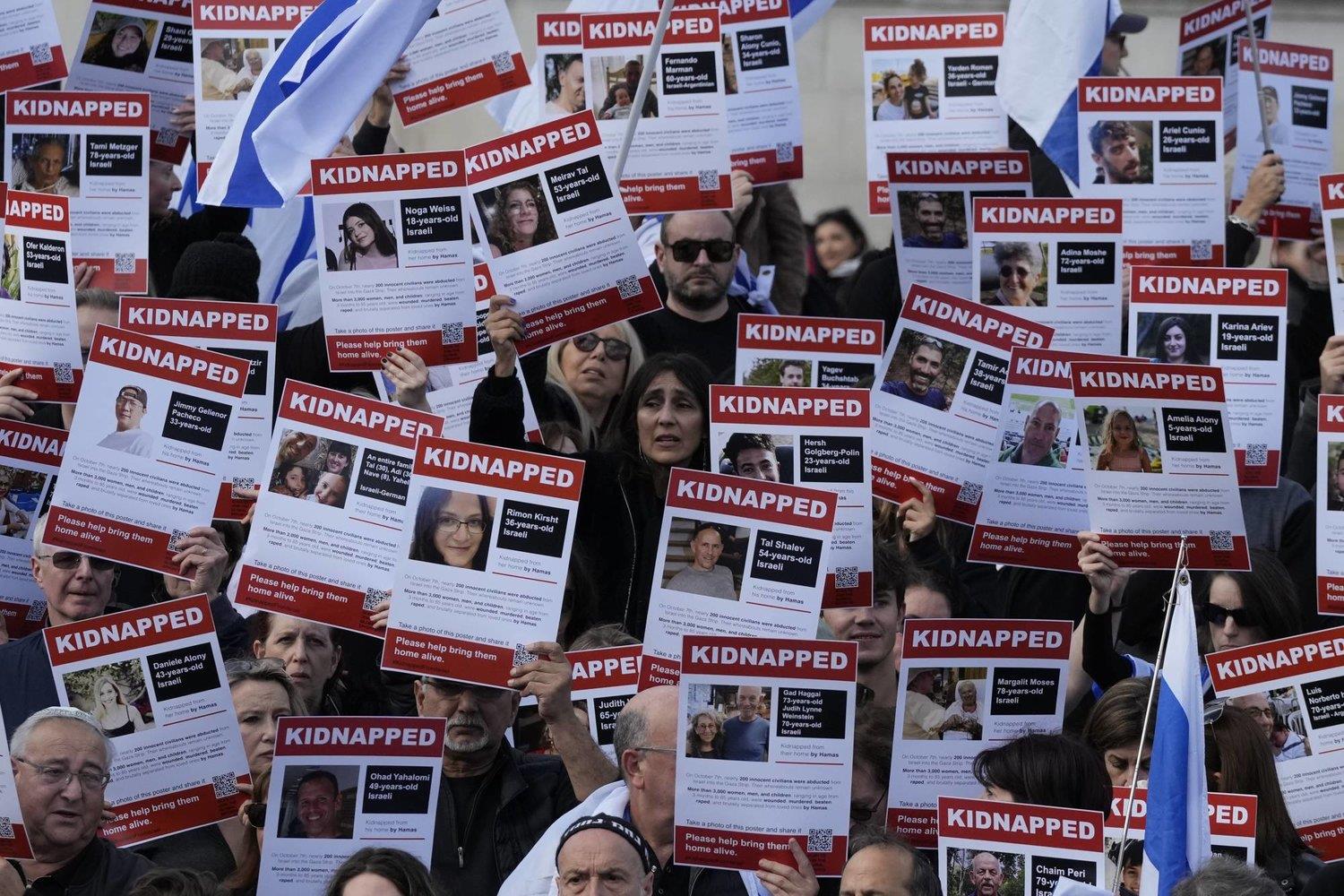
In addition, the Benjamin Netanyahu government is currently facing numerous protests against it and calls for its resignation, particularly in light of its appalling performance in dealing with the Al-Aqsa Flood and the hostage-taking. These are all concerning signs of Israel’s vulnerability.

Imbalances in Livelihood

The Al-Aqsa Flood operation exposed the internal displacement of settlers escaping the Gaza area and the ensuing effects on a large number of settlers’ social, psychological, and economic well-being. The Israeli army declared that 500,000 people, all of whom were originally immigrant settlers, had been displaced within Israel. Additionally, the city of Sderot, comprising approximately 20,000 settlers, was entirely evacuated, as were the settlements located near the northern border with Lebanon.

This aligns with projections suggesting the potential for higher unemployment rates due to the closure of industrial, tourism, and service establishments, which may result in some individuals being rendered partially or entirely unemployed. Furthermore, there is a concern that the Israeli security and military failure to effectively handle the ongoing crisis may contribute to elevated levels of crime, suicide, frustration, and despair. These issues are expected to further erode public support for the government in Israel.

Related Posts

The future of US-Iran negotiations

Between two camps: Reading into ISIS discourse on the US-Israeli war on Iran

Deadlock in the Strait of Hormuz

Reading into attacks on maritime navigation in the Arabian Gulf

TAGGED: Gaza, Israel, Palestine
Hadeer Abu Zeid November 26, 2023
Share this Article
Facebook Twitter Whatsapp Whatsapp LinkedIn Telegram Email Copy Link Print

Stay Connected

Facebook Like
Twitter Follow
Instagram Follow
Youtube Subscribe

Latest Articles

Remembering the June 30 Revolution
Opinion June 30, 2023
Shifting Dynamics: Israeli-Turkish Rivalry and Pragmatic Cooperation amid Syria’s Shifting Landscape
Analysis March 6, 2025
Civil War: Ethiopia’s Armed Conflict Spills into Afar
International Relations August 7, 2021
مكاسب متعددة: ادارة “بايدن” وتوظيف مقتل الظواهري
Multiple Gains: The Biden Administration and the Employment of Al-Zawahiri’s Murder
Analysis August 9, 2022

Latest Tweets

//

The Egyptian Center for Strategic Studies is an independent non-profit think tank providing decision-makers by Policy alternatives, the center was established in 2018 and comprises a group of experts and researchers from different generations and scientific disciplines.

International Relations

  • African Studies
  • American Studies
  • Arab & Regional Studies
  • Asian Studies
  • European Studies
  • Palestinian & Israeli Studies

Defence & Security

  • Armament
  • Cyber Security
  • Extremism
  • Terrorism & Armed Conflict

Public Policies

  • Development & Society
  • Economic & Energy Studies
  • Egypt & World Stats
  • Media Studies
  • Public Opinion
  • Women & Family Studies

Who we are

The Egyptian Center for Strategic Studies (ECSS) is an independent Egyptian think tank established in 2018. The Center adopts a national, scientific perspective in examining strategic issues and challenges at the local, regional, and international levels, particularly those related to Egypt’s national security and core national interests.

The Center’s output is geared toward addressing national priorities, offering anticipatory visions for policy and decision alternatives, and enhancing awareness of various transformations through diverse forms of scientific production and research activities.

All Rights Reserved to Egyptian Center for Strategic Studies - ECSS © 2023

Removed from reading list

Undo
Welcome Back!

Sign in to your account

Lost your password?