








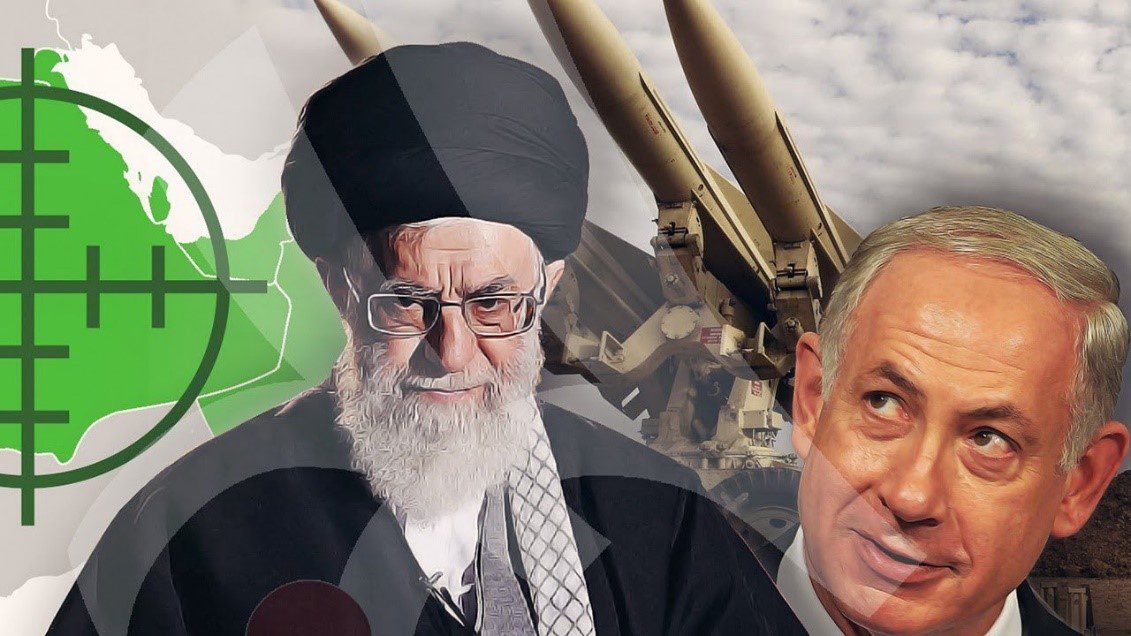
On the evening of 13 April, Iran launched a complex attack called “The True Promise”, using more than 330 drones, ballistic missiles, and cruise missiles that were launched from its territories towards Israel. This came against the backdrop of the Iranian response to the Israeli attack on the Iranian consulate in Damascus two weeks earlier, which resulted in the killing of a number of commanders of the Iranian Revolutionary Guard, most notably General Mohammad Reza Zahedi. Meanwhile, the Israeli army announced that it was able to intercept 99% of the Iranian launches, and the meeting of the small Israeli political-security cabinet ended by authorizing the War cabinet headed by Benjamin Netanyahu to make decisions regarding the response to the first direct Iranian attack on Israeli soil.
Key Observations
The details of the “True Promise” operation launched by Iran against Israel involve a number of important observations, the most prominent of which are:
1. The official Iranian statements so far have adopted a restrained tone, attempting to frame the attack as Iran’s right to defend itself after Israel targeted its consulate in Damascus, and confirming that the military operation launched by Tehran was only a warning. Tehran deliberately distanced this operation from the ongoing war in Gaza, where it avoids portraying itself as the mastermind of Operation Al-Aqsa Storm on one hand, and Hamas refuses to attribute its military achievement on October 7 to any regional parties on the other hand. This was reflected in the statements of Iranian officials since yesterday. For example, the Iranian mission to the United Nations said, “The Iranian military action, which was carried out pursuant to Article 51 of the UN Charter on self-defense, was in response to the Zionist regime’s aggression against our diplomatic premises in Damascus, and the matter can be considered closed.” In the same context, Hossein Salami, the commander-in-chief of the Iranian Revolutionary Guard, commented on the attack, saying, “Until now, we do not have accurate information about the results of last night’s operations; but we have information that they were successfully carried out and achieved their objectives with precision. We carried out limited operations of a certain size and weight to warn Israel, and it could have been an expanded operation.”
2. Although the Iranian attack on Israel constitutes a significant and important regional development, as it represents a qualitative shift in the escalation equation between the two countries, it did not achieve the element of “strategic surprise and ambush”. This is due to the existence of clear prior indications pointing to the possibility of Tehran carrying out missile launch operations from its territories against Israeli targets. This enabled Israel, with the assistance of the United States and some Western countries, to take all necessary defensive and preemptive offensive measures to deal with this attack and its potential repercussions. This perception is supported by the confirmation of the Iranian Foreign Minister, Hossein Amir Abdollahian, in phone calls with his European counterparts, that the United States was duly and sufficiently warned. There are also Western and Israeli reports indicating that the United States was aware in advance of the timing of Tehran’s response to Israel’s targeting of its consulate in Damascus, and there were negotiations in recent days to determine the extent, scope, and timing of this response to prevent sliding into a wider regional war.
3. Israel’s handling of the Iranian attack confirms the existence of extensive security and strategic cooperation and coordination between Israel and its allies. This was manifested in the announcement by US President Joe Biden and the spokeswoman for the US National Security Council, Adrienne Watson, of “the United States’ unwavering commitment to ensuring Israel’s security”. Additionally, the spokesman for the Israeli army, Daniel Hagari, confirmed that Tel Aviv worked closely with the United States, Britain, and France in intercepting and downing a number of drones launched by Iran against it. Furthermore, Western responses generally took a supportive stance towards Israel, condemning the attack on its territory and affirming continued close cooperation in defending its security.
4. Although there is no accurate information regarding the extent of losses incurred by Israel as a result of the Iranian attack, it is possible to observe a significant increase in these losses on the psychological and economic fronts. Some Israeli estimates indicate that the cost of countering the Iranian attack reached between 4 and 5 billion shekels (around $1.35 billion), in addition to the state of tension, alert, and great panic witnessed on the Israeli street, where air raid sirens sounded 720 times in different locations due to the first wave of the attack. Meanwhile, losses on the military field were limited, with minor damage to infrastructure, as the Israeli air defense systems – with American, British, and French assistance – succeeded in intercepting and shooting down the vast majority of missiles and drones launched by Iran from outside Israel’s borders.
5. It was observed that none of Iran’s proxies in the region intervened in an influential manner on the ground as a supporting factor in the “True Promise” operation against Israel. Hamas limited itself to issuing a statement affirming that the Iranian attack against Israel was a natural right and a legitimate response to the targeting of the Iranian consulate in Damascus. Meanwhile, Hezbollah’s targeting of several Israeli positions in the Golan Heights with dozens of Katyusha rockets was considered a response to Israeli raids that targeted several villages and towns in southern Lebanon, and not part of the Iranian attack on Israel. This can be interpreted in light of Tehran’s desire to contain the latest escalation as much as possible and avoid approaching the forbidden scenario of sliding into an open regional military war.
6. The United States’ keenness to dissuade Israel from launching any miscalculated military counterattack against Iran without considering its repercussions and consequences on the regional security equation was notable. American reactions in this context – such as President Joe Biden informing Israeli Prime Minister Benjamin Netanyahu in a phone call that “the United States will not participate in any offensive operations against Iran,” and his announcement that he will coordinate with the Group of Seven for a unified “diplomatic” response to the Iranian attack – reflect Washington’s desire to control the situation and prevent the current tactical escalation between Iran and Israel from escalating into a strategic escalation that would exacerbate the unstable security situation against the backdrop of the Gaza war and harm its military, security, and economic interests in the region. At the same time, the Biden administration did not neglect to reaffirm its support for Israel and its commitment to ensuring its security, seeking to gain advantages in the upcoming presidential election race, at a time when American public opinion polls show a significant decline in Biden’s popularity due to his approach in dealing with the Gaza war. Not to mention the attempt by former US President Donald Trump to exploit the attack in his election campaign by attributing the Iranian attack on Israel to the “great weakness” of the United States under Biden.
Iranian Messages
Although the Iranian attack on Israel was tactically restrained and limited in its military damage, it nevertheless carries important messages that Iran wants to send internally and externally, as follows:
I. On the domestic front, Tehran wants to respond by appeasing public opinion, whose demands have recently increased to respond to Israeli provocations, especially since Israel’s targeting of the Iranian consulate in Syria at the beginning of April and the resulting killing of a number of senior members of the Quds Force of the Islamic Revolutionary Guard Corps, including Mohammad Reza Zahedi, the commander of Lebanon and Syria, and his deputy Mohammad Hadi Haj Rahimi, embarrassed the Iranian government and put it in a position where it had to respond to a direct violation of an area under its sovereignty. Some analyses argue that the main purpose of the Iranian attack on Israel was to “save face” and appease the Iranian street, especially since the outbreak of Operation Al-Aqsa Storm, Israeli strikes have inflicted numerous losses on Iran and its proxies in terms of financial resources and leadership cadres in its regional spheres of influence. However, these strikes were not met with a strong response from Tehran commensurate with the losses they incurred.
II. On the external front, Iran wants to send a strong deterrence message to Israel to dissuade it from directly interfering with its interests. However, Tehran seems keen on confining the military confrontation with Israel without deviating from the “risk reduction” approach it has recently adopted to de-escalate with the United States and focus on its strategic goal of acquiring nuclear weapons as a means of deterrence, while maintaining its regional expansion through its militias deployed in several Middle Eastern countries. This may explain the absence of the element of surprise in the “True Promise” operation and Iran’s implicit coordination with Washington before its implementation, as mentioned earlier.
In conclusion, it can be said that the Iranian attack on Israel –although limited – has brought about a qualitative shift in the equation of the conflict between Tehran and Tel Aviv, moving from the “shadow war” between the two parties to direct military confrontation, which had remained at the level of the “forbidden scenario” during the past years. It can be speculated that the scenarios of potential escalation in the Iranian-Israeli confrontation during the coming period will be governed by various factors related to the calculations and capabilities of both parties to engage in an open military confrontation, such as retaliation and counter-retaliation. However, the most important factor is the United States’ ability to contain this escalation and restrain any miscalculated moves by Netanyahu that could lead to a large-scale regional war.


