







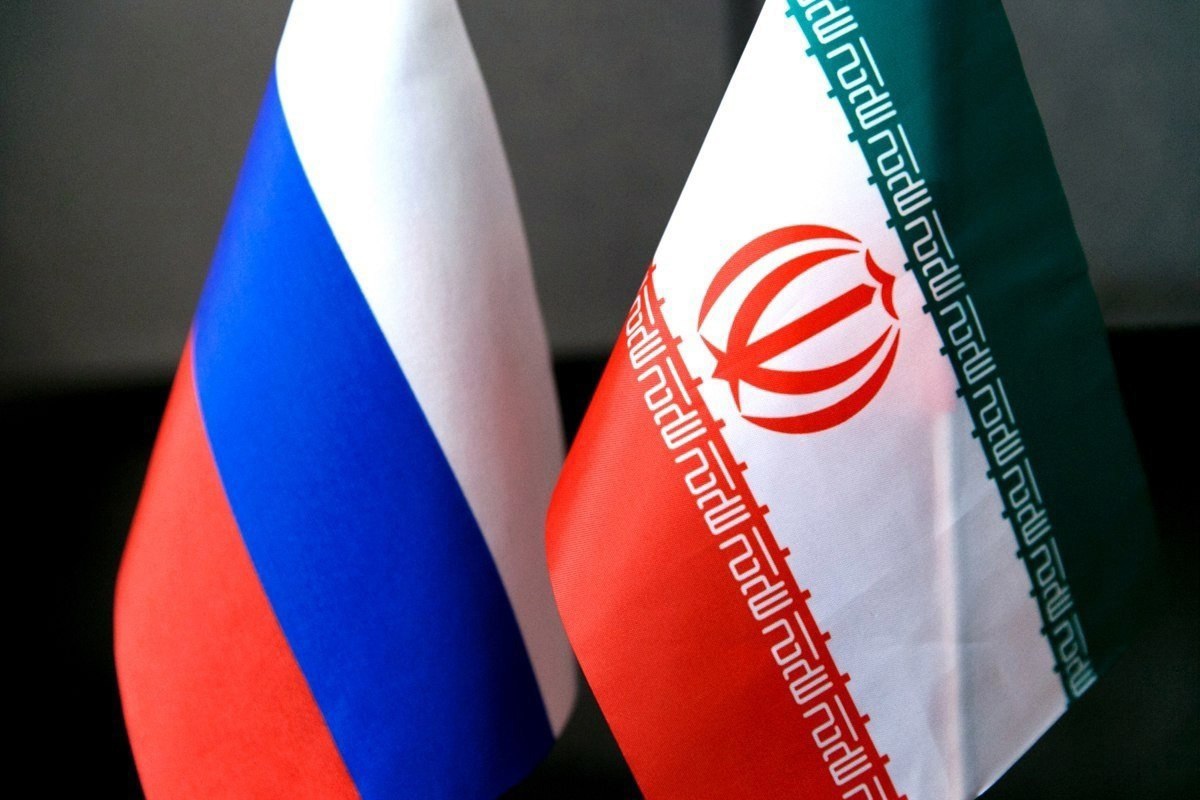
Russia’s endorsement of the Zangezur corridor, which would connect eastern Azerbaijan to the Nakhchivan exclave through Armenian territory without Armenian checkpoints, has provoked sharp opposition from Iran, which views the corridor’s potential geopolitical fallout as detrimental to the region.
During his August 2024 visit to Baku, Russian President Vladimir Putin affirmed Azerbaijan’s right to a land corridor connecting it to the Nakhchivan region. Soon after, Russian Foreign Minister Sergei Lavrov condemned Armenia’s refusal to support the corridor, accusing the Armenian leadership of undermining the ceasefire agreement and questioning the logic behind such a stance. Russian Foreign Ministry spokesperson Maria Zakharova further clarified that the Zangezur corridor would link Azerbaijan’s main territories with Nakhichevan through Armenia’s Syunik region, adding that the removal of restrictions on the corridor would be addressed through tripartite peace negotiations with Armenia.
Tehran, through both official and unofficial channels, has firmly reiterated its absolute rejection of the corridor, deeming it a red line and urging its Russian ally to reconsider backing the corridor’s opening.
Despite the significant alignment in their bilateral relations, particularly following Russia’s war in Ukraine, the disagreement between Russia and Iran over the Zangezur corridor exposes the constraints of this alignment, as the dispute reveals conflicting interests that both sides have yet to navigate effectively.
The Contested Zangezur Corridor
Since World War I, the Zangezur (referred to as Syunik province by Armenians and Zangezur by Azerbaijanis) has been a disputed area, before it was annexed by the Soviet Union to the Armenian Soviet Socialist Republic. This left Azerbaijan without a direct geographical link to Nakhichevan, making access possible only through Iran or Armenia.
During the Soviet period, Moscow established two railway lines linking Nakhichevan to the Azerbaijani mainland through the Zangezur region. Currently, Baku is focused on repairing these railways, which suffered damage during the 1992 First Karabakh War, and constructing highways to enable direct access from Azerbaijan to Nakhichevan, bypassing any Armenian checkpoints.
Baku’s demand is grounded in Article 9 of the Nagorno-Karabakh ceasefire agreement brokered by Russia in November 2020, which requires Yerevan to facilitate transportation between Azerbaijan’s western regions and the Nakhchivan Autonomous Republic under the oversight of the Border Guard Service of the FSB of Russia. The article also outlines the agreement to construct new transport communications linking the Nakhichevan Autonomous Republic with the western regions of Azerbaijan.
Azerbaijan has previously warned that if Armenia fails to meet its demands, it may resort to forcibly taking control of the corridor. Armenia, on the other hand, contends that establishing the Zangezur corridor without Armenian checkpoints compromises its sovereignty and jeopardizes control over its southern border. To reaffirm its adherence to the ceasefire agreement, Yerevan proposed in August 2022 a plan to connect Azerbaijan with the region via three border crossing points: at the village of Sotk on the border of Azerbaijan’s Kelbajar region, at Karahunj on the border of Azerbaijan’s Gubadli region, and Yeraskh on the border of Azerbaijan’s exclave of Nakhchivan.
Yerevan continues to press for the Zangezur corridor to encompass both railways and highways. It also insists that Azerbaijani vehicles be permitted to travel through Armenian territory without Armenian inspections, a condition firmly opposed by Yerevan, which underscores its adherence to the ceasefire agreement, which guarantees secure land connectivity between Azerbaijan’s western regions and Nakhichevan.
Understanding Iran’s Stance
From the outset, Iran has resolutely opposed the establishment of the corridor. After the conclusion of the Second Karabakh War, Iran’s Supreme Leader, Ali Khamenei, declared that any policy aimed at closing the borders between Iran and Armenia would be opposed by Tehran, emphasizing that these borders have been vital communication routes for millennia.
Commenting on Moscow’s backing of the corridor, Iranian Foreign Minister Abbas Araghchi stated on September 2 via the X platform: “Regional peace, security, and stability are not just a priority but a cornerstone of our national security. Any threat to the territorial integrity of our neighbors or redrawing of borders from any direction is wholly unacceptable and constitutes a red line for Iran.” Unofficial reports indicate that Tehran’s ambassador in Moscow conveyed Iran’s protest to the Russian Foreign Ministry over its stance on the Zangezur corridor.
In his meeting with the Russian ambassador to Iran, Head of the Eurasian Department of Iran’s Ministry of Foreign Affairs, Mojtaba Demirchilou emphasized Tehran’s commitment to regional peace and stability while opposing any alterations to internationally recognised borders or the existing geopolitical landscape. He also underscored the importance of considering the legitimate interests and concerns of all regional states.
On September 7, Ebrahim Azizi, Chairman of the National Security and Foreign Policy Committee of the Islamic Consultative Assembly, stated that the geopolitical developments surrounding the Zangezur corridor are not in the best interest of regional countries, reiterating Iran’s strong opposition. He described the Zangezur corridor as a “fake” project, suggesting that its establishment appears to be an attempt to diminish Iran’s military and political influence in the region. Azizi called on the Iranian Foreign Ministry to address this issue through diplomatic efforts.
According to the Tasnim News Agency, which is affiliated with the Islamic Revolutionary Guard Corps, Iranian experts have advised Russia to take into account that Tehran firmly opposes the creation of any corridor connecting Azerbaijan to Nakhichevan through Armenia. They emphasized that Russia should not be surprised by Iran’s legitimate, clear, and consistent stance on this matter.
The report pointed out that Iran, as a sovereign state, has upheld a consistent position on any developments in the South Caucasus, consistently opposing the United States, Western powers, and any hegemonic influence, while making it clear that it will not tolerate any changes to its security borders.
The report further underscored that Moscow should avoid using the Zangezur corridor as a means to resolve its disputes with Armenia at the expense of other countries in the South Caucasus. It pointed out that establishing the corridor would effectively close one of Iran’s gateways to Europe and reduce the number of its neighboring countries from 15 to 14, concluding by advising Russia to refrain from actions that could harm its strategic relations with Tehran, warning that the Zangezur corridor could spark a new flashpoint near the sensitive borders of northwestern Iran.
Russia’s backing of the corridor has drawn significant unofficial backlash, with criticism emerging in both newspaper articles and social media discussions. Many activists have highlighted the growing concern over depending on Russia as an ally, citing the grave risks posed by Moscow’s recent position, which appears indifferent to Iranian interests. This mirrors past instances where Russia’s geopolitical stance conflicted with Iran’s, further fueling skepticism about their partnership.
Diverging Russian-Iranian Interests
Tehran’s opposition to the corridor is driven by several key factors:
1. Iran is concerned that the establishment of this corridor could geographically isolate Tehran from Armenia, thereby disrupting its land link to Central Asia, the Caucasus, and Russia and transit route to Europe, as Armenian territory currently serves as a crucial export and transit hub for Iranian goods. Losing this route could diminish Iran’s economic benefits, particularly since the corridor aims to transport energy from Eurasia and Central Asia to Europe, potentially reducing European demand for Iranian energy. The establishment of the corridor might diminish Iran’s strategic value in the Belt and Road Initiative by providing an alternative route via Azerbaijan and Turkey to Europe. Furthermore, it could force Iran to depend exclusively on trade routes through Turkey and Azerbaijan, thereby limiting its market access to Europe and Asia.
2. Implementing the corridor would cut off Iran from the revenue it currently earns from Turkish exports to Central Asia that transit through its territory. It would also eliminate Iran’s role as the essential conduit between Azerbaijan and the Nakhichevan region, resulting in a loss of income from fees collected for Azerbaijani trucks passing through Iranian territory to reach their destination.
3. Iran is apprehensive that the corridor could amplify Azerbaijani influence along its borders, potentially stirring separatist movements among the Azerbaijani minority in Iran, who make up about 22% of the population and live in the northwestern regions. This anxiety is compounded by this ethnicity’s historical secessionist movements during Mohammad Reza Shah Pahlavi’s reign and ongoing calls from some Azerbaijani groups within Iran for alignment with Azerbaijan, which Baku, even if unofficially, seems to support. Moreover, Tehran is concerned that the corridor could strengthen Israeli influence along its northern borders due to Baku’s close relationship with Tel Aviv.
4. Tehran fears that the implementation of the corridor could undermine its influence and interests in Central Asia while bolstering Turkey’s presence and connections with the region’s countries. Tehran views Ankara, alongside Azerbaijan, as a major beneficiary of the corridor, which would create a direct link between Turkey and Central Asian countries with Turkish nationalist ties. This could bolster Turkey’s nationalist ambitions and projects in the region, negatively impacting Iran’s role there. Beyond this, Tehran sees the corridor as a potential gateway for NATO’s presence in Central Asia, given Turkey’s close relationship with the alliance.
Conversely, Russia’s endorsement of the corridor is underpinned by several key considerations:
1. Russia sees the corridor as another vital link to Turkey, a key partner in its energy export strategy, particularly given the Western sanctions that have curtailed its access to European routes.
2. By raising this issue, Moscow seeks to reaffirm its role as the guarantor of the ceasefire between Baku and Yerevan, thereby securing its position as the primary security provider. As a result, any peace talks excluding Russia as a mediator become futile, especially in light of Armenia’s recent appeal to France for support in its negotiations with Azerbaijan. The Russian Foreign Minister emphasized that the trilateral agreement of November 2020 mandates the restoration of rail and road traffic, which will be protected by the Border Service of the Federal Security Service of the Russian Federation—a role Moscow is clearly unwilling to forfeit.
3. One Iranian interpretation of Russia’s stance is Moscow’s intent to isolate Tehran from the West by encircling it through Turkey and Azerbaijan. This comes as the new Iranian government has pledged to reopen dialogue with the West on the nuclear deal and to restore balance in its foreign policy between East and West. Moscow, in this context, is wary of the potential outcomes of Iranian-Western negotiations, fearing they might limit Iran’s ties with Russia. This may also explain Russia’s hesitation in signing a 20-year comprehensive cooperation agreement with Iran, despite Tehran’s significant support during the Ukraine conflict.
Overall, the corridor’s implementation is likely to hinge on the depth of agreements and arrangements between Russia and Iran, Iran and Turkey, and Iran and Azerbaijan.
On the other hand, the cooperation and tripartite consultation mechanism between Russia, Iran, and Turkey may influence the future of this corridor, particularly in light of Turkish President Recep Tayyip Erdogan’s statement in September 2023 about the potential for establishing a corridor from the Nakhichevan region to Azerbaijan through Iranian territory.
It is important to note the October 2023 announcement by Iran and Azerbaijan regarding their agreement to establish a land corridor connecting Azerbaijan to the Nakhichevan region via Iranian territory, named the Aras Corridor. The agreement outlines the development of a land bridge and the subsequent construction of highways and railways, making the Aras Corridor a potentially appealing alternative to the Zangezur Corridor for Iran.
Nonetheless, various estimates suggest that Baku remains committed to the Zangezur Corridor due to its critical role in challenging Armenia. As a result, the dispute may persist between Iran and Azerbaijan and potentially among Iran, Russia, and Turkey, unless the parties move toward a corridor agreement that safeguards Iran’s interests and upholds Armenia’s sovereignty.