






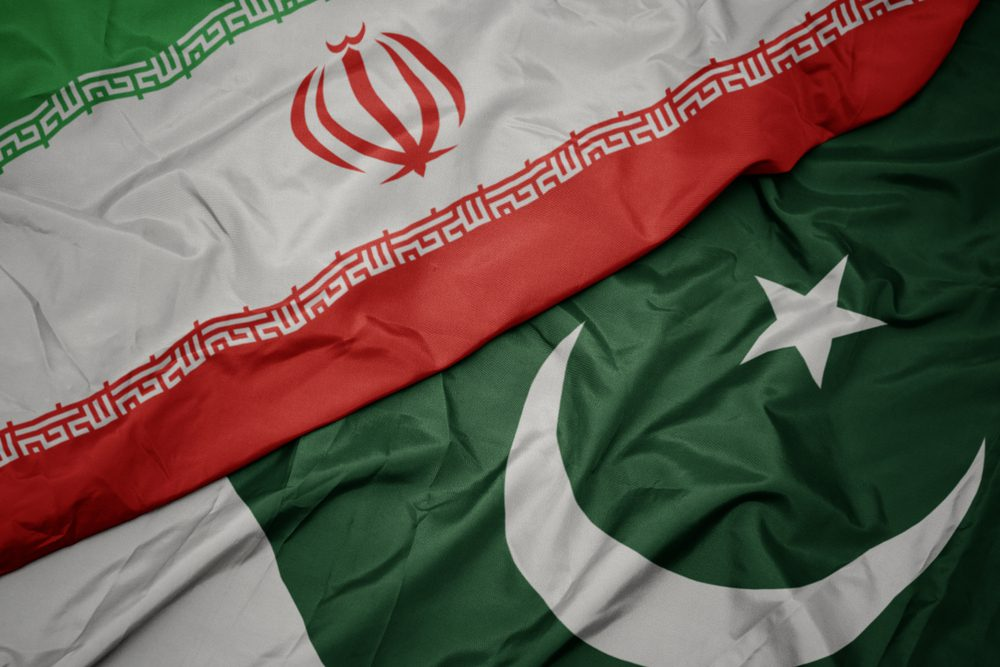
The bilateral relationship between Iran and Pakistan is characterized by a multifaceted web of geopolitical challenges, manifesting in a pattern that oscillates between periods of détente and instances of heightened political and military tension. A recent exemplar of these challenges is Tehran’s decision to initiate international arbitration proceedings against Islamabad, seeking compensation totaling $18 billion for Pakistan’s failure to fulfill its obligations under a joint gas pipeline project despite multiple extensions, including a final deadline until September 2024. This failure largely stems from US threats of sanctions against Pakistan if it proceeds with the project.
This development raises pertinent questions regarding the future trajectory of Iran-Pakistan relations, specifically whether the two countries will maintain their strategy of managing tensions or move toward further escalation.
Intractable Complications
Joint Gas Pipeline: The Joint Gas Pipeline Project between Iran and Pakistan originated from a preliminary agreement signed on May 24, 2009, between Iranian President Mahmoud Ahmadinejad and Pakistani President Asif Ali Zardari. This deal came after 18 years of negotiations, during which the project transitioned from a trilateral agreement, initially involving India, to a bilateral one after India withdrew in 2008. The project aimed to address Pakistan’s gas supply crisis by facilitating the export of Iranian gas to Pakistan. Iran completed its part of the pipeline in 2012, but Pakistan did not commence its portion. Over the past two years, Pakistan’s position was volatile. On the one hand, it issued a force majeure notice and invoked an excused event to delay its obligations, citing international sanctions imposed on Iran as of August 2023. Afterwards, the Pakistani Cabinet approved construction of an 80-kilometer pipeline from the Iranian border to Gwadar on February 23, 2024, and in March, Pakistan’s Foreign Ministry announced Islamabad would not abandon the project and would proceed with its construction. However, by September, the Pakistan Federal Minister for Petroleum acknowledged that international sanctions had created significant obstacles, complicating the project’s progress.
Throughout this period, Pakistan sought an exemption from US sanctions against Iran, but Washington consistently rejected these requests. On March 3, US State Department spokesperson Matthew Miller reiterated the United States’ intent to maintain sanctions on Iran, cautioning any entity considering trade with Iran about the severe consequences. In the same month, US Assistant Secretary Bureau of South And Central Asian Affairs Donald Lu affirmed that importing gas from Iran would expose Pakistan to sanctions, and that the United States was actively working to prevent the pipeline’s construction. As a result, Pakistan’s ability to proceed with the project was effectively frozen. Furthermore, US sanctions on Iran may limit Pakistan’s capacity to secure international funding for its portion of the pipeline. Beyond the US sanctions, the project encounters a variety of other obstacles. Security-wise, the pipeline’s route through the volatile Iranian-Pakistani border is a flashpoint for tensions, exacerbated by the presence of separatist groups in Balochistan. Economically, Pakistan is grappling with severe challenges, including dwindling cash reserves of just $7.9 billion as of June 2024 and a sharp depreciation of the rupee against the dollar, leaving the country without the financial resources needed to complete its portion of this major project.
Border Tensions: The Iran-Pakistan border is a hotspot for tensions, adding another layer of complexity to relations between the two countries. The Baloch population, spread across both sides of the border, regularly engages in separatist movements, calling for autonomy. These insurgents have repeatedly targeted projects situated within this border region, including Chinese institutions and Chinese workers involved in the China-Pakistan Economic Corridor that traverses the region, as well as infrastructure facilities in the Pakistani province of Balochistan, resulting in casualties. These attacks include the late August 2024 attack which resulted in over 70 deaths. The region’s instability, marked by the rising influence of separatist factions, has attracted various terrorist organizations, including the Jaish al-Adl [Army of Justice] and the Tehrik-i-Taliban Pakistan [Pakistani Taliban], further heightening tensions between Iran and Pakistan. These tensions peaked in January 2024 when Iran launched military strikes deep into Pakistan, targeting the Jaish al-Adl, which Iran holds responsible for cross-border attacks. Pakistan retaliated with strikes in Iran’s Sistan and Baluchestan province, claiming to have targeted the Balochistan Liberation Army, exacerbating hostilities in the region.
Contradictory Positions: Compounding the strategic complexities in Iran-Pakistan relations are the opposing positions they hold on numerous regional and international issues, where the two countries diverge sharply in their policies. A prominent example is Afghanistan, particularly following the Taliban’s takeover of the country. Despite ideological differences, Iran has long been a supporter of the Afghan Taliban, even providing refuge for many of its leaders, and formally recognized the Taliban government in February 2023. Pakistan, however, takes a different stance due to the Afghan Taliban’s links with the Pakistani Taliban, a militant group that poses a direct threat to Pakistan’s security. Pakistan’s strikes inside Afghanistan against Taliban strongholds reflect this divide. Additionally, ties with Azerbaijan have become another source of tension between the two countries, as reports indicate Pakistan’s military backing of Azerbaijan in the Nagorno-Karabakh conflict against Armenia, while Iran has provided both political and military support to Armenia during the war. Additionally, Pakistan perceives Iran’s recruitment of Pakistani Shiites to fight in Syria as a breach of its red lines, raising fears that those battle-hardened fighters may return to Pakistan and cause internal unrest. These developments reflect the broader geopolitical rivalry between Tehran and Islamabad, which is playing out across multiple fronts.
Managing Tensions
Despite the longstanding geopolitical rivalry and the intricate complexities shaping the relationship between Iran and Pakistan, both countries have demonstrated a desire to manage their tensions and competition in a manner that secures mutual benefits and mitigates the risk of this tension escalating into a broader confrontation. This could hold true in managing the tensions stemming from delays in the joint gas pipeline project. Several influential factors affect the two countries’ adoption of this approach, including:
Economic Relations: The growing economic ties between Iran and Pakistan have always played a pivotal role in stabilizing their relationship. Trade between the two countries has increased considerably, with non-oil trade rising by 10% between March and August 2024, amounting to $1.1 billion, primarily in Iranian exports to Pakistan. Iran’s total exports to Pakistan in 2023 were valued at approximately $944 million, while Pakistan’s exports to Iran reached $10 million in the same year. By April 2024, the Iranian ambassador to Pakistan announced that the total volume of trade between the two countries had reached $2 billion. During the same month, the late Iranian President Ebrahim Raisi visited Islamabad, where he committed to raising bilateral trade to $10 billion annually. Moreover, both countries have agreed to quickly finalize a free trade agreement, with Pakistan’s Minister of Commerce reaffirming the country’s dedication to enhancing trade through the Shanghai Cooperation Organization. This economic engagement is seen as an attempt by both countries to address and reduce the prevalence of illegal cross-border trade, which, according to 2020 estimates, exceeds $3 billion—primarily driven by fuel smuggling. Of this total, the value of fuel smuggling between the two countries is estimated at $1 billion annually.
The Common Threat of Terrorism: The swift de-escalation following the exchange of military strikes between Iran and Pakistan in January 2024 underscores the mutual desire to prevent tensions from escalating into a full-blown confrontation, recognizing the potentially severe consequences such a conflict could have for both sides. Terrorist activity and separatist movements on both sides of the border serve as a common threat, encouraging both countries to consider increased cooperation. The absence of evidence linking either country to direct support of Baloch separatists could lay the groundwork for potential joint operations against armed groups, improving bilateral relations. Additionally, both sides’ interest in formalizing border trade, where the Baloch community plays a significant role, further underscores this potential collaboration. Strengthening cooperation in this context would enable Pakistan and Iran to collectively tackle the threats posed by these militant groups, bolster border security, and foster regional stability. On September 18, 2024, Pakistan’s Defense Minister Khawaja Asif reiterated the importance of joint anti-terrorism efforts between Tehran and Islamabad. Additionally, Pakistan’s nuclear deterrent remains a significant factor in the inclination of both countries—particularly Iran—to prioritize de-escalation in their relations.
The US Factor: Both countries are acutely aware of the influential role the United States plays in their bilateral relations, largely due to the US-imposed sanctions on Iran. Perhaps this explains why Pakistan has concentrated its efforts on securing a waiver from the United States to revive the joint gas pipeline project, a waiver that would mirror the one granted to Iraq, which is periodically renewed for importing gas and electricity from Tehran, or the exemptions granted to India, making it Iran’s largest trading partner with a trade volume exceeding $15 billion.
With the United States delaying the exemption for Islamabad, effectively stalling the project, and Iran threatening legal action against Pakistan for non-compliance, Tehran remains mindful of the constraints US sanctions on Iran impose on Pakistan. Iran also recognizes the delicate balance Islamabad must strike between its relations with both Iran and the United States and the challenges Pakistan faces in taking any action that could jeopardize its relations with the United States, especially given Islamabad’s increasing reliance on external financing to stabilize its economy and support development projects, particularly from the International Monetary Fund. Both countries may now be waiting for the outcome of the upcoming US elections, anticipating a potential shift in policy. The victory of Democratic candidate Kamala Harris could be favorable for both countries, given the Democrats’ greater openness to dialogue with Iran, particularly concerning its nuclear program and other matters. Such an outcome would potentially provide Pakistan with more flexibility to secure the necessary exemption, while still balancing its regional alliances and international obligations.
Potential Defense Cooperation: The swift developments in the Middle East, particularly in light of the Israeli aggression on Gaza, present significant risks of the conflict escalating into a direct confrontation between Israel and Iran. In such a scenario, the potential for defense cooperation between Iran and Pakistan may arise, with Iran likely seeking to benefit from Pakistan’s advancing military capabilities and the growing strength of its defense industry. Notably, Israeli reports highlighted discussions about Pakistan potentially supplying Iran with medium-range Shaheen-III ballistic missiles, which are capable of carrying nuclear warheads. Although the Pakistani government swiftly denied these claims, emphasizing its commitment to preventing further escalation in the Middle East, the timing of these claims may signal a potential for this scenario to unfold in the near future or beyond. This potential development depends largely on the two countries’ ability to manage and mitigate tensions, as well as Islamabad’s capacity to navigate the delicate strategic balances between international and regional powers.
In summary, the Iran-Pakistan gas pipeline project is just one aspect of a complex web of geopolitical challenges influencing their relationship. Yet, both countries have consistently demonstrated a capacity to manage these complexities, given their shared interests. This approach could extend to the current dispute over the gas pipeline, whether through extending Pakistan’s deadline to complete the project or by Islamabad finding a way to align with US requirements while preserving its own strategic interests.


