







Despite Africa’s growing geopolitical significance to numerous international and regional powers—given its pivotal role in global issues, its burgeoning young population (projected to rise from 1.4 billion to 2.5 billion by 2050), its wealth of natural and mineral resources, diverse energy sources, and a powerful voting bloc in international organizations—the continent remains notably absent from the priorities of US election candidates, especially when compared to other regions.
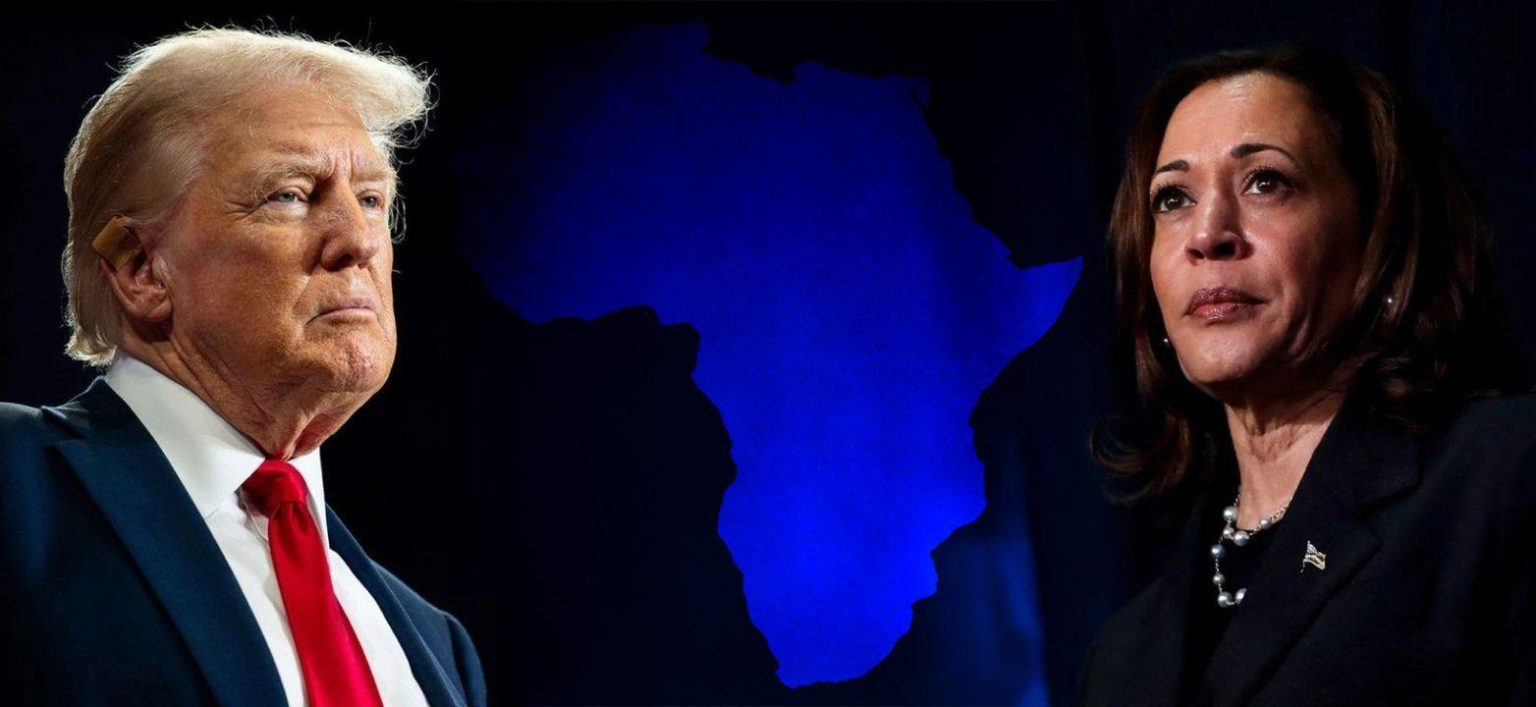
This aligns with the longstanding, consistent US approach across successive administrations in its dealings with Africa, focused on development programs, humanitarian assistance, democracy, human rights, and expanding security partnerships. While Africa has often been a secondary priority for Washington, the Biden administration has recognized the continent’s increasing significance and the importance of African leaders’ participation in global issues—a point underscored by Blinken when unveiling the new US strategy for Africa in August 2022. Against this backdrop, a compelling question emerges: Are there distinct differences between Donald Trump’s and Kamala Harris’s policies and stances on Africa?
Early indications suggest contrasting paths for Trump and Harris on Africa should they win the upcoming election. Harris appears poised to continue Biden’s approach, likely sustaining high-level visits, maintaining strong rhetoric on promoting democracy and rule of law, bolstering economic and trade partnerships, and encouraging private sector involvement in African development, all while emphasizing the significance of African contributions and innovations to shaping the global future, reflecting her commitment to building international alliances, which stands in stark opposition to Trump’s isolationist and protectionist stance.
Conversely, Trump’s previous term demonstrated a clear indifference to Africa, marked by controversial actions, inflammatory statements, and disparaging comments referring to African countries as “shithole countries.” He is likely to emphasize a “pragmatism and political realism first” approach, prioritizing strategic interests while navigating the challenge of balancing democratic ideals with the need to engage with African countries under coup regimes. The main points where Trump and Harris align or diverge in their stances on Africa can be summarized as follows:
I. Restraining China’s Footprint in Africa
While the United States continues to be the largest provider of humanitarian aid to Africa—contributing $9.5 billion through the United States Agency for International Development (USAID) in 2023—China has emerged as the continent’s foremost trading partner, with bilateral trade surpassing $166.6 billion in the first half of 2024. Additionally, Chinese firms play a dominant role in African supply chains for critical minerals and rare earth elements, particularly in the mineral-rich eastern Democratic Republic of Congo, which supplies essential resources for electric vehicle batteries, applications in artificial intelligence, and other cutting-edge technologies used in the US defense sector.
In response to the growing influence of China in Africa, particularly through its Belt and Road Initiative, the Prosperity Africa initiative and other development efforts by Washington have emerged as a late reaction to this challenge. China’s growing presence was especially evident in countries like Angola, Gabon, and Equatorial Guinea, where Chinese engagement has focused on developing seaports. Reports have also suggested Beijing’s interest in establishing a naval base along the Atlantic coast, posing a direct threat to the strategic interests and national security of the United States.
This is reflected in the frequent tours and visits by US Secretary of State Antony Blinken and Secretary of Defense Lloyd Austin, aimed at countering China’s growing influence in the region. Similarly, Washington has focused considerable attention on Equatorial Guinea, recognizing its rich natural gas reserves and its willingness to potentially host a Chinese naval base.
Additionally, the United States has implemented countermeasures against China in the race for strategic minerals in Africa, exemplified by the launch of the Lobito Corridor infrastructure project in September 2023, which connects the abundant cobalt and copper resources of the Democratic Republic of the Congo and Zambia to to American and European markets through the Lobito Port in Angola. As a result, whether under Trump or Harris, it is anticipated that Africa will continue to be viewed as a battleground for influence in the competition with China.
II. Divergence in Military Cooperation and Counter-Terrorism Policies
If Trump wins, Washington is unlikely to play a central role in African conflicts, with a probable reduction in military support. Trump has emphasized this in his statements that American aid should go to friends and allies, asserting that “American taxpayers’ money is not for countries like those in Africa that are not seen to embrace American values.” The Project 2025 report, developed by conservative researchers under the American Heritage Foundation, suggests it would serve Washington’s interests to collaborate with European allies, particularly France, in North Africa to lead counter-terrorism efforts and counter Russian military and political influence across the continent.
Conversely, if Harris wins, she is expected to uphold the policy of supporting coastal states in the Gulf of Guinea, which face threats from cross-border terrorist groups originating in the Sahel. Her approach would likely focus on building local community resilience to counter recruitment and radicalization by these groups, while the US Africa Command (AFRICOM) would assess potential sites for new US bases in Côte d’Ivoire, Benin, Chad, and Libya, especially as Russia assumes a more prominent role in regional security following the withdrawal of US and French forces from the Sahel Confederation countries (Mali, Niger, and Burkina Faso).
III. The Core Significance of the African Growth and Opportunity Act (AGOA)
AGOA is seen as a key determinant of US policies toward Africa, encapsulated by the slogan “trade, not aid,” which aims to enhance trade relations and offer duty-free access for African products to the US market. Although AGOA is set to expire at the end of fiscal year 2025, it faces criticism for not providing equal benefits to all eligible member countries or encompassing the entire African continent. Moreover, its implementation often reflects a “carrot and stick” approach in relations with African countries.
In this context, there are ongoing concerns that a potential Harris administration might impose stricter conditions on AGOA, particularly given the non-compliance with Washington’s criteria for good governance policies. Additionally, there is the possibility of South Africa being excluded from eligibility under AGOA due to its strengthening ties and strategic partnerships with Russia and China. Meanwhile, Project 2025 report suggests transitioning all foreign aid grants to African recipients into loans and terminating all development aid programs, reflecting the stance endorsed by Republican Senator Lindsey Graham in February 2024.
IV. Controversy over Social Issues and Immigration Policies
Social issues surrounding human rights and LGBT rights, which the Biden administration has sought to advance, along with the longstanding Republican ban on funding for family planning and abortions, have become contentious issues between Washington and African countries, with both Republicans and Democrats attempting to impose US cultural and social values on African partners. Uganda, for instance, faced financial sanctions and suspension from the AGOA program as a result of passing anti-LGBT laws.
In a different vein, immigration emerges as a critical issue for both the American interior and African countries, particularly with the rise in illegal immigration from West African countries across the southern border of the United States. The potential for new restrictions to curb immigrant entry looms large, especially if Trump wins, as he is likely to reinstate stringent immigration controls targeting citizens from predominantly Muslim African countries. This approach was clearly articulated in his debate with Harris, where he emphasized a nationalist agenda focused on tightening border security and reducing immigration flows, citing their negative impacts and perceived security threats to American interests. In contrast, Harris advocates for a humane and ethical response to immigration and asylum, viewing it as a source of strength that enriches the diversity of the American nation.
In conclusion, it is unlikely that Washington will alter its policies toward Africa, regardless of the outcome of the upcoming election. The strategic priorities and geopolitical realities that have historically shaped US-African relations persist. The emphasis on accessing valuable mineral resources, alongside Washington’s lack of prioritization of Africa in its diplomatic agenda, the sluggish pace of investment and trade initiatives, and the use of Africa as a battleground for power struggles with China and Russia, all contribute to this outlook.