







There is a growing global trend towards a green economy and energy transition solutions focused on new and renewable energies, aiming to reduce carbon emissions across various sectors of the economy. Green hydrogen emerges as the missing link essential for decarbonizing all sectors. It has the potential to become a versatile fuel capable of providing clean energy to all aspects of the global economy, serving as an alternative to fossil fuels and a clean industrial raw material in numerous applications such as transportation and heavy industries like iron, steel, chemicals, and fertilizers, without generating any pollutants during consumption.
Hydrogen’s carbon-free nature renders it a clean, sustainable, and versatile energy source. It can be stored and transported over long distances, and when compressed or liquefied, it can carry and generate large amounts of energy. This ability to produce clean energy and fuel has positioned hydrogen to potentially meet about 24% of the world’s energy needs by 2050. As a result, it is being recognized as the fuel of the future, with the global tradable market expected to be valued at around $10 trillion by 2050.
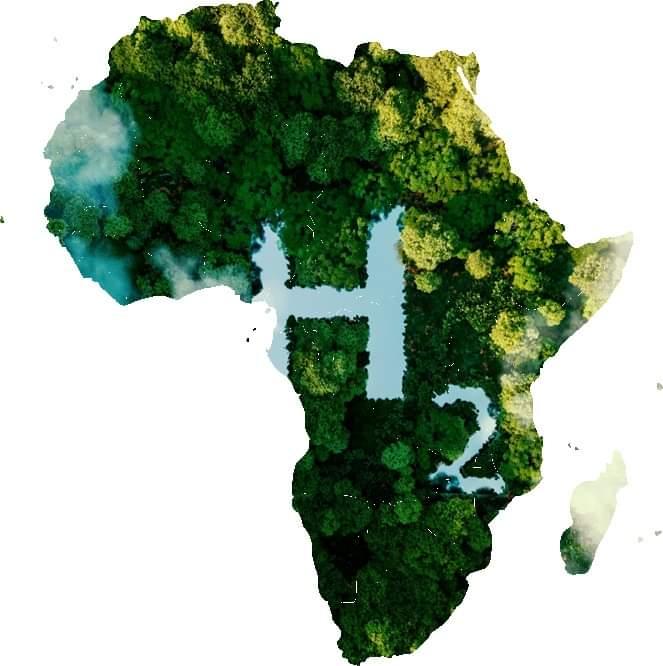
With the increasing global momentum in green hydrogen and its derivatives, Africa has captured the interest of investors. The continent is endowed with numerous resources required for hydrogen production, including an abundance of renewable energy sources such as wind, solar, and hydropower. These inputs are crucial for producing green hydrogen. Furthermore, Africa’s extensive land and coastal areas offer prime locations for setting up projects and transporting products. These factors have spurred growing investment opportunities for advancing green hydrogen in Africa. As a result, numerous international reports and studies have been released, exploring Africa’s potential in the green hydrogen sector and assessing both the opportunities and challenges in the hydrogen trade.
Hydrogen’s Moment: Gaining Global Momentum
Many believe that this decade could propel us into a new phase of the energy transition: the hydrogen era. Hardly a week passes without news of a new project or breakthrough in hydrogen technology. In the last five years alone, over 44 countries have developed national hydrogen strategies, with many more in the pipeline. Severe climate changes and their associated impacts, along with the commitment to the Paris Agreement on climate change, have been major driving forces. Additionally, the Russian-Ukrainian war and the consequent surge in gas prices have catalyzed a shift towards low- or zero-carbon fuels.
Hydrogen production and use can be categorized into two paths. The first is the production path, which includes green hydrogen produced from electricity generated by renewable sources and blue hydrogen produced from natural gas with carbon capture technologies. Green hydrogen has shown the greatest cost reductions. Forecasts suggest that green hydrogen will become cheaper than both blue and grey hydrogen (produced from fossil fuels without emission reduction) before the decade’s end.
The second path involves the sectors that utilize green hydrogen. Hydrogen can replace fossil fuels across all sectors without emitting CO2. As a carbon-free energy carrier, it excels at decarbonizing sectors that are challenging to electrify, such as heavy industry, long-haul transportation, and seasonal storage. Most decarbonization scenarios predict hydrogen will play a crucial role in achieving net-zero emissions by mid-century. For instance, the International Energy Agency and the International Renewable Energy Agency expect hydrogen to meet 12% to 13% of final energy demand by 2050, up from approximately 1% today.
Hydrogen Projects Heating Up Globally
Achieving carbon neutrality by 2050 globally requires the production of about 300 million tons of green hydrogen. According to the 2023 Hydrogen Insights report issued by the Hydrogen Council, 1,400 hydrogen projects have been announced worldwide, with approximately 1,000 slated for implementation by 2030. Additionally, direct investments totaling $570 billion have been announced, potentially achieving an annual capacity of 45 million tons of hydrogen by 2030. This would enable the attainment of net-zero emissions through green hydrogen and low-carbon hydrogen (up from 38 million tons annually), including 32 million tons of green hydrogen and 13 million tons of low-carbon hydrogen. Approximately 10 million tons are expected to be produced in Africa and the Middle East.
Europe remains at the forefront, boasting the largest number of announced hydrogen projects (540 projects) and $117 billion in investments (about 35% of global investments), followed by North America and Latin America, each representing around 15% of announced investments. Major project proposals on a giga-scale or larger constitute about 112 projects, requiring around $150 billion in investments by 2030. Most international estimates suggest that global demand for green hydrogen will surge by about seven times by 2050.
Africa’s Opportunity to Dominate the Global Hydrogen Market
The global enthusiasm for green hydrogen is poised to drive significant global energy transformations, and Africa stands to be a key player in this shift. The continent has the potential to become a leading global supplier of green hydrogen and its derivatives, such as ammonia and methanol. With increased investments in renewable energy across Africa, the prospects of it emerging as a hub for hydrogen production and trade grow stronger, presenting promising investment opportunities. According to the Hydrogen Council, Africa’s green hydrogen exports are projected to reach 11 million tons per year by 2050, with total investments in green hydrogen estimated at $400 billion. The International Energy Agency also suggests that Africa could produce 5,000 mega tonnes of hydrogen annually for less than $2 per kilogram.
Africa’s edge in green hydrogen production lies in its abundant and diverse resources. Solar and wind energy are plentiful in North and South Africa, while central African countries have vast hydropower potential. Meanwhile, countries in East Africa are focusing on developing geothermal energy. Maximizing these resources can lead to the production of low-cost electricity, which is crucial for producing green hydrogen through electrolysis.
The advancement of green hydrogen in Africa bolsters the continent’s electricity access, satisfies local energy demand, stimulates economic growth, and generates job opportunities. By 2050, the hydrogen sector could create approximately 13 million jobs along the production and supply chains. Africa’s green hydrogen exports will extend beyond pipeline transportation from northern countries; anticipated expansions may also facilitate the production and export of more hydrogen derivatives. This development could boost the production of ammonia, methanol, and synthetic fuels in southern and eastern African countries, positioning Africa at the forefront of global hydrogen and derivative production and export. Furthermore, African ports could significantly contribute to global sustainable fuel supply, with the Hydrogen Council estimating that African seaports could cover about 12% of global ship traffic, particularly toward South Asia and Europe.
In this vein, six African countries—Egypt, Morocco, Mauritania, Kenya, Namibia, and South Africa—have formed the Africa Green Hydrogen Alliance (AGHA). This AGHA aims to harness the continent’s vast renewable energy resources to establish a global hub for green hydrogen production and export. It is an ambitious initiative, aiming to produce 30 to 60 million tons of clean hydrogen annually, potentially adding up to $126 billion to its members’ GDP by 2050 and creating up to 4 million new jobs.
Navigating Hurdles in Africa’s Green Hydrogen Industry
Despite Africa’s vast potential and promising opportunities to become a global leader in the green hydrogen sector, several significant challenges persist that could impede progress. At the forefront are infrastructure issues. The continent suffers from a lack of infrastructure readiness, necessitating substantial development to support large-scale green hydrogen production and export. Many regions ideal for renewable energy generation still require infrastructure expansion. Consequently, greater investments in transportation infrastructure are essential to link renewable energy sources to production facilities and export centers. Additionally, water scarcity poses a challenge for electrolysis and hydrogen production, demanding advanced technology for desalination and efficient water usage.
Policy, legal, and incentive frameworks also present obstacles. Developing a robust framework and clear procedures is essential to attract more investments. Weak government policies, insufficient incentives, and immature technology contribute to high production costs for green hydrogen. Addressing these issues with supportive policies and laws will reduce costs and draw more foreign direct investment.
Moreover, there is an urgent need to establish standards, certifications, and follow-up procedures to ensure safety, interoperability, and sustainability across the green hydrogen value chain. These standards should encompass not only hydrogen leakage prevention and emission reductions but also broader concerns like water security impacts.
In conclusion, Africa is uniquely positioned to become a leading force in the development of renewable energy and green hydrogen projects within the global energy sector. However, capitalizing on this opportunity demands a comprehensive approach that focusses on addressing regional obstacles, strengthening international and regional partnerships, and bolstering the AGHA’s capabilities. Furthermore, it is crucial to address trade barriers along green hydrogen supply chains by reducing costs, improving access to technology, and developing modern infrastructure to ensure the environmental safety of hydrogen production.
In this way, Africa can become a major contributor to the future of global energy, with hydrogen acting as a transformative force in the global geopolitical landscape.