







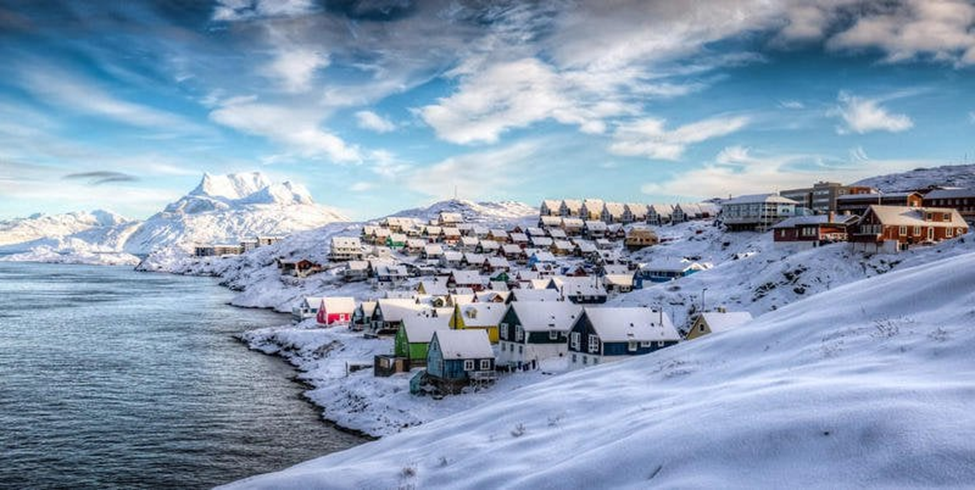
Climate change stands as one of the greatest challenges of our time, shaping not just the present but also the future. Its political, demographic, and economic repercussions will be felt across the globe, sparing no continent or region. This evolving reality is reflected in the newfound American focus on Greenland, a Danish territory, where its growing geopolitical importance and easier access to resources have become key drivers of interest.
Trump’s Greenland Acquisition Plan
In a controversial statement in January 2024, US President Donald Trump announced his intention to purchase Greenland from Denmark. Economic and environmental analysts largely believe that the driving force behind US interest in this remote northern territory is the Arctic’s vast reserves of fossil fuels and rare minerals, as indicated by geological studies. At the same time, climate change-induced ice melt has made these resources more accessible, boosting their economic viability.
Future disputes and conflicts could emerge over the Arctic region, especially after Trump hinted at his intention to annex Canada to the United States. He appears to be capitalizing on global warming’s role in melting the region’s ice. If he succeeds in annexing Greenland or certain northern Canadian cities, his next move would likely be redrawing maritime borders—much like Egypt did with Saudi Arabia, Greece, and Cyprus—to prepare for large-scale exploration in the newly accessible waters.
The strategic benefits of acquiring Greenland and the melting Arctic ice extend far beyond oil reserves. As temperatures rise and ice recedes, new shipping routes are opening, creating major opportunities for global trade. These emerging lanes are poised to become key rivals to the Egyptian Suez Canal and even the Panama Canal—another waterway the US President has expressed interest in reclaiming. Figure 1 shows the key commercial shipping routes through the Arctic and the Egyptian Suez Canal.
Figure 1: The Northeast Passage’s route (blue) in comparison to the Suez Canal’s route (Red)

If the United States controlled Greenland, it could streamline fuel transport to Europe, which currently depends on Russian gas. Once the ice melts, shipping routes would open, allowing fuel to be supplied via Canadian waters and Greenland before reaching Scandinavian countries.
Hence, if Trump’s wish comes true, the United States would gain control over a vast Arctic territory, rivaling Russia’s presence in the region. This would reshape the oil and fossil fuel landscape, altering trade routes between Asia, Europe, and North America. As a result, the fuel market would shift dramatically, with the United States tightening its grip and outmaneuvering competitors.
Arctic shipping traffic has surged by 37% over the past decade. In September 2023 alone, 1,122 ships entered its waters, coinciding with a significant decline in ice levels. This suggests that, in this scenario, climate change is playing into the hands of the United States—especially now that decision-makers, after years of denial, have finally acknowledged its impact, thanks to undeniable scientific evidence.
Figure 2 highlights the seasonal shift in Arctic shipping routes between March and September, with summer and early autumn providing the most favorable conditions for commercial navigation.
Figure 2: Sea ice extent in March 2013 (left) and September 2013 (right), illustrating the respective monthly averages during the winter maximum and summer minimum extents

Strategic Security and the Race for Greenland’s Minerals
The US Department of Defense’s 2024 Arctic Strategy directly addresses regional security challenges, highlighting the activities of Russia and China. The Strategy underscores how accelerating ice melt will transform the region, opening new trade routes while simultaneously increasing security risks for countries that once relied on the Arctic’s inaccessibility as a natural defense. Greenland, with its rich mineral deposits, has become an even more valuable asset in this evolving landscape. Notably, the island holds significant graphite reserves, a crucial component in industries such as electric vehicle batteries and steel manufacturing.
The same applies to minerals like copper, nickel, zinc, and lead. Some companies are actively working to develop a zinc and lead project in Citronen fjord, recognized as one of the world’s largest undeveloped zinc deposits. When it comes to precious metals and gemstones, the most promising gold reserves are found around the Sermiligarsuk fjord in southern Greenland, while the island’s western region holds diamonds and other valuable stones. Additionally, Greenland is rich in iron ore, tungsten, titanium, and vanadium—key materials used across various industrial applications.
When it comes to uranium, Greenland’s leftist Inuit Ataqatigiit party banned uranium extraction in 2021, halting the development of the Kuannersuit rare earth elements project. These signs of Greenland’s vast mineral wealth further strengthen the case for US interest in acquiring the territory—especially as neighboring countries intensify their commercial and military activities in the Arctic amid accelerating climate change.
Climate Change in the Arctic
Environmental studies show that the Arctic is warming up to three times faster than the global average. This is largely due to melting snow and ice exposing the darker ocean surface, which absorbs more solar heat. As a result, the region is experiencing continued sea ice loss and accelerated glacier and ice sheet melt, particularly in and around Greenland. Since 1980, the Arctic has warmed at twice the rate of the rest of the world, with winter temperatures in Alaska and western Canada rising by 3 to 4 degrees Celsius over the past 50 years.
Norwegian meteorological stations in the Arctic confirm this trend. In Longyearbyen, a northern Norwegian settlement in Svalbard, the average annual temperature has increased by roughly 0.25°C per decade since records began in 1912. Scientific analyses and available data indicate that the last few decades have been the warmest on record in the Arctic.
Temperature records since the 1950s show a sharp increase in Arctic warming, with average rises of 0.5 to 1.0°C, and even greater spikes in certain areas. This makes recent Arctic temperatures the highest recorded in at least 2,000 years.
Figure 3 compares the average Arctic ice coverage from the beginning of the millennium to projections for the end of the century, based on climate change-driven melting rates.
Figure 3: Decline in Average Arctic Ice Coverage from Early 2000s to 2100 Projections

Notably, five countries share borders with the Arctic: Russia, which controls a vast portion through Siberia; Norway, Norway, which borders the Arctic through both its mainland and the Svalbard archipelago; Denmark, through its administration of Greenland; Canada, via its northern coastline; and the United States, through Alaska. Additionally, under current demarcation lines, some uninhabited areas remain outside the jurisdiction of these countries.
The Geopolitical Impact of Global Warming
Geopolitical shifts driven by climate change are becoming increasingly common. Changing demographics in some countries may result from global warming’s effects, including rising sea levels, floods, and droughts, which can trigger climate-induced migration away from resource conflicts and environmental disasters. Several studies highlight the scale and locations of these impacts. In Bangladesh, for instance, concerns are growing that by 2050, around 17.5% of the country’s land could be lost due to environmental disasters linked to rainfall patterns and seawater intrusion.
Climate change is expected to impact most regions worldwide. At current rates, this crisis could displace millions of people in the coming decades. It may also lead to significant shifts in the global economic and political landscape, reshaping international relations. Central and South Asia, being highly vulnerable, will see the power of countries like China and India fluctuate—either strengthening or weakening depending on their ability to adapt to climate challenges and manage population growth.
Naturally, all of this will have far-reaching implications for national security. Climate change may heighten security tensions, particularly regarding food and water resources. Many countries have struggled with securing water supplies due to climate change since the last century, and addressing water scarcity will require significant shifts in the international system. This calls for a reassessment of existing global mechanisms to tackle these challenges. The Paris Climate Agreement is one such international effort that may need reinforcement or revision to improve its effectiveness in combating climate change. However, concerns remain about its effectiveness, especially after the White House signaled an intent to withdraw from it during Trump’s second term, undoing Biden’s previous decision to rejoin.
This is just one example of the broader security, economic, and political transformations driven by climate change. In 2021, the US Department of Defense officially recognized climate change as a serious security threat—one that, unlike traditional threats, does not stem from a specific country, group, or individual. However, like any crisis, it also presents opportunities that can be leveraged.
Therefore, it is crucial for countries and the international community to collaborate in addressing climate change and its geopolitical consequences. Through cooperation and the development of shared strategies, countries can better adapt to these challenges and help maintain global stability.