








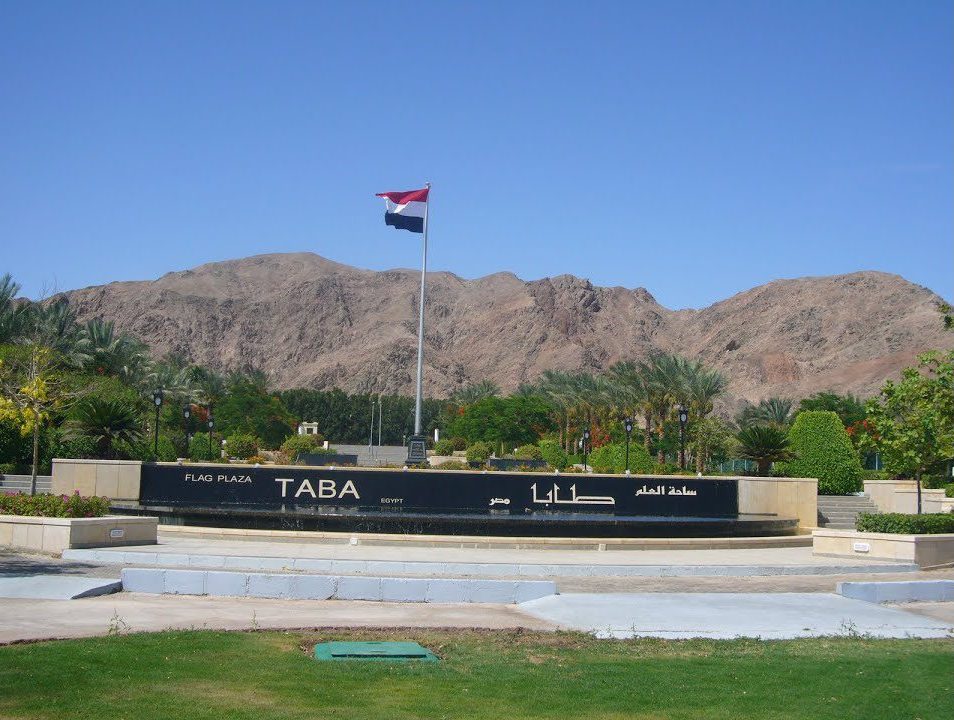
March 19 marked the 36th anniversary of Egypt’s reclamation of Taba, the final piece of its territory to be restored. Before delving into the significance of this occasion, it is important to note that one of the authors of these lines was a member of the National Supreme Committee for Taba and actively participated in years of negotiations between Cairo and Tel Aviv.
Taba, an area of about 1,200 square meters, was excluded from Israel’s final withdrawal from Sinai on April 25, 1982. Despite the agreement for full withdrawal, Israel refused to leave the point of Ras Taba on the western shore of the Gulf of Aqaba, claiming that pillar No. 91—which defined its location—was unclear and not within Egyptian territory.
This marked the beginning of the Taba dispute, which Egypt approached with seriousness and strategic patience. Rather than allowing this issue to obstruct the broader Israeli withdrawal, Egypt agreed to the withdrawal, excluding Taba, as long as a future resolution mechanism was provided for in the peace treaty. The Taba negotiations are considered one of the longest diplomatic and political battles, marking the first-ever settlement of a border dispute between Israel and an Arab state in the Middle East through international arbitration—an achievement that one historian referred to as the longest documentary marathon in the history of border disputes.
Egypt set an exemplary precedent in honoring its international commitments, adhering to the 1979 Peace Treaty with Israel. Article 7 of the treaty stipulated that any disputes must first be addressed through negotiations and, if unresolved, through conciliation or arbitration. This reflects Egypt’s consistent commitment to dialogue over military confrontation in resolving disputes, firmly establishing peace as a strategic choice—one of the core principles of Egyptian foreign policy. This approach ultimately led to international arbitration, pursued only after exhausting all negotiation and conciliation efforts. It stands as a testament to the persistence and determination of Egyptian negotiators in reclaiming every grain of Egyptian soil.
As we reflect on this historic moment, it is essential to highlight the remarkable role of the Egyptian negotiator. Negotiating with the Israeli side was nothing short of a fierce legal, political, and diplomatic battle. Israeli negotiators were known for their argumentative tactics and their tendency to focus on technicalities in an attempt to divert attention from the core issue: Egypt’s rightful claim to Taba. However, Israel was fully aware that Taba was indisputably Egyptian land, and its claims had no historical or geographical legitimacy.
In May 1985, Egypt formed the National Supreme Committee for Taba, a high-level body tasked with securing Taba’s return to Egyptian sovereignty. When negotiation and conciliation efforts failed, Egypt and Israel took the matter to arbitration, in what became a national effort involving political, military, legal, and scientific expertise. All state institutions—including the Armed Forces, the Ministry of Foreign Affairs, and legal and academic bodies—worked in unison to prove Egypt’s rightful claim to Taba and reclaim it through international arbitration. Egypt pursued a precise legal strategy, ensuring that the arbitration process remained strictly focused on the primary objective: the full restoration of Taba’s sovereignty. This approach was evident in Egypt’s submission to the arbitration panel, which specifically sought to verify the exact locations of the border markers, particularly marker 91, without engaging in any discussions that could alter the fixed borders established by international treaties and maps—which Israel had sought to alter in its favor.
The reclamation of Taba through negotiation and arbitration was a matter of national survival—there was only one possible outcome for the Egyptian negotiators: the full restoration of Taba to Egyptian sovereignty. No other option was on the table. The Egyptian delegation successfully neutralized the American side, which was present during the negotiations, ensuring that it remained impartial and did not favor Israel. The Taba negotiations stand as a testament to the strength, patience, skill, and perseverance of the Egyptian negotiators, who overcame every obstacle, no matter how great. It was a historic diplomatic triumph, an unforgettable national milestone, forever engraved in modern Egyptian history in letters of gold.
The Taba arbitration agreement highlighted Egypt’s remarkable efforts, showcasing the superiority of its diplomatic, legal, and military expertise over all Israeli maneuvers. This ultimately led to a decisive victory for Egypt, with the arbitration panel ruling in its favor on September 27, 1988. Israel subsequently withdrew from Taba, and on March 19, 1989, the Egyptian flag was raised over the reclaimed land. This moment affirmed a fundamental truth: Egypt, throughout history, has never and will never compromise its rights. What cannot be reclaimed by force can be won through negotiation and arbitration.
A Testament to History
In these lines, I will reflect on some of the key lessons learned from this great national milestone and how we can apply them today. Raising the Egyptian flag over Taba was far more than a symbolic gesture—it was a resounding affirmation that Egypt does not relinquish its rights, no matter the cost, and has the capability and determination to employ all necessary means to achieve this goal. This is the clear message that must be understood by any country that might, even for a moment, doubt Egypt’s unwavering commitment to defending its sovereignty.
As we commemorate the 36th anniversary of Taba’s restoration, we must also honor Egypt’s fallen heroes—the brave soldiers who gave their lives to liberate Sinai, as well as the members of the National Supreme Committee for Taba, who dedicated their lives to reclaiming the land through diplomacy. Their sacrifices form part of the national epic of Sinai’s liberation and the reclaiming of Taba.
This anniversary comes at a time when Egypt faces major challenges, particularly amid fast-moving regional and global developments, particularly in the economic sphere. This underscores the need to reflect on the key factors that enabled Egypt to reclaim Taba and to draw inspiration from this unique experience in overcoming the difficulties the country faces today.
One of the most important lessons to emphasize on the anniversary of Taba’s return is that Egypt is fully capable of overcoming any challenge—provided that the following key factors are taken into account:
- Political will is the foundation for solving national crises.
- The unity of the Egyptian people with their leadership is essential, ensuring that the entire country stands as one in confronting the challenges facing the country.
- Constant coordination among all state institutions is crucial to effectively address any crisis, ensuring that responses are carried out within a comprehensive strategy tailored to real-time conditions on the ground.
- The media must be an integral part of the state’s framework, providing clear and balanced coverage of national issues and challenges without understatement or exaggeration. It should also clarify the roles and responsibilities of both the state and the people, emphasizing how the nation’s citizens serve as the first line of defense in confronting these challenges.
If I were to send a message to Egypt’s young generation, I would tell them that they are the backbone of the future. They must draw lessons and inspiration from these historic victories and national struggles. They should always remember that hard work is the shortest path to success and that through their dedication and sincere efforts, Egypt will claim its rightful place among the world’s great countries.
In short, Egypt reclaimed its occupied land through the blood, effort, and intellect of its people—whether in war, diplomacy, or negotiation. Just as the October War shattered the myth of Israel’s military superiority, the battle to reclaim Taba dismantled the legend of Israeli cunning. The arbitral tribunal’s ruling was a true affirmation that the great victory achieved by the Egyptian army in October 1973 was ultimately completed with the recovery of the last precious piece of land that Israel sought to claim without any legitimate right.
No right is ever lost as long as there is someone determined to defend it.