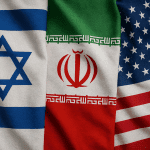








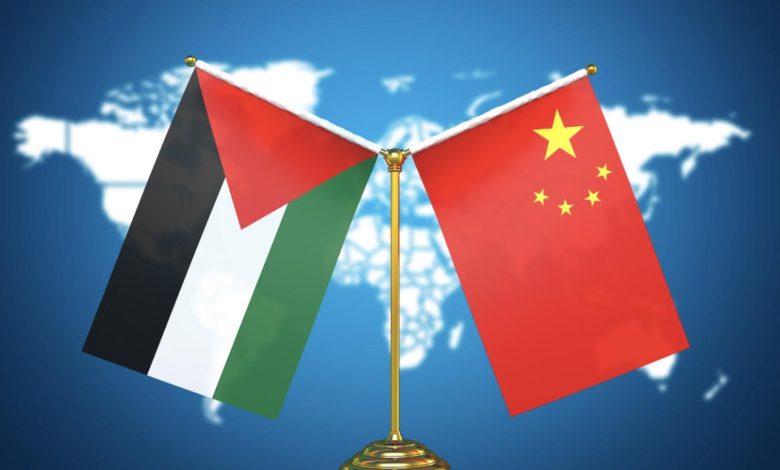
As the Israeli assault on Gaza continues, China has voiced its support for a ceasefire. Foreign Minister Wang Yi of China criticized Israel for “going beyond self-defense”, saying that Tel Aviv must adhere to its obligations under international humanitarian law and that Israel “should heed the call of the international community to stop the collective punishment of the people in Gaza”. China’s position stands in stark contrast to that of the United States, which is biased and unconditionally supports Israel.
China steadfastly adhered to its position, as evidenced by Permanent Representative of China to the United Nations, Zhang Jun, voting in favor of two consecutive resolutions at Security Council (SC) meetings. Russia introduced the first of these resolutions on October 16; it demanded a ceasefire between the Palestinian and Israeli sides in order to protect civilians and provide humanitarian aid to Palestinians in the Gaza Strip. The second was a resolution put forth by Brazil on October 18 that called for a humanitarian ceasefire to grant UN partners and agencies complete, safe, and unhindered access to Gaza. The SC was unable to adopt these resolutions because the United States, a permanent member of the Council, exercised its veto power.
Factors Influencing China’s Position
Given that it has been accused of brutalizing its Uyghur Muslim population, China’s support for the Palestinian cause cannot be explained by ideological concerns regarding minorities and Muslims. Beijing’s stance is motivated primarily by the pursuit of its own interests. Following its success in mediating a reconciliation deal between Iran and Saudi Arabia to reestablish diplomatic ties between the two nations, as well as its efforts to include some Arab countries in the BRICS grouping, China is currently in talks with a number of countries, including Egypt, to coordinate efforts to find a ceasefire between the parties to the Gaza conflict. China’s goal is twofold: first, to prove its worth on the international stage; and second, to increase the sphere of its influence, particularly in the nations of the Global South, which includes the Middle East and Africa.
The Chinese strategy in the Middle East is a response to the declining popularity of the US presence in the region, which is a consequence of its military interventions there. The developments in the Palestinian cause inflamed Arab populist resentment towards the United States, which denies the brutality of Israeli aggression against Gazans and unequivocally supports Israel’s actions. China, on the other hand, wants to undermine US influence internationally, which is consistent with Beijing’s plan for a multipolar world devoid of US hegemony.
Consequently, Beijing’s stance fuels its determination to project its image on the international stage and advance at the expense of Western influence, especially the United States, which is seen as Beijing’s biggest rival despite their strong economic ties. This chance to try to weaken the United States is consistent with the “Great Revival of the Chinese Nation” plan, which aims to restore China’s status as a global power after a century of humiliation that left deep scars on the Chinese psyche and fueled the country’s insistent desire to regain its historical greatness.
In addition, China’s strategy, which implicitly aims to surpass the United States as the world’s largest economic force by 2049, encourages it to forge closer ties with Arab countries as well as Latin American and African nations that support Palestine, many of which are looking for partners other than the United States. On this basis, China has a lot to gain from improving ties with the Middle East, particularly economically, as this region would be crucial to Xi Jinping’s massive infrastructure project to link global markets since it serves as the hub of the Belt and Road initiative.
Future Steps
It is anticipated that China will increase its involvement in the Middle East as a result of the Palestinian-Israeli conflict. It will be able to relate to countries that are fighting for their right to self-determination through the Palestinian-Israeli conflict, which could become the cornerstone of its foreign policy and give it the ability to fully mediate conflicts in the Middle East. To bolster its position calling for peace in the region, China may resort to generalizing the five principles of peaceful coexistence it put forward in the 1950s with the leaders of India and Myanmar. It may, however, face severe criticism if it continues to be involved in regional conflicts in the East and South China Seas.
These principles include respect for each other’s territorial integrity and sovereignty, mutual non-aggression, non-interference in each other’s internal affairs, equality and mutual benefit, and peaceful coexistence. If China can successfully intervene to halt escalations and reach a truce based on these principles, it may demonstrate the failure of US policies in the Middle East. In this situation, China might seek to demonstrate its status as a superpower that has succeeded where the US has failed in bringing about peace and putting an end to ongoing conflicts.
Accordingly, China is likely to use Arab public dissatisfaction with the United States and its biased position to win over Arab nations and establish itself as a major player in the conflict region. This is especially true given how the United States has been portrayed in Chinese official media as a regional villain planning “behind the scenes’ of Middle Eastern conflicts. The Chinese media made hints that Beijing had something to do with the conflict’s resolution. In order to protect its economic and geopolitical interests in the region, Beijing will work to bolster its efforts in an effort to put an end to these violent clashes, which, if it fails, could turn China’s ambitions in the Middle East upside down.
Potential Risks
Given its prior efforts to take a neutral stance in this conflict and foster relations with both the Israeli and Palestinian sides equally, China is betting on the Palestinian side’s need for victory through its current initiatives, which are no longer neutral. Antagonizing Israel could come at a high cost to Beijing, given that Beijing has robust economic ties with Tel Aviv, particularly through lucrative trade in the technology sector, with Beijing importing more than $1 billion worth of semiconductors from Israel annually.
The fact that Israeli authorities are paying attention to the Chinese response to this escalation raises the risk that China will lose as a result of its firm stance on Palestine. The government of Benjamin Netanyahu expressed concern over Beijing’s silence regarding the attack. Israel was also disappointed by Beijing’s failure to clearly condemn what it called the brutal “massacre” perpetrated by Hamas, which is designated as a terrorist organization by the United States and many other countries, against civilians, kidnapping some of them and transporting them to Gaza. Israeli discontent grew as a result of Chinese media criticism of Israel and accusations that the United States is fueling Middle East tensions.
If Israel were to win, China would suffer economic and political setbacks, especially in the Middle East, where Israel’s influence could be greater than that of other countries. In a broader context, the risks China faces will not be limited to the potential losses it may incur from Israel alone, given the existing differences between it and the United States and China’s strategic position against the latter. Given that the European Union and South Korea support the US position while Russia and North Korea support China’s position, the already-existing conflicts between the two nations could become more acrimonious. In light of this, the current conflicts between the two parties, which are expected to escalate significantly in the coming period, will undoubtedly be weighed down by their divergent positions.
In conclusion, China is taking advantage of the current situation in Palestine to strengthen its global position by gaining the support of Middle Eastern countries and countries sympathetic to the Palestinian cause. As a result, the United States will lose clout in these regions, while China is rising to prominence. Beijing sees the current upsurge of violence in the Middle East as an opportunity to present developing countries with an alternative vision of global leadership that can eventually displace the United States and its policies.