






Cairo has recently witnessed an intensive and qualitative movement on the Libyan file as the political transition process in Libya enters into the decisive phase.
According to the timetable of the roadmap of the transition process, around three months remain until the holding of elections on 26 December, 2021, which would constitute the completion of this stage.
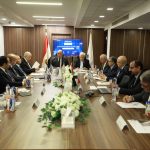
This is the context in which Egyptian-Libyan talks were held on 14 September in Cairo between President Abdel-Fattah El-Sisi, Speaker of the Libyan Parliament, Aguila Saleh, and General Commander of the Libyan National Army (LNA), Field Marshal Khalifa Haftar.
These talks represented a continuation in the strengthening of Egyptian-Libyan strategic partnership, manifested in the holding the second round of the Joint High Committee’s meetings between the two countries, headed by the two prime ministers two days later.
The Libyan side in those meetings was represented by a high level delegation which included virtually all the members of the Government of National Unity (GNU), and was headed by Prime Minister Abdel-Hamid Dbeibah, who also met President El-Sisi on the same day.
In contrast to the orientations of many of the parties involved in the Libyan file, the Egyptian position is distinguished by its comprehensive vision, which includes implementing all of the entitlements agreed upon in the Libyan roadmap without limiting the transition process to the elections only.
These entitlements include completing the process of unifying divided institutions, ending all manifestations of external interference through military presence in the country, the withdrawal of foreign fighters, and reaching a resolution in the file of armed factions
Cairo’s position is based on the belief that the persistence of these manifestations of foreign interference in the country will not only negatively affect the entire political process in the lead up to the elections, but, and perhaps more importantly, also affect the readiness of the various sides to accept its results, in an undesirable repeat of the 2012 scenario.
Egypt’s vision is also premised on the calculation that the existence and activation of these manifestations will affect Egyptian national security.
In a development that would impact the security situation in Libya, Field Marshal Haftar, the commander of the LNA, is expected to announce his candidacy in the presidential elections, which would mean that, per the law, he would give up his position three months before the poll.
In the case this takes place, Cairo would have to be informed of special arrangements made by the General Command of the LNA in the coming period to deal with Haftar’s stepping down as commander.
This would be pertinent especially due to the existence of since there are common border security arrangements, in addition to the continuation of the operation led by a brigade of the LNA, with French support, in the south of the country against Chadian rebels.
Also, in the same context, it is possible to see a link between the Egyptian-Libyan talks that took place in Cairo in mid-September and the second Egyptian-Turkish exploratory round of talks that took place a week earlier. The common denominator in the statements that were issued by the Egyptian and Turkish sides after the second round talks reveal that the Libyan file is a pivotal file on the table.
However, the extent to which Ankara is ready to meet Cairo in its insistence on achieving a breakthrough in this file, as a way to restore normal relations between the two countries, remains contingent on Turkey’s next step.
Another central indication that can be discerned in the Egyptian statement that was issued after the second Egyptian-Turkish round of talks is Cairo’s focus on dealing with all Libyan parties in an equal manner to achieve the entitlements of the roadmap. This was signified by the presence of the majority of the Libyan leadership last week in Cairo at the same time. It affirms that Cairo extends bridges of communication with everyone to achieve the interim goals, and to bring the various Libyan parties closer in order to prevent the reproduction of the situation of the GNU government and the reappearance of political and military fronts of conflict.
Indeed, the recent process of the “cooling” of the Libyan conflicts during the current transitional phase – after a long costly period – may have contributed to further rapprochement between all the forces involved in the Libyan arena, a rapprochement exemplified in their adoption of a new perspective on the conflict that is based on understanding and coordination regarding economic and security interests to a certain extent.
Such coordination necessitates two things: the first is the existence of a unified central authority that can be dealt with, and, the second, is limiting the repercussions of security fragility in Libya, which has raised the cost of maintaining regional security for the neighboring countries of Libya – and perhaps also on the European arena – especially with regard to border security for the neighbouring countries, files of combatting illegal migration and the fight against terrorism, in particular, for European countries.
Moreover, it also seems that further rapprochement among most of the involved sides has also resulted from their mutual recognition of two things: the next stage on the Libyan front is, first, one of mutually sharing in the economic benefits within the framework of the Libyan reconstruction program, which, according to European Union (EU) estimates, is expected to exceed $100 billion, and, second, of course, is one of addressing the security files.
The scope and type of agreements concluded within the framework of the Egyptian-Libyan Joint Higher Committee reflects the extent of the desire of the two sides to develop their cooperation, which achieves added value and mutual benefits for both.
However, while Cairo values as important the economic benefits for Egypt from its participation the Libyan reconstruction, it equally values the positive impact that an improved security situation and attainment of stability in Libya would have on the development process for its neighbour.
Indeed, one of the main principles emphasised by the Egyptian discourse is the importance of distributive justice and social justice that requires the achievement of development in all parts of Libya, since there are regions in the country, especially the Libyan south, that largely lack in the process of development and reconstruction.


